Two Mediterranean signals stand out in the summer of 2026: Italy has the widest West Nile spread in Europe and Greece the fastest recent rise. Neither is a new arrival. The tiger mosquito is established across Italy, and West Nile has recurred in Greece almost every year since 2010. This brief reads both as established seasonal presence, sets out the dated surveillance figures, and shows the practical steps households can control.
Two Mediterranean signals stand out in the summer of 2026. Italy has the widest West Nile spread of any European country this season, and Greece has recorded one of the fastest recent rises. Neither is a new arrival. The Asian tiger mosquito is established across much of Italy, and West Nile virus has returned to Greece almost every year for more than a decade. Read correctly, these are the markers of an established seasonal presence, not the opening of a new emergency. For the clinical picture that frames why these numbers matter, see the related Italian neuroinvasive-severity review and, for the wider north-west European signal, the Dutch One Health sentinel study. For the broader concept of a receptive summer, the receptivity explainer sets out how ECDC separates vector presence from active local transmission.
This brief bundles the two because they are the same story told in two places. Both sit in a warming Mediterranean basin. Both involve mosquitoes that already live there. And both are tracked, week by week, by the European Centre for Disease Prevention and Control alongside national public-health agencies. The Mosticare threat map carries the consumer-facing summary aligned to the same weekly figures. The practical response in Rome and in Athens is the same as it is anywhere with a receptive summer: read the surveillance, reduce breeding sites and prevent bites.
The European surveillance picture as of 5 August
ECDC tracks West Nile infection through a weekly dashboard and a joint monthly report with EFSA. In the ECDC and EFSA monthly report covering data up to 5 August 2026, seven countries had recorded 245 locally acquired human cases: Italy 139, Greece 65, Spain 17, North Macedonia 13, Romania 6, France 4 and Germany 1. The report notes that this total is below the average for the corresponding period over the past decade. The country-level summary is carried through to the consumer-facing Mosticare threat map, which records the same ECDC figures per country for the current week.
Two features matter for reading these numbers. First, they are locally acquired cases, meaning the infection was contracted within the country rather than imported by a traveller. Second, West Nile activity in Europe builds through August and September, so an early-August total is a moving picture rather than a season total. The figures confirm circulation; they do not forecast where the season ends.
Rome and Lazio: an established mosquito, an emerging West Nile focus
The search interest in Rome mosquito control reflects a real feature of the city and its region. The tiger mosquito, Aedes albopictus, is an established resident of Italy. ECDC's June 2025 distribution snapshot records the species established in 369 regions across 16 EU/EEA countries, with Italy among the most suitable environments in Europe. In Rome, as across much of the country, the tiger mosquito is a settled daytime biter rather than a recent guest.
West Nile virus is carried by a different mosquito, the night-active Culex, and it too is a familiar part of the Italian summer. National human surveillance is coordinated by the Istituto Superiore di Sanità with the Ministero della Salute, which reports the data on to ECDC.
For the region around Rome, the clinical context is set out in a 2026 review from the Spallanzani Institute, Rome's National Institute for Infectious Diseases. The companion Mosticare editorial on that review, West Nile neuroinvasive severity: the Italian clinical review, traces the same clinical picture from the under-1-percent neuroinvasive fraction and the case-fatality rate as high as 17 percent through to the absence of a licensed antiviral or human vaccine. Together, the review and the editorial place Lazio, the region that contains Rome, as an emerging epicentre of a climate-sensitive flavivirus that is now endemic in Europe. Endemic is the operative word. The virus is not arriving in Lazio; it has been settling into a widening seasonal presence for years, and an authoritative review of how to manage its severe form is part of a mature response to that reality.
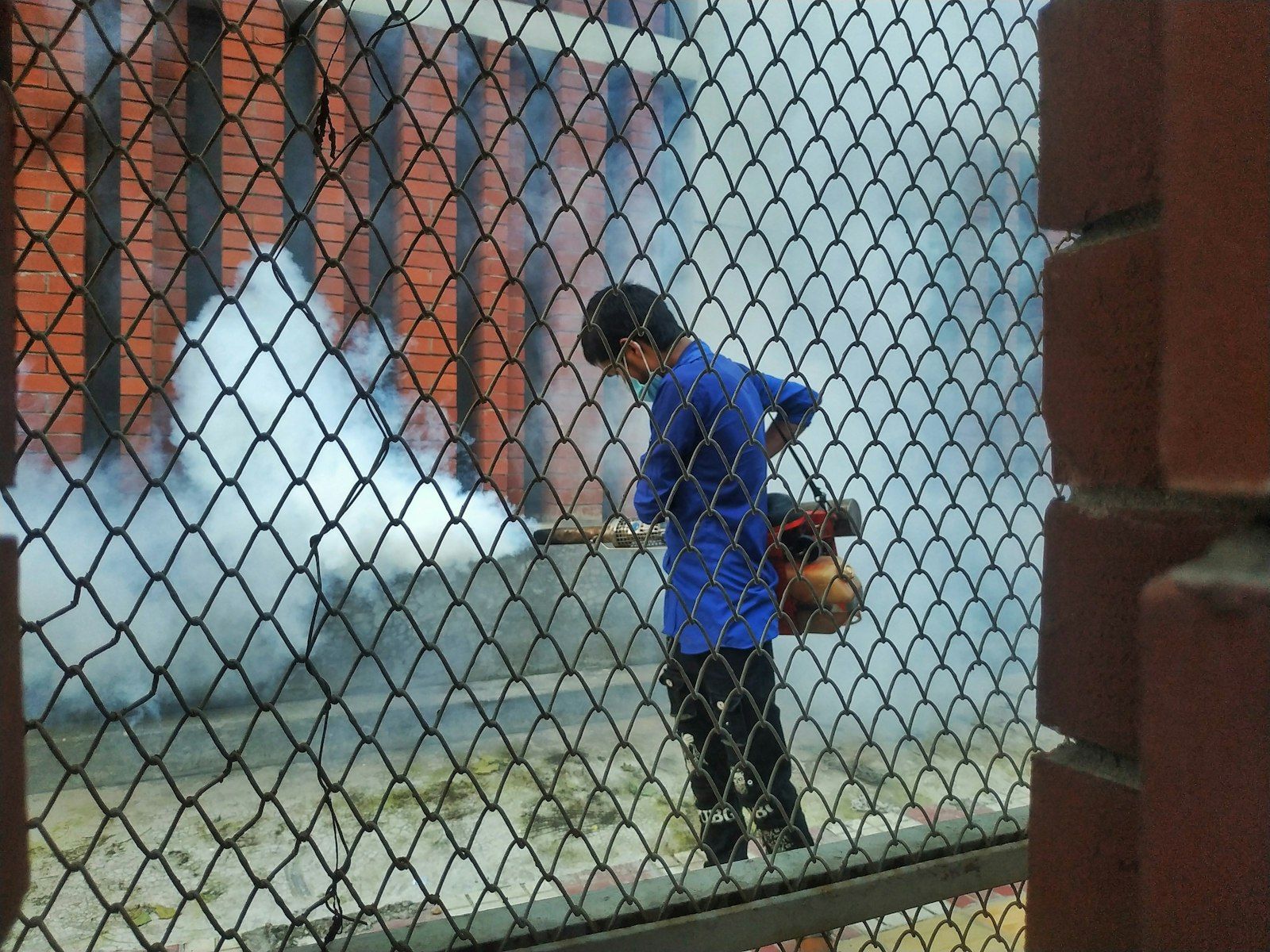
Italy's answer is a coordinated programme rather than a single measure. National human arbovirus surveillance is coordinated by the Istituto Superiore di Sanità with the Ministero della Salute, and the integrated programme combines human, veterinary and entomological surveillance. When a confirmed case appears, local health authorities target disinfestation around the site. Mosquito control in Rome, in other words, is a public and household task working in parallel, and its first lever is the elimination of breeding sites.
Greece: West Nile as an established seasonal presence
Greece is the clearest illustration of established presence in this brief. As of 22 July 2026, the National Public Health Organization (EODY) had recorded 21 locally acquired human cases for the season. Of these, 20 developed involvement of the central nervous system, such as encephalitis, meningitis or acute flaccid paralysis, while one presented with mild symptoms. No deaths had been recorded, 13 patients were in hospital, and 14 of the cases had been reported in the previous week alone. The great majority were in Attica, the region around Athens.
EODY's own assessment is the important part for framing. The agency notes that West Nile cases have recurred in Greece almost every year since 2010, which indicates that the virus has become established in the country, a pattern seen in several other European nations. On that basis, EODY treated the return of cases during the 2026 mosquito season, in historically affected areas and potentially in new ones, as both likely and expected. This is not a story of a virus reaching Greece for the first time. It is the routine, if serious, return of a resident summer pathogen, and the agency recommends personal protection against mosquito bites across the country because it cannot predict in advance which areas will be affected.
The Greek and Italian numbers also corroborate each other. The ECDC and EFSA monthly report places Italy and Greece among the countries with the highest case counts, and the national EODY figures sit within the same picture. When the pan-European surveillance system and the national agency agree, the reading is firmer.
For the wider geographic breadth, the Dutch One Health sentinel study from the same reporting family (wild foxes and stone martens in the Netherlands testing positive for West Nile and Usutu virus) shows that the mosquito-borne flavivirus system extends well beyond the Mediterranean and south-east European footprint ECDC reports in its weekly human-case tally, and that the endemic framing applies from Attica to the north-west as well.
Put the health risk in proportion
An established virus deserves attention, not alarm, and the proportions are well documented. The World Health Organization reports that about 80 per cent of West Nile infections cause no symptoms at all, and that about 1 in 150 infections becomes severe, affecting the nervous system. For the underlying distinction between a region being receptive to local transmission and one where local transmission is actually occurring, see the receptivity explainer, which sets out the four conditions that need to align before a chain of local infection can close.
The severe minority is genuinely dangerous, which is why surveillance exists. The Spallanzani review notes that fewer than 1 per cent of infections progress to the neuroinvasive form, but that this form carries a case-fatality rate as high as 17 per cent, and that no antiviral drug or human vaccine is licensed, so hospital care remains supportive. Two facts therefore hold together without cancelling each other out: most people infected with West Nile never know it, and the rare neuroinvasive form is serious. The 17 per cent figure is the fatality rate of that severe form, not of West Nile infection overall, and treating it as an overall risk would misread the data.
What households can control
The regional map and the surveillance report are not under household control. The Mosticare threat map carries the ECDC-derived country and regional counts that update through the season, so readers can follow where cases are being recorded now; the prevention list below is the household layer that does not change with the count. Breeding sites and bites often are, and the same short list applies in Rome, in Athens and anywhere with a receptive summer.
- Empty or cover standing water every week. Check plant saucers, buckets, watering cans, blocked gutters, toys, drain traps and folded covers. This is the single measure that removes mosquitoes before they can fly, and it is the first lever in Italy's national plan.
- Match protection to the biting time. Culex mosquitoes, which carry West Nile, are most active from dusk to dawn, per ECDC's West Nile fever factsheet. Tiger mosquitoes bite mainly by day, per the ECDC Aedes albopictus factsheet. Cover both windows.
- Use physical barriers. Fit intact window and door screens, and use a well-fitted mosquito net over beds, cots and daytime rest spaces.
- Use an effective repellent when exposure continues. Follow the label for DEET, picaridin or another product recommended by your public-health authority, and treat it as a supplement to a barrier rather than a replacement for one.
- Follow current local advice. A confirmed local case can change the recommended response during the season, and both ISS and EODY update their guidance as the summer develops.
No single step removes all risk. Source reduction lowers local mosquito numbers, screens and nets reduce indoor contact, and clothing and repellents add protection when people remain outdoors. Because there is no West Nile vaccine or specific antiviral, this prevention layer is the reliable one for households this season.
Medical disclaimer
This article gives general public-health information, not medical advice. Risk changes during each transmission season. Check ECDC, EODY, the ISS and your national or local health authority for current guidance. Seek medical care after mosquito exposure if you develop fever, rash, severe joint pain, confusion, neck stiffness or other worrying symptoms.
Sources cited
- ECDC, weekly surveillance of West Nile virus infections in humans in Europe, refreshed each week during the transmission season.
- EODY, Weekly Epidemiological Report for West Nile Virus, Greece, 22 July 2026.
- ISS EpiCentro, integrated West Nile and Usutu virus surveillance bulletin.
- ECDC, Aedes albopictus current known distribution: June 2025, updated 1 July 2025.
- ECDC, Public health guidance for assessing and mitigating the risk of locally acquired Aedes-borne viral diseases in the EU/EEA, 1 July 2025.
- Reviews in Medical Virology (Spallanzani Institute, Rome), West Nile neuroinvasive disease review, 2026, PMID 42431607.
- WHO, West Nile virus.
- ECDC and EFSA, Surveillance of West Nile virus infections in humans and animals in Europe, monthly report, data submitted up to 5 August 2026.
- ECDC, West Nile fever factsheet for experts.
- ECDC, Aedes albopictus factsheet for experts.
Last updated 25 July 2026.
This article is general information, not medical advice. Ask a doctor or pharmacist about your own health.