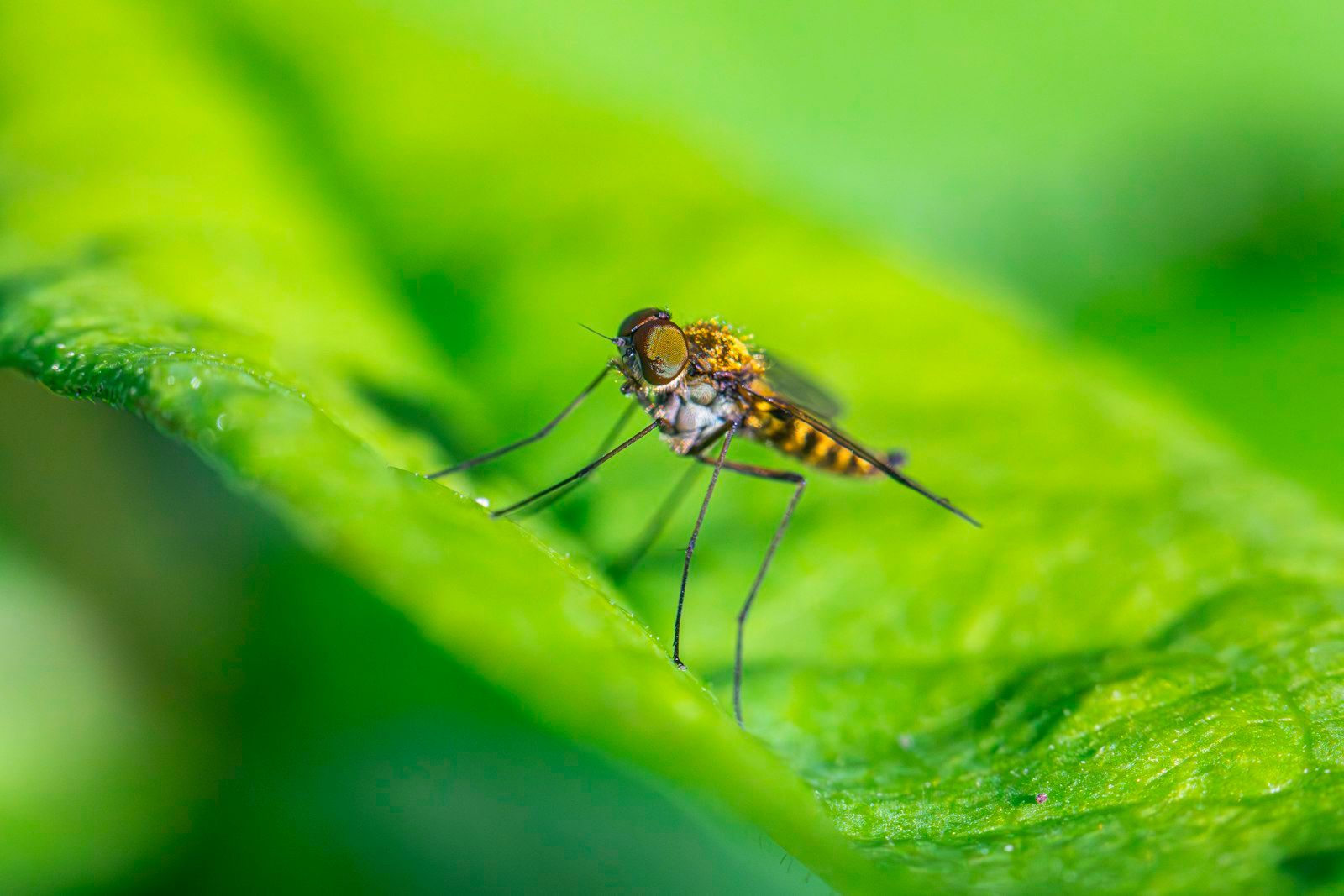
England logged 73 imported chikungunya cases between January and June 2025, mostly linked to travel to Sri Lanka, India and Mauritius. No onward transmission followed, because the vector, *Aedes albopictus*, is not established in the UK. ECDC lists it as established in France, Italy, Spain, Germany and Switzerland, and mainland France recorded 809 locally acquired cases in 2025, the largest season ECDC has recorded in the EU/EEA.
Between January and June 2025, the UK Health Security Agency recorded 73 cases of chikungunya in England. The same six months of 2024 produced 27. UKHSA reported 112 cases in 2024, nearly one and a half times the 2023 figure. Most of the patients had been to Sri Lanka, India or Mauritius. All 73 were reported in England, and most lived in London.
The pattern matters: every one of the 73 was infected overseas.
Chikungunya is an arbovirus. It does not spread person-to-person. It needs a mosquito, specifically Aedes aegypti or Aedes albopictus, the latter known to British naturalists as the Asian tiger mosquito. The mosquito takes blood from an infected human, incubates the virus for a week or so, and then bites somebody else. Without the vector in the right place at the right time, the chain breaks. Every imported case is a terminal node on the transmission graph. The patient recovers, and the virus cannot pass on once the antibodies clear it.
Aedes albopictus is not established in the UK. UKHSA says there is currently no risk of onward transmission, because the mosquito species that carry chikungunya are not established in the UK and the British climate is generally not suitable for their survival and breeding.
That will not last. The tiger mosquito has spread across Europe over the past quarter-century. ECDC lists it as established in France, Italy, Spain, Germany and Switzerland. It also reports the species in Austria, Belgium, the Netherlands and the Czech Republic, though it is not established there yet.
ECDC's data on local transmission shows what establishment can mean. In 2025, mainland France recorded 809 locally acquired chikungunya cases across eight regions and 44 municipalities. Italy recorded 384 across eight regions and 27 municipalities. The French figure is the largest single season ECDC has recorded in the EU/EEA. The vector is present in both countries. The introduction of the virus by a viraemic traveller is what starts a local cluster.
England's 73 cases in the first half of 2025 are the introduction pool. All were reported in England, with the majority in London. London's exposure reflects its volume of returning travellers from active outbreak regions. Dr Philip Veal, Consultant in Public Health at UKHSA, set out the position on 14 August 2025 with the institutional understatement of his trade. "Chikungunya can be a nasty disease and we're seeing a worrying increase in cases among travellers returning to the UK."
It is worth being clear about what "a nasty disease" means here. Death from chikungunya is rare. UKHSA says the disease can be fatal very rarely, particularly for the very young, older people and those with other illnesses. The main burden is pain. The name comes from a Kimakonde word meaning "that which bends up", a reference to the joint pain that characterises the acute phase. UKHSA says up to 12% of patients still experience joint pain three years after infection. In some cases the pain persists for months or years.
The Conversation's coverage of the 2025 data was written by Paul Hunter, Professor of Medicine at the University of East Anglia. He described the pattern in plain terms: "All of these infections were associated with travel to regions which have had ongoing outbreaks of the virus, including Sri Lanka, India and Mauritius."
In July 2025 the Joint Committee on Vaccination and Immunisation issued formal advice on chikungunya vaccines for UK travellers. Two are licensed in Britain. IXCHIQ, made by Valneva, is a single-dose live attenuated vaccine. The MHRA licensed it in February 2025 for people aged 18 and over. JCVI advises that it be offered only to immunocompetent people aged 18 to 59, and advises against use in people aged 60 and over while further safety data are gathered. Vimkunya, made by Bavarian Nordic, is a non-replicating virus-like particle vaccine, approved for people aged 12 and over. JCVI advises that it may be offered from age 12. Both are available privately from travel clinics, after an assessment by a healthcare professional. JCVI says a chikungunya vaccine may be considered for people travelling to regions with active outbreaks, for long-term or frequent travellers, and for laboratory staff working with the virus.
The Lancet Countdown on Health and Climate Change Europe 2026 reports that the average risk of dengue outbreaks across Europe increased by 297% between 2015 and 2024. That is measured against the 1981-2010 baseline. The same report tracks chikungunya, Zika and West Nile virus as separate indicators.
What an ordinary returning traveller can do about chikungunya in 2026 is not mysterious. Avoid bites in the destination country: long sleeves, long trousers, repellents (DEET, picaridin, IR3535, oil of lemon eucalyptus), permethrin-treated clothing, and a treated bed net under which to sleep. Look at the destination on the TravelHealthPro site before booking. If you are over 65, immunocompromised, pregnant, or planning extended travel to an active outbreak country, raise it with a travel clinic, and consider the vaccine. The main domestic action, for those returning, is to keep the next bite from happening. Aedes albopictus is not yet established in the UK. Even so, emptying water from saucers under flowerpots, plant pots, gutters, paddling pools, disused buckets and birdbaths each week through the warm months is what prevents the mosquito from establishing. The current absence of the vector will not last forever.
What to watch in the next year is not the case count alone. One question is whether ECDC logs any 2026 cluster that fails to close cleanly. Another is whether surveillance confirms Aedes albopictus establishment further north in Europe. A third is whether the JCVI revisits its advice once another year of European outbreak data is available. A first sustained locally transmitted chikungunya cluster in the UK would follow the pattern now visible in mainland Europe.
For now, the 2025 record is the one Dr Veal set out in August. Seventy-three patients, all infected abroad, none the source of a second case. The vector's absence did the work. Public-health planning can use the time that absence buys.
What we know
Sources cited
- UK Health Security Agency, Rise in chikungunya cases in UK travellers returning from abroad. GOV.UK news release, 14 August 2025. https://www.gov.uk/government/news/rise-in-chikungunya-cases-in-uk-travellers-returning-from-abroad
- UK Health Security Agency, What are the symptoms of the chikungunya virus and is there a vaccine? UKHSA Blog, 7 August 2025. https://ukhsa.blog.gov.uk/2025/08/07/what-are-the-symptoms-of-the-chikungunya-virus-and-is-there-a-vaccine/
- Paul Hunter, Chikungunya: what UK travellers should know about this mosquito-borne virus. The Conversation, 19 August 2025. https://theconversation.com/chikungunya-what-uk-travellers-should-know-about-this-mosquito-borne-virus-263296
- European Centre for Disease Prevention and Control, Historical data on local transmission in the EU/EEA of chikungunya virus disease. https://www.ecdc.europa.eu/en/infectious-disease-topics/chikungunya-virus-disease/surveillance-and-updates/local-transmission-previous-years
- European Centre for Disease Prevention and Control, Aedes albopictus - Factsheet for experts. https://www.ecdc.europa.eu/en/disease-vectors/facts/mosquito-factsheets/aedes-albopictus
- Joint Committee on Vaccination and Immunisation, Chikungunya vaccine in UK travellers: JCVI advice. GOV.UK publication, 16 July 2025. https://www.gov.uk/government/publications/chikungunya-vaccine-for-uk-travellers-jcvi-advice-16-july-2025/chikungunya-vaccine-in-uk-travellers-jcvi-advice
- Lancet Countdown on Health and Climate Change Europe, 2026 Report. https://lancetcountdown.org/europe/2026-report/
This article is general information, not medical advice. Ask a doctor or pharmacist about your own health.