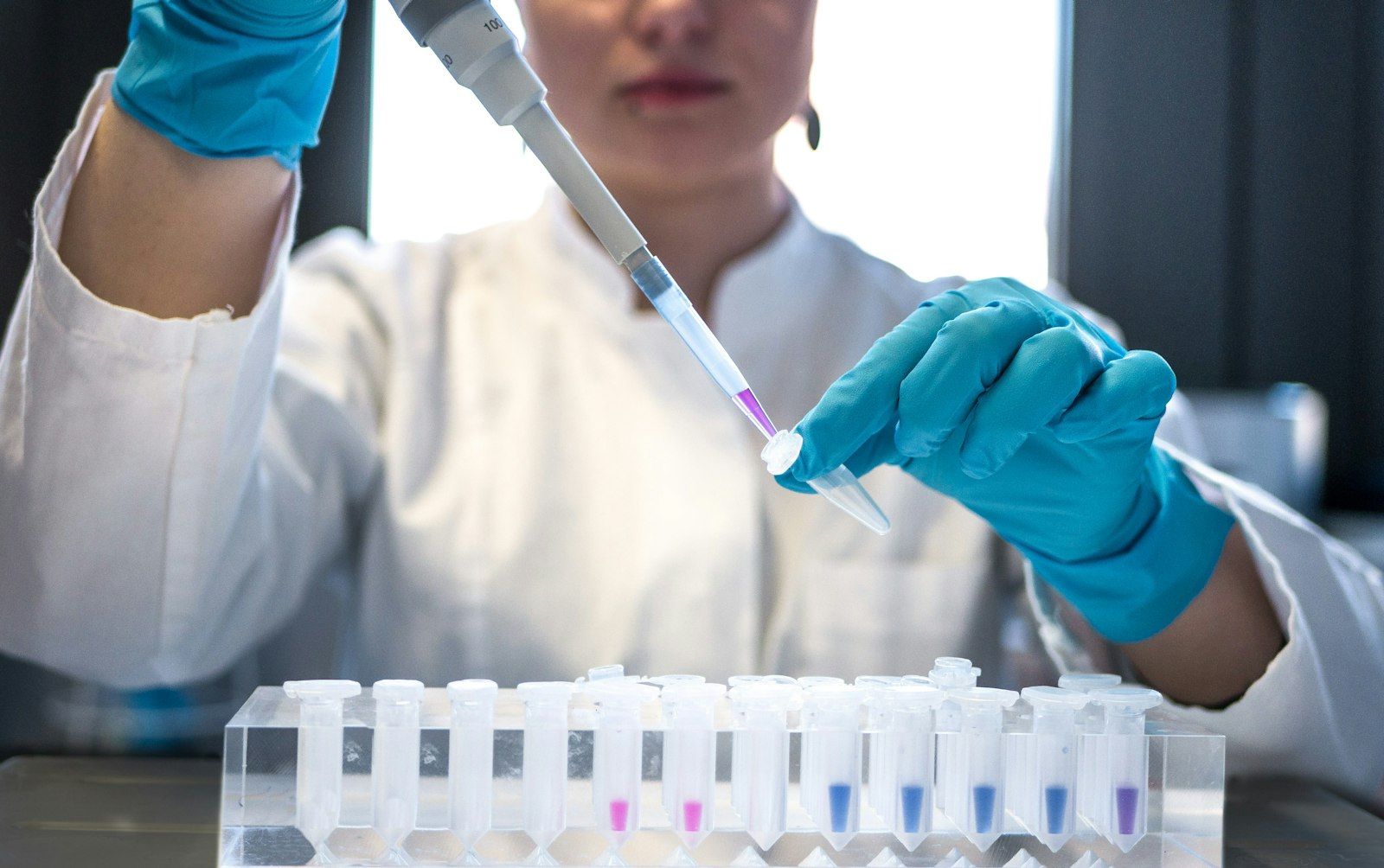
Luciano Moreira, CEO of Wolbito do Brasil and co-discoverer of *Wolbachia*-mediated dengue blocking in *Aedes aegypti*, has been named to Time's 2026 Health 100 and 100 Most Influential lists. The Curitiba biofactory he runs produces 100 million *Wolbachia*-infected mosquito eggs a week, and the country-scale operational reality behind the headline is harder than the awards-cycle story.
Vector-control is, on the whole, a field without celebrities. The work is undertaken by municipal health departments, by Fiocruz field epidemiologists, by Imperial College entomologists, by the Singapore National Environment Agency. The annual ceremonies that name the world's most influential people in health do not, as a rule, include anyone whose job description involves releasing mosquitoes for a living.
This year, one of them does. Time magazine's 2026 Health 100 list, published in early May, names Luciano Moreira, CEO of Wolbito do Brasil, former Fiocruz researcher, and one of the two scientists who co-discovered that Wolbachia bacteria block Aedes aegypti's ability to transmit dengue, as one of the year's hundred most influential figures in global health. Time then named him again, separately, on its 2026 Most Influential People list. Nature had already placed him in its top-ten scientists of 2025. The Brazilian press has, in roughly the same window, started calling him "Dr Wolbachia."
For Mosticare's readers, many of whom have read in this publication and elsewhere that Wolbachia is "the most promising natural method for dengue control" without ever quite hearing about the people scaling it, this is the moment to name the person behind the programme, and to be honest about what is and is not working at the scale he is now trying to operate at.
What Moreira has actually built
Moreira introduced the World Mosquito Program to Brazil in 2012, working out of Fiocruz, the federal public-health institute founded in 1900 that anchors Brazilian research on tropical disease. The method is well-rehearsed by now: rear Aedes aegypti in captivity, infect them with a strain of Wolbachia pipientis, a bacterium found naturally in roughly two-thirds of insect species but not, by default, in Aedes aegypti, and release the infected mosquitoes into urban areas. Wolbachia spreads through the wild mosquito population via maternal inheritance and, once established, dramatically reduces the population's competence to transmit dengue, Zika, chikungunya, and yellow fever. It is not a vaccine. It is not a pesticide. It is an inoculation of the mosquito population itself.
The first Brazilian deployments, in Niterói and Rio de Janeiro, ran across the late 2010s. The early evidence was promising; the operational learning curve was steep. By the early 2020s, the WMP-Brazil programme had grown to protect roughly five million people across eight cities. In July 2023, Moreira, the WMP, Fiocruz, and the Institute of Molecular Biology of Paraná (IBMP) signed a joint venture into Wolbito do Brasil to take the work out of the academic-pilot stage and into industrial deployment. In July 2025, Wolbito do Brasil opened a 3,500-square-metre biofactory in Curitiba's southern industrial park, the largest Aedes aegypti breeding facility in the world. The opening ceremony brought Brazil's Health Minister Alexandre Padilha and WMP founder Scott O'Neill together with Moreira to inaugurate the line.
The Curitiba facility's headline number is 100 million Wolbachia-infected mosquito eggs per week, with annual output projected at roughly five billion mosquitoes. The production team, about thirty-two biologists, pharmacists, veterinarians, and biomedical professionals led by biologist Antonio Brandão, is, by global vector-control standards, a remarkably small group operating a remarkably large machine. From the outside, the building looks like an ordinary office. Inside, it is the closest thing the world has to industrial-scale public-health biology.
The numbers that justify the prize
The programme's evidence base now runs across both observational rollouts and a city-scale randomised controlled trial.
In Niterói, the first Brazilian municipality fully protected by Wolbito releases, dengue case counts dropped 89% after coverage was established, a figure measured against the city's pre-deployment baseline and consistent with the WMP's prior Indonesian and Vietnamese results. In Campo Grande, a more recent observational analysis published in 2026 found a 63% reduction. In Belo Horizonte, a randomised controlled trial designed to settle the question of effect-size at population scale is in its final analysis phase, with results expected in 2026.
Across the WMP's worldwide programmes, the cleanest pooled estimate of dengue-incidence reduction following established Wolbachia coverage remains in the 70-80% range; in Aedes aegypti abundance, reductions of roughly 75-80% have been observed at the city-scale Singapore trial referenced in our 26 May coverage of the National Environment Agency's expansion. Brazil's deployments now protect more than five million people across sixteen Brazilian cities, six of them currently in active treatment from Curitiba: Joinville, Blumenau, and Balneário Camboriú in Santa Catarina, and Brasília, Valparaíso de Goiás, and Luziânia in the central federal district.
The expansion plan published with the Time100 Health profile is ambitious: 54 new municipalities in 2026 alone, bringing the total to roughly 70, with a stated Ministry of Health target of protecting 140 million Brazilians across 40 priority high-dengue municipalities over the coming years. That target, if reached, would make Brazil the first country in the world to deploy a biological vector-control intervention at the scale of an entire dengue-endemic population.
The honest version
Awards lists tell a particular kind of story. They are not the only story.
A piece published in early May 2026 in Phys.org carried a quieter line worth attending to: in operational reality, "the factory had to scale back production because demand from the Health Ministry wasn't that high." The Curitiba biofactory's 100-million-egg-a-week ceiling is, for the moment, larger than the rate at which Brazilian municipalities are actually requesting and absorbing releases. Rio de Janeiro's deployment has experienced serious institutional coordination flaws; local health teams in some areas have used larvicides that damage Wolbachia-infected mosquitoes alongside wild ones; favela security conditions have made some scheduled releases impossible to execute on plan. Health Minister Padilha himself has listed "technical, operational, logistical, and financial" constraints on the rollout. More than 200 million Brazilians remain at risk, and the country still recorded more than 6,000 dengue deaths in the 2024 outbreak year.
Moreira's own framing of the situation is the right one: "a decisive moment to expand in Brazil." The bottleneck is no longer evidence. It is no longer production capacity. It is municipal-level coordination, integrated vector-control discipline, and the institutional patience to let a biological intervention reach the cross-generational equilibrium where its long-term cost-effectiveness is realised. That is a different kind of problem, and a harder one, than the problem of proving the method works.
For Mosticare's readers, the operational reality matters as much as the headline number. The method works at the city scale where it has been deployed with discipline. It does not yet work at the national scale at which Brazil is now trying to deploy it. Closing that gap, from a city-by-city success story to a country-scale public-health intervention, is the work Moreira and his Wolbito team have now committed to, and it is the work that the next three to five years of Brazilian dengue data will measure.
What this means for the longer arc
The personality-news hook of a Time100 spot will fade in a week. The structural facts will not. There is now a country in which a peer-reviewed, biologically-stable, ethically-uncontroversial vector-control method is being deployed by a federally-backed joint venture out of the world's largest mosquito factory, led by a CEO whose face the science press now recognises. None of that was true five years ago. The combination of all of it being true at once is what makes the editorial timing right.
The piece that has not yet been written, the one Mosticare and the rest of the global-health press will be tracking through 2027 and 2028, is whether the Brazilian model can be exported. Indonesia, Vietnam, Colombia, and Mexico all have parallel WMP programmes at various scales. Whether the Curitiba-style production-and-deployment combine can be replicated, and whether the operational coordination problems Brazil is currently working through can be solved cheaply enough to make the model viable in lower-income endemic settings, is the open question. Moreira's Time100 honour is, in that sense, less an arrival than the visible mid-point of a much longer climb.
For now, the field has its first household-name vector-control CEO. The mosquitoes themselves remain anonymous. That is, on balance, a reasonable division of labour.
Sources cited
- Time, Time100 Health 2026, Luciano Moreira profile, May 2026, https://time.com/collections/time100-health-2026/7362466/luciano-moreira/
- Time, 100 Most Influential People of 2026, Luciano Moreira entry, https://time.com/collection/100-most-influential-people/2026/luciano-moreira/
- World Mosquito Program, Luciano Moreira Q&A, Scaling Wolbachia for dengue control in Brazil, https://www.worldmosquitoprogram.org/Luciano_Moreira-Scaling_Wolbachia_for_Dengue_Control_in_Brazil
- World Mosquito Program, Meet the faces behind the world's largest mosquito factory, 5 March 2026, https://www.worldmosquitoprogram.org/news-stories/meet-faces-behind-worlds-largest-mosquito-factory
- Phys.org, Dengue outpaces virus-blocking mosquitoes in Brazil, 12 May 2026, https://phys.org/news/2026-05-dengue-outpaces-virus-blocking-mosquitoes.html
- World Mosquito Program, World's Largest Wolbachia Biofactory Opens in Brazil, July 2025, https://www.worldmosquitoprogram.org/news-stories/brazil-opens-worlds-largest-mosquito-biofactory