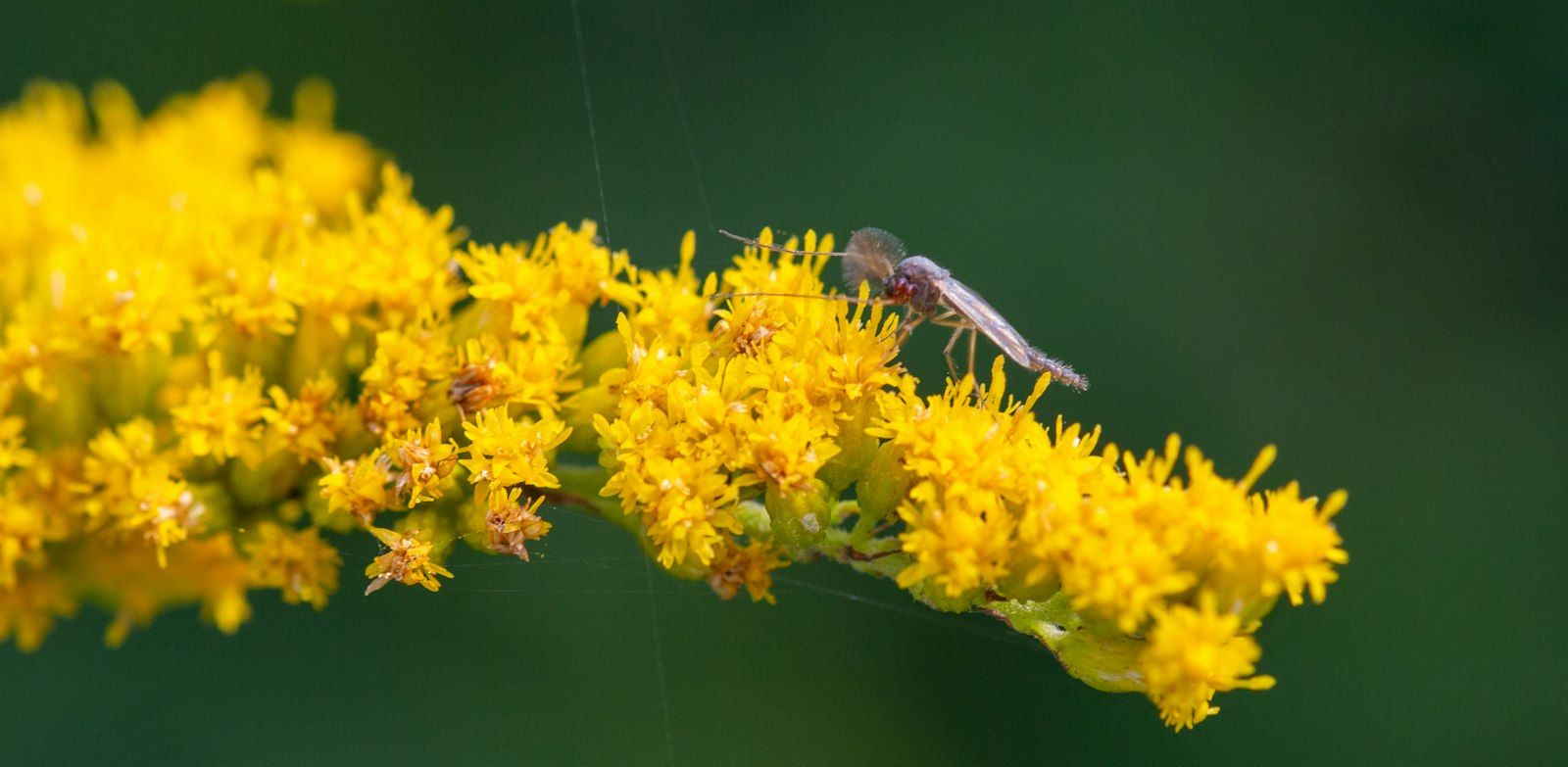
Two invasive mosquitoes, Aedes japonicus and Aedes koreicus, have spread across Europe since 2000. Learn where they live, how they bite, and what public health evidence shows.
Two quiet arrivals that rarely make headlines
Most public attention goes to the tiger mosquito. Two close relatives spread more quietly: Aedes japonicus, the Asian bush mosquito, and Aedes koreicus, the Korean bush mosquito. Both are container breeders with black and white patterns, and both have gained ground in Europe since 2000. The European Centre for Disease Prevention and Control describes Aedes japonicus as endemic to Korea, Japan, Taiwan, southern China and Russia. It reached Normandy in northern France in 2000. Aedes koreicus is endemic to Japan, north-eastern China, the Republic of Korea and parts of Russia. It appeared in Belgium in 2008. Neither species dominates the news, yet each has changed the mosquito map of several countries in a single generation.
Why these mosquitoes travel so well
Both species lay eggs that resist freezing and drying out. The eggs overwinter in a dormant state called diapause and hatch when conditions improve. This trait lets the insects survive temperate winters and travel long distances inside infested containers. Aedes japonicus larvae develop in rock pools, tyres, bird baths, milk cartons, buckets and tree holes. It prefers rock pools and cooler shaded water in summer. Aedes koreicus breeds in garden ponds, water drums, tree holes and stone cavities. Its adults appear from May to October, with a summer peak. The ECDC notes that Aedes koreicus tolerates cold well and can survive northern European winters, as larvae collected in early spring showed. The Dutch population stayed inside Lelystad, and a south eastern group spanned Austria, Slovenia, Italy, Croatia and Hungary, the review adds.
How Aedes japonicus spread across the continent
Koban, Kampen, Scheuch and colleagues reviewed the European situation in Parasites and Vectors in 2019, seventeen years after the first detection. By late 2017 the species was established in ten countries and still spreading in most of them. Detections included France in 2000, Belgium in 2002, Switzerland and Germany in 2008, Austria and Slovenia in 2011, Hungary and the Netherlands in 2012, Italy and Croatia from 2013, and Liechtenstein in 2015. After mergers and an eradication in Belgium, four populations persisted. The largest spanned western Germany into France, Switzerland, Austria and Liechtenstein. One was restricted to Lelystad in the Netherlands. Population genetics suggest at least two separate introductions since 2000. Adults live from May to October, bite people and animals by day and night, and carry cold hardy eggs through winter.
How Aedes koreicus moved from Belgium to the east
The ECDC records the first European finding of Aedes koreicus in Belgium in 2008. Specimens appeared within a six square kilometre area concentrated in an industrial zone. Italy reported it in 2011 during surveillance for Aedes albopictus, in Belluno province in Veneto. At the time, the species did not seem to spread from the Belgian site. Ganassi, De Cristofaro, Di Criscio and colleagues reviewed the evidence in Frontiers in Microbiology in 2022. By 2021 it had spread within Italy to Veneto, Trentino Alto Adige, Friuli Venezia Giulia, Lombardia and Liguria. The review also documents establishment in Germany, Hungary, Switzerland near the Italian border, Slovenia, European Russia, Austria, Crimea and the Netherlands, first found there in 2021.
What the laboratory evidence says about disease
Laboratory studies show that both species can carry pathogens. Aedes japonicus is competent for West Nile virus, Japanese encephalitis virus, La Crosse virus, Saint Louis encephalitis virus, Eastern equine encephalitis virus, chikungunya, dengue and Rift Valley fever virus. It has also tested positive for West Nile virus several times in the United States. For Aedes koreicus, experimental transmission of Dirofilaria immitis to dogs has been proven. Chikungunya transmission depends on temperature, with an infection rate of 68.2 percent at about 27 degrees Celsius but only 17.6 percent at about 24 degrees. Zika competence is low, at 4.7 percent. No West Nile virus transmission was detected at either temperature in those trials. The review notes that no West Nile virus transmission was detected in those laboratory trials at either temperature.
Field transmission is still rare or unproven
Laboratory competence is not the same as disease spread. Koban and colleagues note there are no confirmed reports of pathogen transmission by Aedes japonicus in the field. In parts of Russia, Aedes koreicus is suspected to transmit Japanese encephalitis virus in the field, but the ECDC describes this as a suspicion, not a confirmed role. Ganassi and colleagues conclude that involvement of Aedes koreicus in pathogen spread cannot be excluded with absolute certainty. That careful wording matters. These mosquitoes are a reason for monitoring, not for alarm. No biting nuisance had been reported in Belgium or Italy at the time of the ECDC factsheet, and no specific control guidance existed for Aedes koreicus. Aedes koreicus larvae were collected in early spring in northern Europe, which supports the evidence that the species survives cold winters there.
What monitoring looks like and what residents can do
Koban and colleagues reviewed monitoring methods: larval surveys of water containers in cemeteries and allotment gardens, adult trapping, ovitrapping, and citizen science schemes such as the German Mueckenatlas. Their conclusion was blunt. Eradication of Aedes japonicus no longer seems feasible, so surveillance should continue. For residents, the practical lesson is simple. Tip out standing water from buckets, tyres, bird baths and water drums. Keep garden ponds and stone cavities in mind. Physical barriers work when correctly specified, intact and correctly used. Aedes japonicus blood meal analysis found 52 percent of meals from white tailed deer and 36 percent from humans, so the species bites people as well as wildlife. Report unusual biting to local surveillance schemes.
Sources
- Aedes japonicus, factsheet for experts: European Centre for Disease Prevention and Control
- Aedes koreicus, factsheet for experts: European Centre for Disease Prevention and Control
- The Asian bush mosquito Aedes japonicus japonicus (Diptera: Culicidae) in Europe, 17 years after its first detection, with a focus on monitoring methods: Parasites and Vectors
- The new invasive mosquito species Aedes koreicus as vector-borne diseases in the European area, a focus on Italian region: What we know from the scientific literature: Frontiers in Microbiology