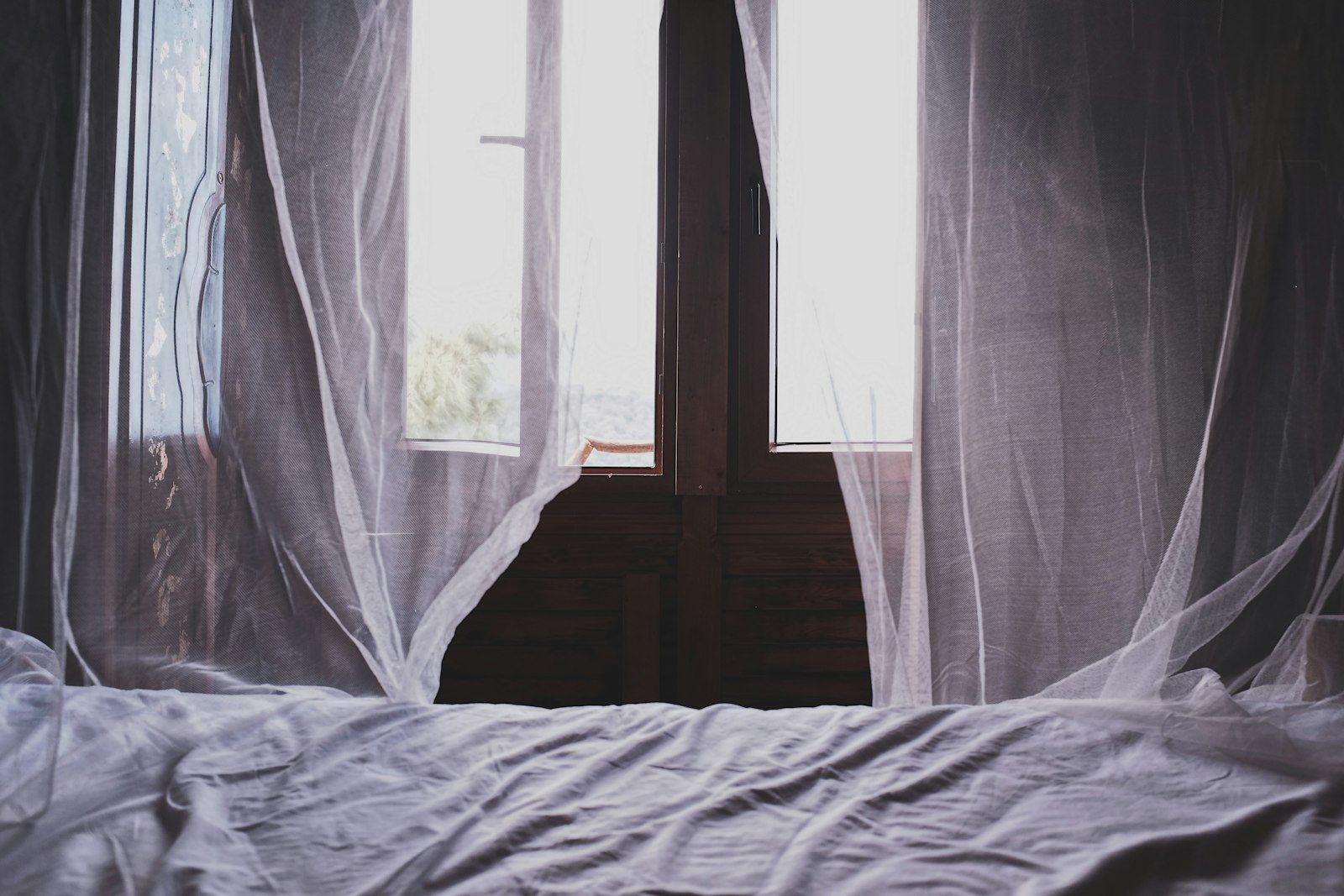
How to choose a bed net that suits your room, hang it so gaps stay closed, and care for it so protection lasts.
What a bed net actually does
A bed net is a physical barrier that stops mosquitoes reaching you while you sleep. Physical barriers count as real protection when they are correctly specified, intact and correctly used, and a net fails on any of those three points. Mosquitoes that carry malaria tend to bite at night, so the hours you spend asleep matter. The NHS advises people travelling to areas where malaria is found to sleep under mosquito nets treated with insecticide, alongside repellent and covering clothing in the evening. That advice treats the net as one layer of a plan, not a substitute for prescribed antimalarial medicine. Understanding the mechanism helps you judge a net honestly. The fabric blocks access, the mesh size decides which insects get through, and the shape decides whether gaps appear where the net meets the mattress.
Mesh size and insecticide treatment
Mesh size controls what the barrier excludes. A fine mesh keeps out small biting insects as well as mosquitoes, but it also cuts airflow and makes the air under the net warmer. A coarser mesh feels cooler and lets more air move, yet it may admit insects that a fine mesh would stop. Insecticide treatment adds a second mechanism. An untreated net blocks bites first, but a treated net is designed to kill or repel insects that land on the fabric before they find a way in. The NHS specifically advises nets treated with insecticide for malaria prevention, so treat treatment as part of the specification when you travel. Check any label or packaging for the treatment claim, and ask a pharmacist or travel clinic if a net's protection is unclear before you rely on it.
Shapes, frames and room fit
Net shapes are practical choices, not status symbols. A rectangular box net needs a frame or four fixing points and gives steady headroom, which suits a fixed bed in a room you use often. A conical net hangs from a single point, so it tolerates uneven ceilings and rooms where drilling four anchors is impossible. Wedge and travel nets fold small and suit short stays. Measure the bed before you buy, then measure the space above it. A treated net is designed to kill or repel insects that land on the fabric, so keep the sides away from your body. Check the height between the mattress and the hanging point, and check whether a frame, hook or ceiling anchor is included or sold separately.
Hanging a net without gaps
Hanging decides whether the barrier stays closed. Fix the anchor securely first, because a net that drops at night leaves you exposed. Aim to tuck the net's lower edge under the mattress on all sides, so the fabric forms a continuous skirt with no opening at floor level. If your bed has no mattress overhang, use a frame that closes around the base or a net designed to be tucked. Keep the net clear of bedside furniture, lamps and power cables so nothing pulls a gap open. Check the entry point you use each night and close it properly afterwards. Before sleep, walk around the bed and look for holes, split seams, and fabric gathered on one side. Inspect the net regularly for small holes, and mend them before they grow.
Caring for the fabric
Care keeps the barrier intact and the treatment working. Wash a net gently, following the maker's instructions on the label, and avoid harsh products that may damage the fibres or the treatment. Inspect the net regularly for small holes, and mend them before they grow. Patching with a suitable repair material is quicker than replacing a whole net. Store a net dry and away from damp, because mould weakens fabric and makes the net unpleasant to use. When you fold a travel net, avoid creasing the same line repeatedly, since repeated creases wear thin. Keep the net away from naked flames and heat sources. If the fabric feels brittle, or the mesh has stretched so far that holes open, replace the net rather than trusting a weakened barrier.
Nets alongside other precautions
A net protects only the sleeping hours and only the bed it covers. The NHS advises using insect repellent on your skin that is 50% DEET-based, wearing long-sleeved clothing and trousers in the evening when mosquitoes are most active, and taking any prescribed antimalarial medicine. Treat these as layers that work together. A net over a bed does not protect a child playing outside at dusk, and it does not protect anyone sitting in a room after waking. If you travel with others, check that every bed in the room has a net that closes. For malaria, the NHS states that symptoms usually appear between 7 and 18 days after an infected bite, though they can take months, rarely years. Malaria is an emergency that needs quick treatment.
Planning before you travel
Plan before departure rather than on arrival. The NHS advises getting advice from a GP, nurse, pharmacist or travel clinic before travelling to an area where malaria is found, ideally at least 4 to 6 weeks ahead, though last-minute advice is still possible. Ask about the net you need, the repellent and the medicine together, so the plan fits your destination and your health. The UK Government's foreign travel advice service lets you search guidance by country or territory, with 226 listed, covering health risks among other topics. Combine that country-level context with clinical advice. No single measure removes all risk, and honest prevention means layering measures that each work as specified, stay intact and are used correctly, including every night you sleep in a risk area.
Sources
- Malaria - NHS: National Health Service (England)
- Foreign travel advice - GOV.UK: UK Government
This article is general information, not medical advice. Ask a doctor or pharmacist about your own health.