What biting midges are, how their bites differ from mosquito bites, and the practical barrier, repellent and aftercare steps that reduce the risk.
What biting midges are
Biting midges are small flies in the family Ceratopogonidae, and many people in Europe know them by the German name Kriebelmücken. They are not mosquitoes, though the two are often confused. The European Centre for Disease Prevention and Control publishes vector factsheets that cover mosquitoes, ticks, fleas, lice and phlebotomine sand flies, and notes that sand flies are vectors of human and canine leishmaniasis. Biting midges belong to a separate group again, and their importance to public health rests mainly on the irritation their bites cause rather than on any single named disease. Describing them accurately matters, because fear-driven folk remedies spread faster than correct information. Most people who are bitten experience local discomfort that settles in a few days.
Why vector bites are a public health topic
Health agencies treat biting insects as a public health matter because some of them transmit pathogens. Mosquitoes, ticks and fleas that spread germs are called vectors, and a person bitten by a vector who then becomes unwell may have a vector-borne disease, according to the US Centers for Disease Control and Prevention. That same source reports that cases have risen significantly since 2004, with more than one million cases reported between 2001 and 2023 in the United States. The World Health Organization states that vector-borne diseases account for more than 17% of all infectious diseases and cause more than 700,000 deaths each year, and that they can be caused by parasites, bacteria or viruses. These figures describe vector-borne disease generally, not biting midges specifically.
How to recognise a bite
A biting midge bite usually produces a small, itchy red spot soon after the insect feeds, often on exposed skin such as the face, neck, wrists and ankles. Because midges are tiny, many people never see the insect itself, only the after-effect. The itch tends to be intense, and clusters of bites can appear when several insects settle at once. The CDC describes using insect repellent as the best way to prevent bites and stresses that everyone can take steps to prevent mosquito and tick bites. Its list of people at increased risk includes children, older adults, dog owners, outdoor workers, outdoor enthusiasts and people with weakened immune systems. Those groups should take bite avoidance seriously rather than dismiss small insects.
Barriers that keep midges off
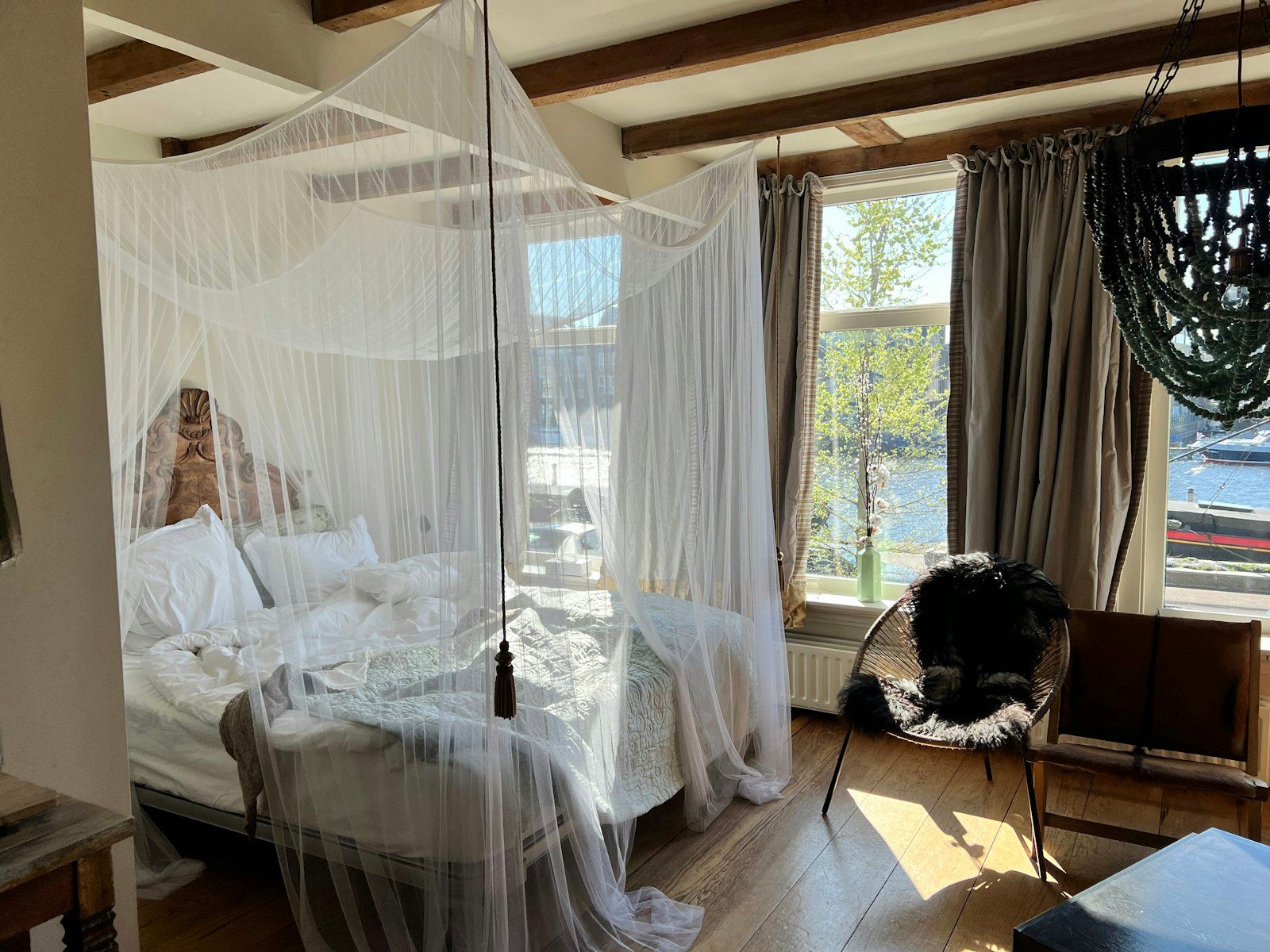
Physical barriers are real protection when they are correctly specified, intact and correctly used. The World Health Organization lists window and door screens and air conditioning as measures that reduce the risk of mosquitoes coming into contact with household members. It also notes that mosquito nets provide additional protection to people sleeping during the day. Food-grade fine mesh offers a practical principle for biting midges, which are small enough to pass through coarse screening. The key requirement is that a barrier must be fine enough to block the insect, with no gaps at frames, sills or ventilation openings. A torn or loosely fitted screen gives partial protection only, and mending it is a cheaper step than any purchased product.
Repellents and household measures
The CDC states plainly that using insect repellent is the best way to prevent bites, and the WHO adds that household insecticide aerosols, mosquito coils or other insecticide vaporizers may reduce biting activity. Read the label and follow it, because household insecticide products are not designed for direct application to skin. Apply skin repellents to uncovered areas only, keep them away from the eyes and mouth, and wash treated skin when you return indoors. Reapply according to the product instructions rather than by guesswork. Evidence for repellents refers to biting insects and vectors generally, not to biting midges alone, so treat any claim of specific midge efficacy with caution. Repellent is one layer of protection, not a licence to sit among insects.
After a bite: sensible first steps
Most biting midge bites need no treatment beyond comfort measures. Keep the area clean, avoid scratching, and trim nails if a child cannot resist rubbing. Scratching broken skin creates an opening for bacteria, which is a common reason a minor bite becomes a problem. Wash the area with soap and water, and use a cold compress to ease swelling and itch. Watch for spreading redness, increasing pain, pus or fever, and seek medical advice if any of these appear. The WHO notes that vectors are living organisms that transmit infectious pathogens between humans, or from animals to humans, and that many are bloodsucking insects. That broader context is why bites deserve attention rather than panic.
Reducing risk without fear
The Foundation informs and never sells, so this guidance names no product and no shop. Reduce exposure by covering arms and legs, choosing fine mesh when screening sleeping spaces, and using repellent on exposed skin as instructed. The CDC notes that cases of vector-borne diseases have increased significantly since 2004, which is a reason for sensible caution, not alarm. Biting midges are chiefly a nuisance to most people, and serious outcomes are uncommon. The WHO estimate that vector-borne diseases cause more than 700,000 deaths a year describes all such diseases worldwide, including those carried by mosquitoes, ticks and sand flies. Treat each measure as modest, cumulative protection, and treat a bad afternoon of bites as uncomfortable rather than catastrophic.
Sources
- Factsheets about disease vectors: European Centre for Disease Prevention and Control
- About Vector-Borne Diseases | Vector-Borne Diseases | CDC: US Centers for Disease Control and Prevention
- Vector-borne diseases: World Health Organization
This article is general information, not medical advice. Ask a doctor or pharmacist about your own health.