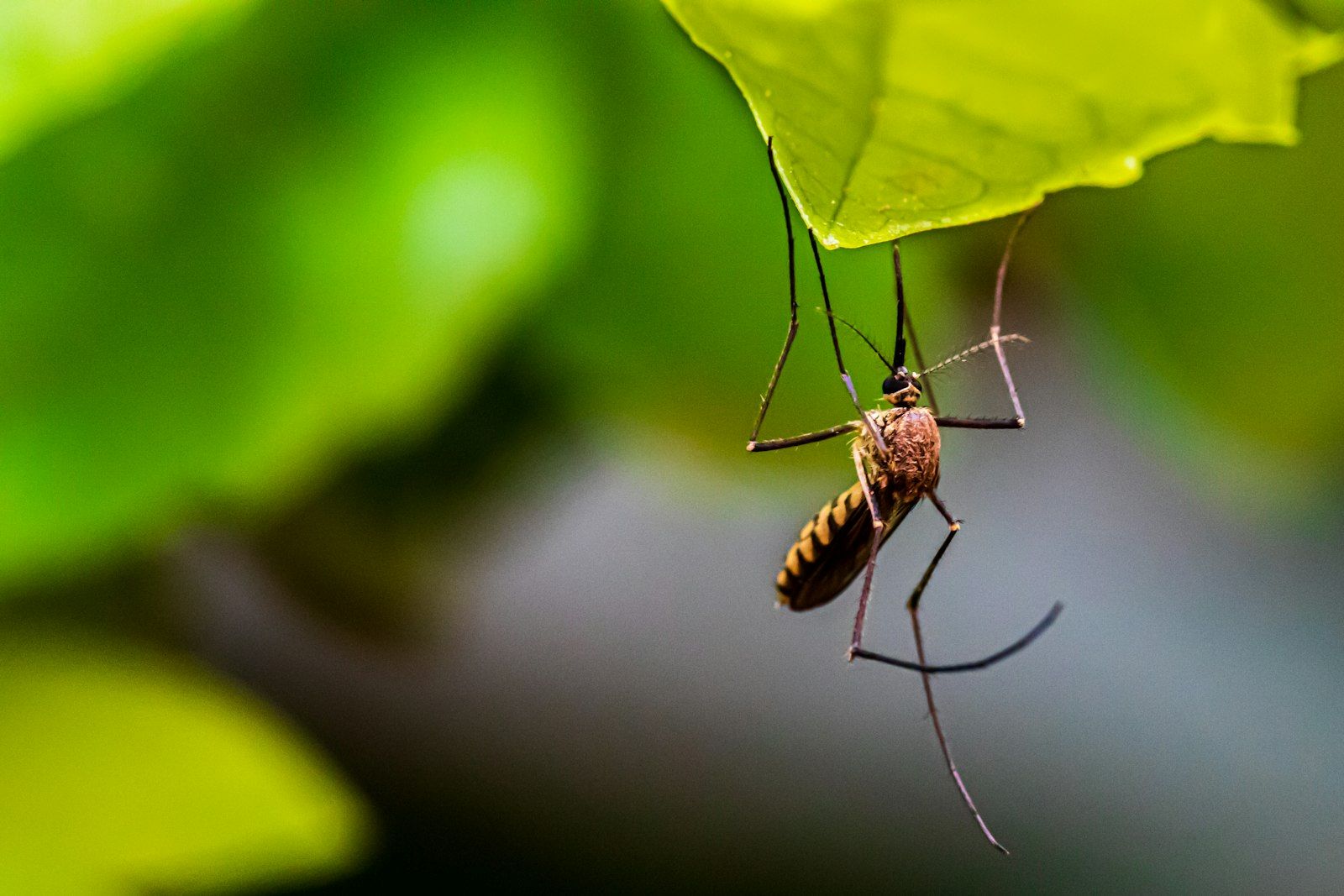
Insect Écran's 50% DEET *Zones Infestées* spray won France's 'Meilleur Produit Pharma 2026' consumer survey in the insect-repellent category. The result is a useful signpost for how French pharmacy shoppers are choosing their repellents, and where that diverges from advice elsewhere in Europe, where icaridin at 20% has been the first-line pharmacy recommendation for the past decade.
In May 2026, the French dermo-cosmetics consumer survey programme "Meilleur Produit Pharma" published its 2026 winners. In the insect repellent category, the result was a 50% DEET pocket spray, Insect Écran's Zones Infestées, marketed for "infested zones" and "particularly effective against the tiger mosquito", claimed to deliver up to 16 hours of mosquito protection with two daily applications.
For anyone who has spent time inside the European repellent industry over the past five years, the headline is worth a small double-take. DEET at 50% remains a perfectly legal, fully approved, widely sold active ingredient in France. It is also the highest concentration that some other European pharmacy chains will routinely recommend to a customer, and a higher concentration than several public-health agencies elsewhere on the continent typically suggest as a first-line option. That a 50% DEET formulation is winning consumer awards in 2026 is not surprising in isolation. It is interesting in context.
What Actually Won the Award
The "Meilleur Produit Pharma" programme is a Biotopia-organised consumer survey, not a public-sector accreditation. Between March and September 2025, 100 French panellists tested products across pharmacy categories, sunscreen, oral care, joint supplements, repellents, and rated them at 16/20 or above to qualify. Zones Infestées won in the insect repellent class.
The formulation, made by Coopération Pharmaceutique Française (Cooper) in Melun, contains 50% DEET (N,N-diethyl-meta-toluamide). Cooper claims up to 16 hours of mosquito and sandfly protection when applied twice daily, and up to 14 hours against ticks. Single-application protection is stated as 8 hours for mosquitoes and 7 hours for ticks. The label specifically targets Aedes albopictus, the tiger mosquito, which is now established across 83 of the 96 French metropolitan départements and produced 809 autochthonous chikungunya cases in mainland France during 2025.
The product is pharmacy-only. The label carries the standard French biocidal warning, "Utilisez les biocides avec précaution" (use biocides with care), and is sold in 50 ml and 100 ml formats.
Why French Pharmacy Shoppers Are Reaching for High DEET
Several reasons line up.
The French market has lived with established Aedes albopictus longer than most of its neighbours. The tiger mosquito first appeared in Menton in 2004 and has been spreading north and west ever since. By 2025, autochthonous chikungunya cases in Provence had jumped an order of magnitude over the prior year. French pharmacists are now routinely answering questions from customers about transmission, not theoretical risk. In that setting, the highest-concentration repellent on the shelf carries an obvious allure: it lasts longer, it works against the species the customer is anxious about, and the prescriber feels covered.
There is also a pharmacy-channel structural reason. Insect Écran is a Cooper brand, marketed almost exclusively through pharmacies rather than supermarkets. That channel skews toward customers who are willing to pay a premium for a recommendation from a professional, and the professional rewards the customer with a strong, specific product. The 50% DEET formulation fits the channel logic: a clear, decisive answer to a clear, decisive question.
And the 16-hour-with-two-applications claim sits at the upper end of what manufacturers say their formulations achieve. Independent verification of any DEET formulation's protection time depends heavily on the test protocol; the variance between 6, 8 and 12 hours of protection from a 30-50% DEET application is determined as much by humidity, sweating and clothing as by the chemistry. But on the box, "up to 16 hours" reads as decisive.
Why the European Drift Is the Other Way
Most public-health guidance in Europe has, over the past decade, moved toward concentrating on icaridin (picaridin) at 20-25% as the first-line pharmacy recommendation, with DEET reserved for higher-risk travel use or specifically high-pressure environments. This is not a regulatory ban. It is a soft consensus, reflecting three things:
The first is the consistent finding that icaridin at 20% provides protection durations broadly comparable to DEET at 20-30% in most field conditions, with a milder skin and plastics profile. ECDC and several national pharmacy guidance documents reflect this.
The second is paediatric and pregnancy advice. Many European guidelines limit DEET to ≤30% for children over two years and pregnant women, where icaridin at 20% is allowed without those restrictions. A pharmacy shelf that mixes 30% DEET for adults with 20% icaridin for families maps onto that guidance cleanly. A 50% DEET pocket spray is, in that framework, a specialist tool.
The third is consumer comfort. DEET at higher concentrations is well known to degrade certain plastics, irritate sensitive skin, and produce a residue some users find uncomfortable. Icaridin formulations are less aggressive on both fronts.
France is not breaking from any of this in regulatory terms. DEET remains approved up to 50% under the EU Biocidal Products Regulation, ANSES has not flagged the active ingredient, and several European national agencies still endorse DEET at higher concentrations for travellers to tropical destinations. The French pharmacy shopper is making a reasonable choice. They are simply making it more decisively, and at a higher dose, than the average European pharmacy shopper currently does.
That divergence is the genuinely interesting market signal. A Zones Infestées award in 2026 says: when the threat is local, when the species is named, and when the channel is the pharmacist, French consumers will reach past the gentler chemistry for the higher dose.
What This Means for the Wider Repellent Market
The market signal is worth reading plainly. Icaridin at 20% and a 50% DEET spray answer different questions: one is a general-use, family-friendly option, the other a high-concentration formulation for named, high-pressure exposure. Perceived threat level shapes which one a shopper reaches for, and as Aedes albopictus and locally transmitted chikungunya spread further across southern Europe, tolerance for higher-active formulations tends to rise with it.
For the public, the reading is plainer still. A 50% DEET formulation suits specific high-pressure situations: biting at dusk in Aedes albopictus-infested zones, fieldwork, or travel to dengue-endemic regions. It is more concentration than a routine evening in the garden calls for. The protection-time numbers are not free; the chemistry, however well-tolerated, is still a fairly powerful neuro-active compound applied to skin. Higher concentrations match higher-risk settings, while milder actives or physical barriers such as nets, screens and light clothing cover everyday, lower-risk exposure.
What we know
Sources Cited
- Insect Écran. Zones Infestées product page, 2026: https://www.insectecran.com/product/zones-infestees
- European Centre for Disease Prevention and Control. Aedes albopictus, Factsheet for experts and personal protective measures: https://www.ecdc.europa.eu/en/disease-vectors/facts/mosquito-factsheets/aedes-albopictus
- US EPA. Skin-Applied Repellent Ingredients: https://www.epa.gov/insect-repellents/skin-applied-repellent-ingredients