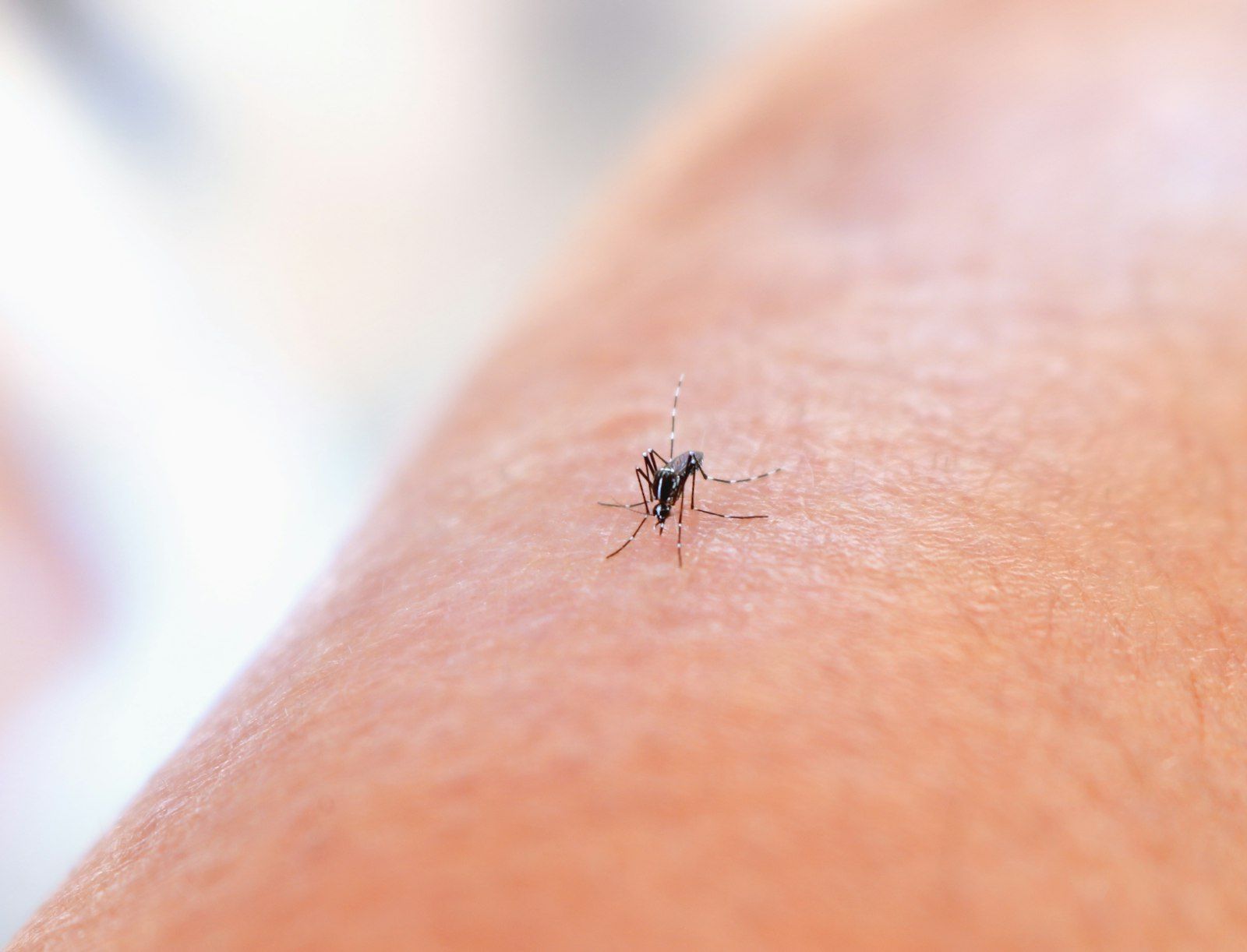
A mosquito bite itches because your own immune system is reacting to proteins in the insect's saliva, not because of anything the mosquito left behind to hurt you. Here is what actually calms a bite, what the internet gets wrong, how long the itch really lasts, and the specific signs that mean it is time to see someone.
A mosquito bite itches because of you, not because of the mosquito. When a female mosquito feeds, she injects a little saliva to stop your blood clotting while she drinks. Your immune system spots those saliva proteins as foreign and releases histamine, which makes the tiny blood vessels around the bite leak and the nerve endings fire. That histamine response is the itch and the raised bump (Cleveland Clinic). The mosquito left nothing behind to harm you. The reaction is entirely your own body doing its job a little too enthusiastically.
That single fact explains almost everything about how to handle a bite, so we will start there and work outward to the parts people get wrong.
Q: Why do mosquito bites itch?
A: Because your immune system reacts to proteins in the mosquito's saliva by releasing histamine, which inflames the skin around the bite and triggers the itch. It is an allergic-type reaction to the saliva, not venom or poison. This is also why an antihistamine helps, and why some people react far more strongly than others.
Why some people itch more than others
If mosquitoes seem to feast on you while ignoring the person next to you, you are not imagining it, and the reason is not your blood being "sweeter." Mosquitoes locate people mainly by the carbon dioxide we breathe out, by body heat, and by the particular blend of chemicals produced by the bacteria living on our skin. People who are larger, warmer, more active, or simply carrying a skin-microbe mix a mosquito finds attractive get bitten more. Popular claims that a specific blood type is the deciding factor are far weaker than the internet suggests; the reliable signals are breath, heat and skin chemistry.
The size of the itch is a separate question, and it comes down to your immune history. The more times you have been bitten by a given local mosquito population over the years, the more your body tends to tolerate the saliva and the smaller the reaction. That is why young children, who have had the fewest bites, often react most, sometimes with a dramatic swelling called Skeeter syndrome, which we cover in full in the guide to Skeeter syndrome.
Q: Do male mosquitoes bite?
A: No. Only female mosquitoes bite, because they need a blood meal to develop their eggs (ECDC). So every itchy bite you have ever had came from a female.
How to stop a mosquito bite itching
The treatment follows directly from the cause. You are calming a local histamine reaction and, above all, keeping your own fingernails from turning a harmless bite into an infected one. In rough order of usefulness:
- Do not scratch. This is genuinely the most important step, however unsatisfying. Scratching gives a few seconds of relief, but it breaks the skin, which is exactly how a trivial bite becomes an infection (NHS). Keep children's nails short and cover a bite they cannot leave alone.
- Cool it. Put an ice pack wrapped in a cloth, or a clean cloth soaked in cold water, on the bite for at least 20 minutes (NHS). Never put ice directly on skin.
- Antihistamine. Because the itch is histamine-driven, an oral antihistamine tackles it at the source. It is especially worth taking before bed, when an unscratched bite is most likely to be scratched raw in your sleep.
- Topical hydrocortisone or calamine. A thin layer of over-the-counter hydrocortisone cream calms local inflammation; calamine lotion soothes the surface itch. A pharmacist can advise on what is suitable for young children.
- Wash it. Clean the bite with soap and water. It will not stop the itch, but it lowers the chance of infection if the skin is already broken.
Q: How do you get rid of a mosquito bite overnight?
A: A bite will not vanish overnight, because the swelling has to clear as the immune reaction settles. What you can do is control the itch so it does not keep you awake or get scratched open: take an antihistamine before bed, apply a cold compress and a little hydrocortisone, and resist scratching. The bump itself typically fades over a few days.
How long a mosquito bite itches
Most mosquito bites are small, raised and itchy, and they get better in a few days (NHS). If a bite is getting steadily worse rather than better, that is the pattern to pay attention to, and the next section is for you.
The home remedies: what has a basis, and what is a myth
The internet is full of bite "cures," and honesty means sorting them rather than repeating them.
- Cold genuinely helps, for the reason above. This is the one kitchen remedy with a clear mechanism.
- Heat applied briefly is sometimes said to ease itch by overwhelming the local nerves; the evidence is thin and it is easy to burn yourself, so it is not something we would recommend over the reliable options. The viral "hot spoon" trick is one we have looked at directly in the hot-spoon bite-remedy myth: the sensible core is "cool and soothe," not "burn."
- Toothpaste, baking-soda paste, vinegar, saliva and the rest are folk remedies with little or no evidence behind them. At best they distract from the itch; at worst an irritant makes it angrier. They are not dangerous in small amounts, but they are not the thing to rely on.
The pattern across all of them is the same one we apply to the whole mosquito aisle: the boring, evidence-backed option (cool it, antihistamine, do not scratch) beats the clever-looking one almost every time.
When a mosquito bite needs a doctor
Nearly every bite is a self-care matter. A small number are not, and the signs are specific and worth knowing:
- Signs of infection: the skin around the bite feels hot or looks red, the area is painful or swollen, or there is pus or fluid coming out of it (NHS). A pharmacist can recommend antibiotics if the bite is infected.
- Signs of a serious allergic reaction: the lips, mouth, throat or tongue suddenly swell, breathing becomes fast or difficult, the throat feels tight, or you feel dizzy or lightheaded (NHS). These are rare after a mosquito bite but need urgent help.
- A very large local swelling, especially in a child, that develops within hours is Skeeter syndrome, an exaggerated allergic reaction to mosquito saliva that can mimic an infection (AAAAI). If you are unsure, or it is a baby, ask a pharmacist or doctor. The Skeeter syndrome guide walks through telling the two apart.
- Illness after travel: if you develop a high fever, severe headache, muscle or joint pain, or a rash within 4 to 10 days of being bitten somewhere dengue circulates, see a doctor and mention the travel (WHO dengue). The mosquito that carries those viruses in Europe is the Asian tiger mosquito.
When to seek help, in short
See a pharmacist if the bite becomes hot, red, painful, swollen or starts to ooze. Seek urgent care for swelling of the lips, mouth, throat or tongue, difficulty breathing, a tight throat, or dizziness. See a doctor for fever, rash or severe joint pain in the weeks after travel to a region with mosquito-borne disease. Everything else is self-care.
The bite you never get needs no remedy
All of the above manages a bite that already happened. The only way to remove the itch entirely is to not be bitten, and that is worth the effort for anyone who reacts badly.
The order is barrier first. A fine-mesh screen on the window and a correctly specified net over the bed keep mosquitoes off you while you sleep, using no chemical at all; for exposed skin, DEET was the most effective product in a comparative trial (Fradin and Day, New England Journal of Medicine, 2002), and picaridin is an EPA-evaluated skin-applied active (US EPA). Either is the right supplement for the hours a barrier cannot cover. For the full method, indoors and out, see how to get rid of mosquitoes.
The short version
A mosquito bite itches because your immune system is reacting to the insect's saliva with histamine. To calm it: do not scratch, cool it, use an antihistamine and a little hydrocortisone, and let the bump fade over a few days. Watch for the specific signs of infection, a serious allergic reaction, or illness after travel, and see someone if they appear. And because the itch is your body's reaction and not the mosquito's weapon, the surest cure is the bite that never lands: a barrier first, a proper repellent second.
Sources: NHS, Insect bites and stings | Cleveland Clinic, Skeeter Syndrome | AAAAI, Skeeter Syndrome Defined | ECDC, Culex pipiens factsheet | WHO, Dengue and severe dengue | WHO, Chikungunya | US EPA, Skin-Applied Repellent Ingredients | Fradin and Day, NEJM 2002
This article is general information, not medical advice. For a bite you are worried about, especially in a baby or young child, consult a pharmacist, doctor or qualified healthcare professional.
This article is general information, not medical advice. Ask a doctor or pharmacist about your own health.