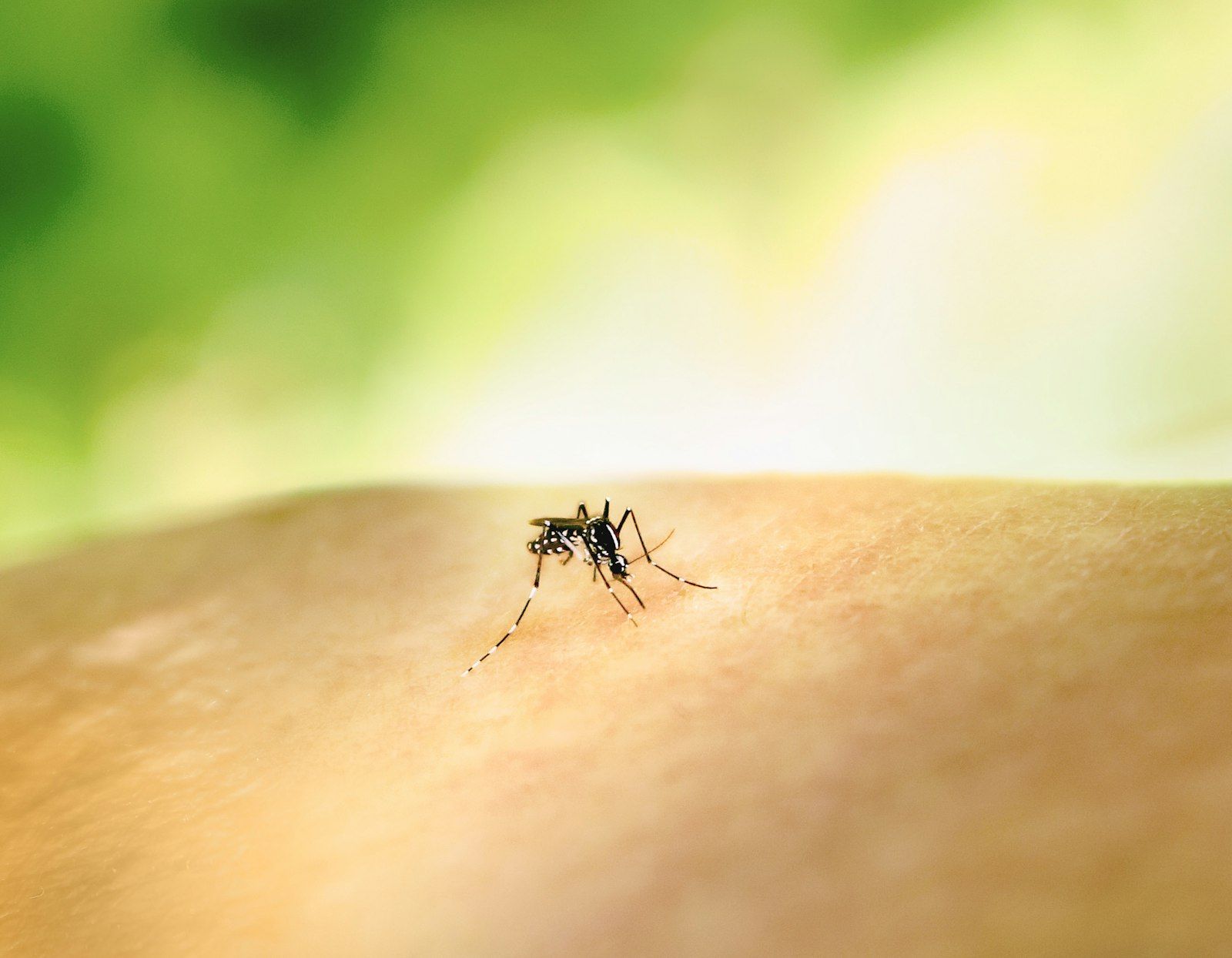
A mosquito bite that balloons into a hot, red swelling the size of a golf ball looks alarming, especially on a child. It usually is not dangerous. Here is what Skeeter syndrome is, how to tell it from an infection, how to calm it, and the red flags that do warrant a doctor.
Skeeter syndrome is a large local allergic reaction to the proteins in mosquito saliva (Cleveland Clinic). Instead of the usual small itchy bump, the bite swells into a large, hot, red, sometimes painful area (American Academy of Allergy, Asthma & Immunology). It is most common in young children, and rarely it comes with a fever (Cleveland Clinic). It looks far worse than it is. In almost every case it is uncomfortable, not dangerous, and it settles in a few days.
That reassurance is the whole reason to write this calmly. A swelling the size of a golf ball on a small child's leg is frightening to a parent, and fright is exactly the wrong fuel for a good decision. So here is what is actually happening, and how to tell the ordinary version from the rare case that needs a doctor.
What Skeeter syndrome actually is
Every mosquito bite is a small immune event. When a female mosquito feeds, she injects saliva containing proteins that stop your blood clotting while she drinks. Your immune system recognises those proteins as foreign and mounts a reaction: histamine floods the spot, tiny blood vessels leak, and you get the familiar itchy welt. The itch is not venom. It is you.
In Skeeter syndrome, that normal reaction is turned up. The same saliva proteins trigger a much larger local inflammatory response, so the bite becomes a broad area of swelling, redness and warmth rather than a small bump (AAAAI). The swelling typically begins within hours of the bite, and it clears over roughly three to ten days (Cleveland Clinic).
Q: What is Skeeter syndrome in simple terms?
A: An oversized but local allergic reaction to a mosquito bite. The body overreacts to proteins in mosquito saliva, producing a large, hot, red swelling instead of a small bump. It is a recognised condition, not an infection, and it is usually harmless even though it looks dramatic.
Why children get it more
Skeeter syndrome is most common in young children, and there is a logical reason for it. Allergic sensitivity to mosquito saliva depends on prior exposure: the immune system has to meet the proteins, react, and gradually build tolerance over many bites across many summers. Young children have had the fewest bites, so their reactions are often the largest. Sometimes the reaction becomes less severe over time, but adults can also have Skeeter syndrome (Cleveland Clinic).
The one distinction that matters: allergy versus infection
This is the part worth reading twice, because it is the difference between "wait it out" and "call the doctor."
A big swelling from Skeeter syndrome is an allergic reaction. A bite can also become infected (cellulitis), usually because it was scratched open and bacteria got in. The two can look similar, but they behave differently, and the timing is the clearest clue:
- Skeeter syndrome (allergy) appears fast, usually within hours of the bite. It is itchy as much as painful, and it tends to peak and then settle over days (AAAAI; Cleveland Clinic).
- Infection appears later and gets worse rather than better. The skin around the bite feels hot or looks red, it is painful, the area looks swollen, or there is pus or fluid coming out (NHS).
A large swelling that came up within hours and itches is almost certainly the harmless allergic kind. A bite that gets worse rather than better, or that does not settle, needs medical attention (NHS).
How to calm it at home
For the ordinary allergic swelling, the treatment is simple and unglamorous:
- Cold compress. Put an ice pack wrapped in a cloth, or a clean cloth soaked in cold water, on the bite for at least 20 minutes to ease swelling and itch (NHS). Never put ice straight on skin.
- Oral antihistamine. A non-drowsy antihistamine damps the allergic reaction that is driving the swelling. Use an age-appropriate product and follow the label, or ask a pharmacist for a child.
- Topical hydrocortisone. A thin layer of over-the-counter hydrocortisone cream calms the worst of the local inflammation. A pharmacist can advise on suitability for young children.
- Do not scratch. This is the one that actually prevents trouble. Scratching does not relieve the itch for long and it breaks the skin, which is precisely how a harmless allergic swelling turns into an infection. Keep nails short on children and cover the bite if needed.
We go through the full toolkit for itch and swelling, including which home remedies help and which are myths, in the companion guide on why mosquito bites itch and how to stop it.
When to see a doctor
Seek medical advice if the bite shows signs of infection (the skin around it feels hot or looks red, it is painful, the area is swollen, or there is pus or fluid coming out); if swelling affects the mouth, throat or a whole limb; if there is any difficulty breathing, widespread hives, dizziness or facial swelling (these suggest a rare systemic reaction and warrant urgent care); or if you are simply unsure, especially with a baby or a very young child. True anaphylaxis to mosquito bites exists but is rare (Cleveland Clinic).
The best treatment is the bite you never get
Everything above manages a bite that already happened. The only intervention that removes Skeeter syndrome entirely is not being bitten, and for a reactive child that is worth taking seriously.
The order is the same as for mosquitoes generally, and it is barrier first. A fine-mesh screen on the window and a correctly specified net over a bed or a pram keep the insect off a sleeping child without any chemical at all; the mesh has to be fine enough to stop small daytime biters like the tiger mosquito, a point we cover in how to tell a net that works from one that only looks like it does. For exposed skin during the day, use a repellent registered by a regulator such as the US EPA. The EPA lists DEET and picaridin among the active ingredients in registered skin-applied repellents (US EPA, skin-applied repellents). DEET remains the best studied for long-lasting protection (Fradin and Day, New England Journal of Medicine, 2002).
If your household includes someone who reacts badly to bites, the tiger mosquito guide is worth a read too, because that species bites in daylight and goes for the lower legs, which changes where you concentrate protection: the Asian tiger mosquito, how to recognise it and keep it off you.
Common questions
These are the questions people search for most, answered in one place.
Q: Is Skeeter syndrome dangerous?
A: Almost never. It is a large but local allergic reaction to mosquito saliva, uncomfortable rather than harmful, and it settles on its own in a few days (AAAAI; Cleveland Clinic). The rare things that do need urgent care, difficulty breathing, facial or throat swelling, widespread hives or dizziness, are signs of a systemic allergic reaction, not of ordinary Skeeter syndrome.
Q: How long does Skeeter syndrome last?
A: The swelling usually begins within hours of the bite, peaks over the first day or two, and clears over roughly three to ten days (Cleveland Clinic). A bite that keeps getting worse rather than settling points to infection instead (NHS).
Q: Is Skeeter syndrome contagious?
A: No. It is your own immune system reacting to proteins in mosquito saliva. It cannot be passed from one person to another, and it is not caused by the bite being dirty.
Q: Can adults get Skeeter syndrome?
A: Yes, although it is most common in young children, who have had the fewest bites and so react most strongly. Sometimes reactions become less severe over time, but adults can also have it (Cleveland Clinic).
Q: How do you treat Skeeter syndrome at home?
A: A cold compress, an age-appropriate oral antihistamine, a thin layer of over-the-counter hydrocortisone cream, and not scratching. Scratching is the one thing that turns a harmless swelling into an infection, so keep nails short on children and cover the bite if needed.
Q: How do you tell Skeeter syndrome from an infected bite?
A: Timing is the clearest clue. Skeeter syndrome appears fast, within hours, and itches as much as it hurts (AAAAI). Infection appears later and gets worse rather than better, with the skin around the bite feeling hot or looking red, pain, swelling, or pus or fluid coming out (NHS). A bite that gets worse rather than better needs a doctor.
The short version
Skeeter syndrome is a big, hot, alarming-looking but almost always harmless allergic reaction to mosquito saliva, most common in children, that settles in a few days. Cool it, take an antihistamine, do not scratch it, and watch for the specific signs of infection or a systemic reaction. And because the reaction is worst in the people with the fewest prior bites, the households that benefit most from a good barrier and a proper repellent are exactly the ones with young children in them.
Sources: AAAAI, Skeeter Syndrome Defined | Cleveland Clinic, Skeeter Syndrome | NHS, Insect bites and stings | US EPA, Skin-Applied Repellent Ingredients | Fradin and Day, NEJM 2002
This article is general information, not medical advice. For a bite you are worried about, especially in a baby or young child, consult a pharmacist, doctor or qualified healthcare professional.
This article is general information, not medical advice. Ask a doctor or pharmacist about your own health.