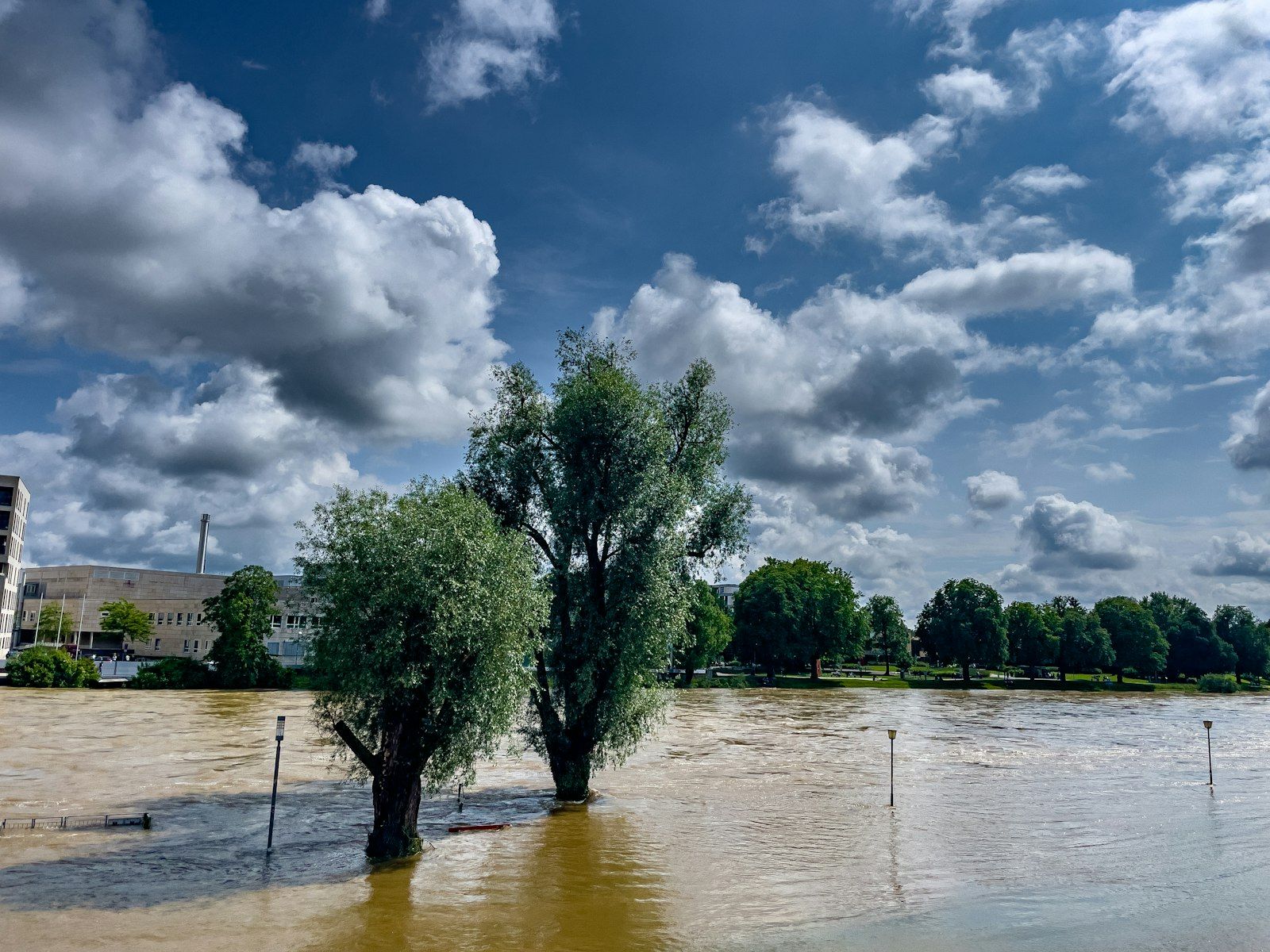
Floods leave standing water that can become breeding habitat for mosquitoes. Good rain, warm weather and slow drainage can combine to increase biting numbers near homes.
What floods leave behind
Floodwater rarely disappears at once. Water lingers in drains, ditches, paddocks, tyre ruts, plant pots, tarpaulins and the shaded edges of gardens. Each of these can hold still water long enough for mosquitoes to develop. Mosquitoes need water to breed, and large floods create water in places that are usually dry. That matters because the species that breed in temporary pools are often the ones that bite people in daylight. The World Health Organization reports that climate change substantially affects pathogens, vectors and reservoir hosts, and that several vectors have expanded their latitude and altitude ranges, with the length of the season during which they are active increasing. Warm, wet conditions after a flood can therefore extend the biting season as well as raise local numbers.
The life cycle is fast
Mosquitoes do not appear from nowhere. They hatch from eggs laid near or on water and pass through egg, larva, pupa and adult stages. The larval and pupal stages happen in water, so a container that holds water for a week or two can produce adults. The CDC notes that adult mosquitoes live indoors and outdoors, can bite day and night, and live for about 2 to 4 weeks depending on the species, humidity, temperature and other factors. In warm post-flood weather, development is quicker and adults survive longer. That combination, more habitat plus faster development, explains why numbers can climb steeply within days rather than months after heavy rain. Warm post-flood weather can support faster development, while adult mosquitoes live about 2 to 4 weeks depending on species, humidity and temperature.
More animals mean more bites
Only female mosquitoes bite, because they need a blood meal to produce eggs. The CDC states that only female mosquitoes bite people and animals to get a blood meal, which they need to produce eggs. A small number of infected mosquitoes can then start an outbreak in a community. Floods also displace people, livestock and wildlife, and standing water can concentrate animals and people in smaller areas. That proximity raises the chance an infected mosquito bites a person. It also raises the chance a mosquito picks up a virus from an infected host and passes it on. The result may be more nuisance bites, alongside greater potential for transmission where an infected mosquito is present.
Disease risk is not only nuisance
Biting numbers matter because mosquitoes can spread pathogens. The CDC notes that over 3,700 types of mosquitoes can be found worldwide and that mosquitoes can spread pathogens, meaning germs, through bites. In Australia, mosquito bites can transmit serious diseases including some that cause joint pain, fever or, rarely, severe illness. NSW Health states that mosquitoes can transmit serious diseases and advises several protective steps. Not every mosquito carries a virus. To reduce the risk of diseases mosquitoes transmit, NSW Health advises wearing loose-fitting long-sleeved shirts and long pants, applying repellent to exposed skin, and screening windows and doors. Officials track these factors through surveillance, which NSW Health describes as organised monitoring of virus activity, vector populations and infections to detect or predict changes in transmission.
Pests and patients share a burden
The World Health Organization reports that vector-borne diseases account for more than 17% of all infectious diseases, causing more than 700,000 deaths annually, and can be caused by parasites, bacteria or viruses. Vectors are living organisms that can transmit infectious pathogens between humans, or from animals to humans, and many are bloodsucking insects. Those figures are global, and most of that burden falls elsewhere. In Australia, the practical concern after a flood is a rise in bites and a higher chance of local transmission where a virus is present. People caring for vulnerable relatives should take the risk seriously without panic. People caring for vulnerable relatives should follow NSW Health advice during mosquito season to reduce the risk of diseases mosquitoes transmit.
What households can do
Most protection is simple and physical. NSW Health advises people to wear loose-fitting long sleeved shirts and long pants, apply mosquito repellent to exposed skin, screen windows and doors, and remove potential mosquito breeding sites at home. A correctly installed flyscreen in good repair is real protection when it covers the opening and closes fully. Empty and remove containers that hold water: buckets, plant saucers, old tyres, tarps and blocked gutters. Repair leaking taps and check water tanks are sealed. Use repellent as labelled and reapply it as the label directs. Because some mosquitoes bite during the day, protection is not only an evening task. Check screens and containers weekly while water remains on the ground.
Read warnings without fear
Public health messaging after floods can sound alarming, and some commercial channels lean on that fear. Be blunt about dishonest practices: products sold on exaggerated disease claims and scare tactics deserve scepticism. The practical response is to follow official guidance, not sales copy. NSW Health surveillance exists to detect or predict changes in virus activity, mosquito populations and infections. That means local warnings can be specific rather than generic. Watch your state health department's advice for your area, and act early on standing water around the home. Most people who take basic precautions will come through a flood season without serious illness. A calm plan beats a frightening headline. A brief check of your yard after rain is a practical habit that reduces breeding near your home.
Sources
- Vector-borne diseases: NSW Health
- About Mosquitoes | Mosquitoes | CDC: US Centers for Disease Control and Prevention
- Vector-borne diseases: World Health Organization