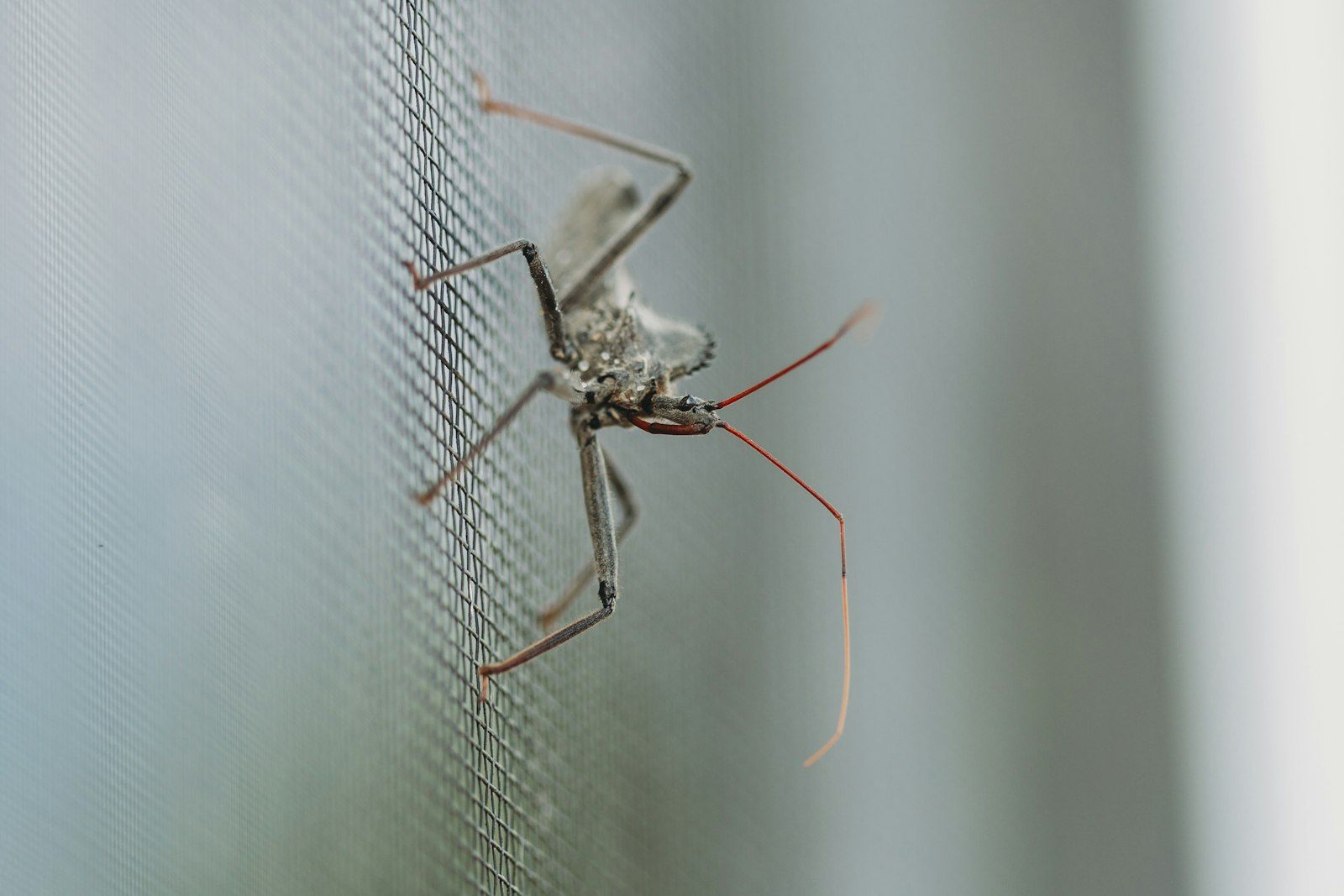
The season does not end when the calendar says so, it ends when the household says so. Cases of West Nile virus in Europe are typically reported into the autumn, tiger mosquito eggs are already waiting on the rims of forgotten containers, and the equipment that kept the summer livable is about to be stored for six months. This is the order of work that closes the season without leaving next spring a head start.
The calendar turns and the evenings cool, but the season does not read the calendar. West Nile virus cases in Europe are typically reported into the autumn (ECDC), while the tiger mosquito has already moved on to its real project: leaving behind eggs that will outlast everything else in the garden. What a household does in the next few weeks decides whether next spring starts from a clean slate or a stocked one. Here is the order of work, cheapest and most durable first.
1. Walk the garden with water in mind
Start with every object that can hold a litre of anything. Plant saucers, watering cans, buckets, wheelbarrows, the lid under the barbecue, the toy that filled with rain in August. Empty them, then brush their insides, because tiger mosquito eggs sit just above the old water line and a rinse will not move them. Anything that can live upside down, should; anything that can go under cover, goes. This single walk removes more of next year's population than any product sold for the purpose.
2. Clear the gutters and gullies before the leaves come down
The big autumn rain is coming and it will find every blocked gutter, gully and drain chain on the property. A choked gutter is not a drainage problem for a few weeks, it is a water feature at roof height, and it will sit there through winter. Clear them now, while the spouts are still reachable and the leaves are still on the trees. Check the rain barrel at the same time: a fine mesh screen over the opening keeps the water available and the mosquitoes out of it.
3. Service the bedroom layer
The net or screen over the bed did the quiet work of the whole season, and this is its service interval. Wash the mesh on the gentlest cycle its label allows, or by hand, and let it dry fully. Hold it up to the light and find the tears before the mosquitoes do: two minutes with a repair patch on a small tear is cheaper than replacing the net because a thumb-sized hole went unnoticed for a month. Check window screens while you are at it, straightening the frames and sealing the small gaps where mesh meets masonry. Then store what is being stored, clean and dry, in something that will keep it that way until spring.
4. Pack down the terrace properly
A net canopy, gazebo or enclosure that spent the summer over the dining table has earned more than being bundled wet into a corner. Clean it, let it dry completely, fold it as the maker intended, and store it away from damp. Look at the frame and cordage now, when parts are easy to replace, rather than in May, when everyone in Europe remembers their terrace at the same time. Equipment that is inspected at the end of the season gets a decade of summers. Equipment that is abandoned gets one.
5. Write down what happened, then close the loop
One note on the phone is enough: where the bites came from, which evenings were worst, whether the bedroom or the terrace was the weak point, what you would change. Then set a reminder for the first warm week of spring to reinstall it all in the same order: barriers first, screens checked, and the water walk repeated once more before the first generation gets going. The household that closes the season deliberately opens it ahead of the mosquitoes, and the ones that do not end up starting from behind every year.
The honest note about the tail
Nothing in this list asks you to stop enjoying autumn. The terrace still works, and it still gets visitors, because Culex pipiens bites at night, and West Nile virus transmission in Europe continued into late October in 2025 (ECDC; ECDC). For the hours spent outdoors in that window, a repellent based on DEET or picaridin works and should be applied on the interval its label actually lasts. The physical layer stays what it has been all season: the base that does not wear off, does not run out and does not need reapplying. A screen on the window and a net over the bed cover the night's exposure at its most exposed hours, and both are already in place if the season is closed out properly.
Sources cited
- World Health Organization. Vector-borne diseases fact sheet. https://www.who.int/news-room/fact-sheets/detail/vector-borne-diseases
- European Centre for Disease Prevention and Control. Factsheet, West Nile fever. https://www.ecdc.europa.eu/en/west-nile-fever/facts/factsheet-about-west-nile-fever
- European Centre for Disease Prevention and Control. Factsheet, Culex pipiens. https://www.ecdc.europa.eu/en/infectious-disease-topics/related-public-health-topics/disease-vectors/facts/mosquito-factsheets/culex-pipiens
- World Health Organization. Personal protection against mosquitoes. https://www.who.int/publications/i/item/WHO-HTM-NTD-VEM-2017.02
- European Centre for Disease Prevention and Control. Historical data on West Nile virus transmission in Europe. https://www.ecdc.europa.eu/en/west-nile-fever/surveillance-and-disease-data/historical
This article is general information, not medical advice. Ask a doctor or pharmacist about your own health.