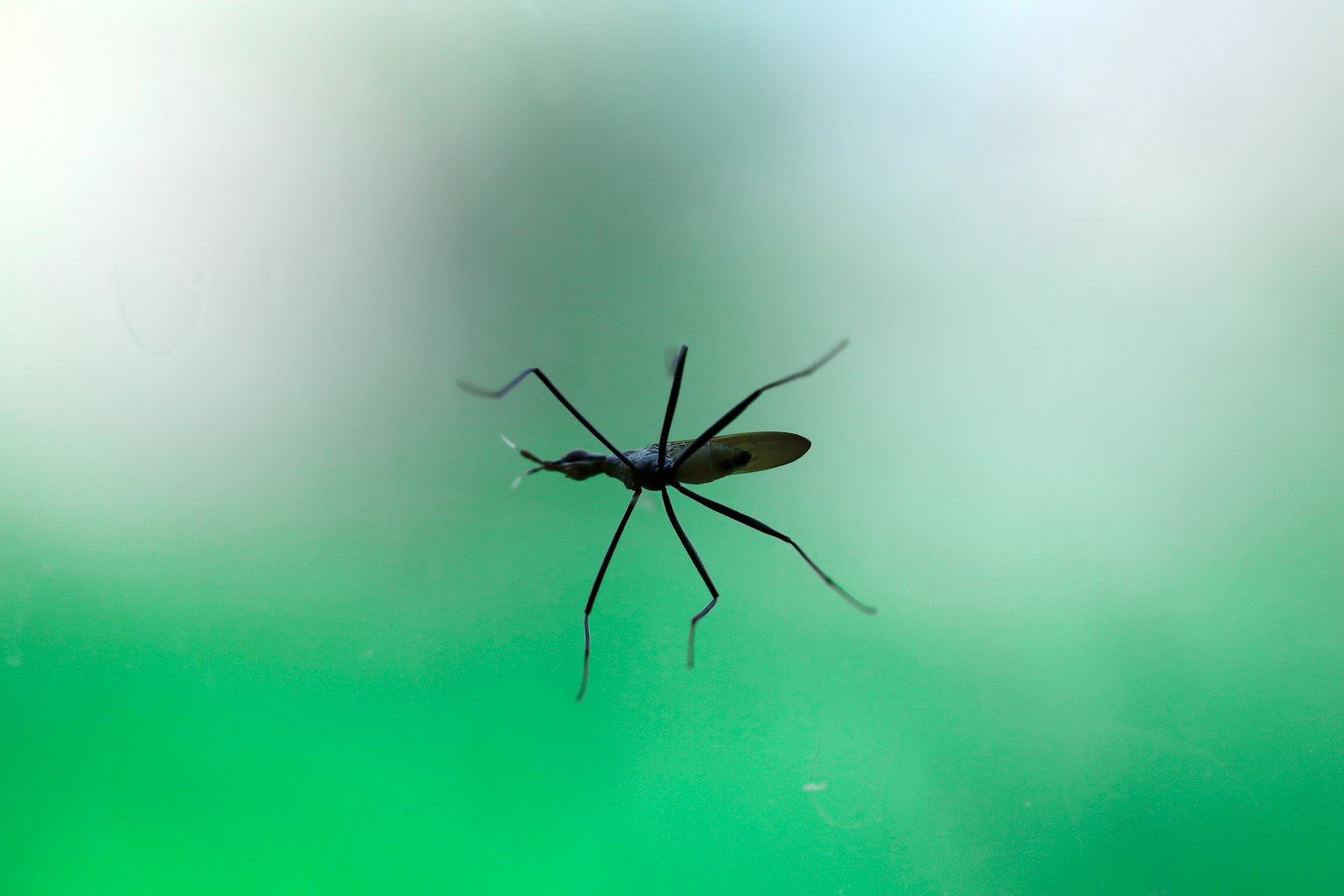
West Nile virus is now transmitting locally in mainland France for the 2026 season, with a first autochthonous case confirmed in the Pyrénées-Orientales in mid-July and a second reported in the Bouches-du-Rhône. Both are documented, expected events for a virus that Culex mosquitoes carry along the Mediterranean each summer. The disease is mostly silent, there is no vaccine and no specific treatment, so the practical control is the same one every household already owns: keep the biting mosquito away from the people in the room.
Two things happened quietly in the south of France this July. In mid-July, Santé publique France recorded the first locally acquired human case of West Nile virus of the 2026 season, in the Pyrénées-Orientales, on the Mediterranean edge of Occitanie. A little over a week later, a second locally acquired case was reported in the Bouches-du-Rhône, in Provence, moving the season's count for mainland France from one to two.
Neither case is a surprise, and neither is a reason for alarm. West Nile virus has been part of the southern French summer for years, and 2026 is following a pattern that public-health agencies now expect and watch for. What matters for a household is much smaller and much more useful than the headline: the virus is carried by a specific kind of mosquito that bites at specific times, and the single most reliable thing you can do about it is keep that mosquito away from the people in the room.
This piece sets out what is actually known, keeps the two cases in proportion, and then does the only part that is in your hands: the prevention.
What was reported, and how confident we are in it
The first case is on firm ground. The Pyrénées-Orientales infection appears in Santé publique France's national reinforced arbovirus bulletin (édition du 23 juillet 2026, covering data through 19-20 July), which logs one autochthonous West Nile human case for mainland France alongside the season's first autochthonous dengue cases. "Autochthonous" simply means locally acquired: the person did not catch it abroad; a mosquito passed it to them in France.
The second case, in the Bouches-du-Rhône, was reported on 29 July 2026 by the surveillance aggregator Outbreak News Today, citing Santé publique France, which states that "as of July 27, 2026, two autochthonous cases of West Nile virus infection have been identified in the Pyrénées-Orientales (Occitanie) and Bouches-du-Rhône (Provence-Alpes-Côte d'Azur) departments," with investigations and control measures under way. At the time of writing, that second case has not yet appeared in the national reinforced bulletin (which still reads one) or in the European Centre for Disease Prevention and Control's weekly dashboard. We treat it as a credible, well-attributed early signal rather than a settled figure, and we will update this page when the SpF bulletin and the ECDC weekly refresh confirm it.
That distinction, one case fully confirmed in the primary bulletin and a second reported and pending formalisation, is the honest state of the record as of 30 July 2026.
The wider French picture: no longer an all-imported summer
For years the accurate line on mainland France was that its mosquito-borne viruses were essentially all imported by travellers. That line is now out of date, and it is worth retiring cleanly. In the 2026 season, France is running three arboviruses locally at once: the first metropolitan autochthonous dengue cases of the year (in the Tarn and Hérault), the first autochthonous chikungunya case of the season (in the Tarn, confirmed in the 23 July SpF bulletin), and now West Nile.
The right frame for each of these is the same: first of the 2026 season, mild so far, and met with targeted local control: mosquito treatment around the case sites and reinforced surveillance. This is not "unprecedented." For scale, 2025 ended with 809 autochthonous chikungunya cases across seventeen French departments. A handful of early-season local cases in July is the surveillance system doing exactly what it is built to do: catching transmission early and acting on it.
Across Europe the same season is visible in the numbers. The ECDC's most recent confirmed weekly report (23 July, data to 22 July) counted 81 locally acquired West Nile cases across six countries: Italy 46, Greece 21, North Macedonia 5, Romania 5, Spain 3 and France 1. West Nile is endemic in southern and south-eastern Europe; it recurs most summers, and the season typically climbs through August. The World Health Organization's Regional Office for Europe issued a public "what you need to know" note on 24 July, and the BMJ carried an editorial on the European season on 27 July. Both point in the same, calm direction: know how the virus spreads, and protect against bites.
Why the type of mosquito matters more than the case count
Here is the part that turns a news item into something you can act on.
West Nile virus is carried by Culex mosquitoes, in France chiefly Culex pipiens, the ordinary "house mosquito." This is a different insect from the day-biting tiger mosquito (Aedes albopictus) that carries dengue and chikungunya. The practical difference is timing and place:
- Culex mosquitoes are most active at dusk and after dark, and they are happy to come indoors and rest in bedrooms.
- The tiger mosquito bites mostly by day, outdoors, around ankles, in gardens and on terraces.
So the West Nile mosquito is precisely the one that reaches you in the evening and at night, in the room where you sleep. That is why, for this particular virus, screening windows and protecting the bed are not incidental measures. They are the front line.
The disease itself argues for prevention rather than panic. According to the WHO, roughly four in five people infected with West Nile virus have no symptoms at all. Most of the rest have a flu-like illness that passes. About one in 150 develops severe neuroinvasive disease, and the risk is concentrated in older adults and people with weakened immune systems. There is no licensed human vaccine and no specific antiviral treatment. When there is no vaccine and no cure, avoiding the bite is not one option among several. It is the control.
What a household on the Mediterranean coast can actually do
None of the following requires a product decision to be useful. It is the standard, agency-aligned advice, ordered by how much it does for a Culex-driven, dusk-and-night biter.
- Protect the sleeping space first. A well-fitted mosquito net over the bed, or fixed insect screens on bedroom windows, stops the evening and overnight biting that matters most for West Nile. A physical barrier does not wear off, does not need to be reapplied, and works for infants, pregnant women and older adults without any chemical exposure, the groups for whom repellent advice is most cautious and for whom severe outcomes are more likely.
- Cover the openings you use in the heat. In a Mediterranean summer people sleep with windows open. Screens on windows and doors let you keep the air moving without letting the mosquito in. This is where the two goals (staying cool and staying unbitten) stop being in conflict.
- Use a registered repellent at dusk, on exposed skin. For evenings outdoors, an EU-registered repellent (for example one based on icaridin/picaridin or DEET at an appropriate concentration) used as directed adds cover for the hours when Culex is most active. Follow the label, especially for children.
- Remove standing water weekly. Culex breeds in stagnant water: saucers under pots, blocked gutters, buckets, unused containers, water features. Emptying or covering standing water around the home each week cuts the number of mosquitoes produced nearby. This is the one step that reduces the problem at its source rather than just at your skin.
- Tip the odds for the vulnerable. If an older or immunocompromised person is in the household, prioritise their bedroom screening and net first. The severe end of West Nile is where the small numbers land, and it lands disproportionately on them.
The proportionate read
Two locally acquired West Nile cases in southern France in late July is a documented, expected feature of a Mediterranean summer, caught early by a surveillance system that is working. It is not an outbreak sweeping the country, and it is not a failure of the authorities. The reinforced bulletins and the local mosquito control are the response, functioning as designed. The season will most likely add cases through August, and the Friday ECDC refresh and the next SpF bulletin will formalise the figures, including the Bouches-du-Rhône case.
For a household, the number to remember is not the case count. It is the fact that the mosquito carrying this virus comes for you in the evening and at night, that there is no vaccine and no cure, and that a screen on the window and a net over the bed remove almost all of the exposure that matters. That is a problem you can close tonight.
Figures in this article are dated to their sources and reflect the surveillance record as of 30 July 2026. The second (Bouches-du-Rhône) case is reported and pending confirmation in the primary national bulletin and the ECDC weekly dashboard; this page will be updated as those surfaces refresh. Spotted an error? Write to corrections@mosticare.org.
Last updated 30 July 2026.