UK, US and WHO guidance on DEET, icaridin and other repellents for babies, children, pregnancy and breastfeeding, plus net and clothing protection.
What official guidance covers
Three public health bodies publish clear advice on repellents for babies, children and pregnancy. The UK Health Security Agency sets out bite prevention in its malaria guidelines for UK travellers. The National Travel Health Network and Centre, known as NaTHNaC, publishes a bite avoidance factsheet. The United States Environmental Protection Agency explains how to use repellents safely. The World Health Organization covers mosquito protection in its Zika virus fact sheet. Read together, these sources agree on the main points and differ mostly in emphasis. This article summarises what each source states, so a parent or carer can hold one clear picture. It deals with repellents, nets and clothing. Government and international health bodies publish distinct bite prevention guidance aimed at parents, carers and travellers.
DEET: ages, strengths and children
The UK Health Security Agency reports that the UK Malaria Expert Advisory Group recommends a 50% DEET repellent, and that protection time does not increase beyond 50%. DEET is not recommended for infants under two months, but it suits anyone older unless allergic. The agency notes the US EPA approves DEET for children with no age restriction. NaTHNaC states 50% DEET is recommended for all travellers over two months of age who tolerate it. Babies under two months should instead be protected by clothing and insecticide treated nets over cots and prams, secured to leave no gaps. Adults should apply repellent to their own hands first, then to the child's skin, avoiding the child's hands.
Applying repellent safely
The EPA gives simple rules for children. Adults should not apply repellent to a child's hands, but should put it on their own hands and then onto the child. They should wash the child's treated skin and clothes with soap and water, or bathe the child, after returning indoors. Repellent belongs only on exposed skin and clothing. Keep it away from eyes and mouth, use it sparingly around the ears, and never apply it over cuts, wounds or irritated skin. NaTHNaC adds that repellent should go onto the hands first, then the face, to keep it out of the lips and eyes. Accidental application to the eyes can cause damage. Repellent should never be applied to broken skin, and hands should be washed after use.
Pregnancy and breastfeeding
Both UK sources address pregnancy directly. They cite evidence that 20% DEET used in the second and third trimesters was not associated with adverse effects on infants followed for up to 12 months after birth. The UK Malaria Expert Advisory Group recommends DEET at up to 50% for pregnant women, including the first trimester, when travel to a risk area makes repellent necessary. NaTHNaC states DEET up to 50% is recommended for all pregnant women at any stage travelling where malaria or other insect borne diseases are a risk. DEET may also be used at up to 50% by women who are breastfeeding. Nursing mothers should wash repellent off their hands and breast skin before handling their infants. The EPA page offers no specific pregnancy or breastfeeding guidance.
Icaridin and plant based options
Icaridin is the main alternative named in UK guidance. The UK Health Security Agency states that icaridin gives comparable protection to DEET when both are used at 20%, and the expert group advises a 20% preparation. NaTHNaC agrees that icaridin at 20% gives protection comparable to DEET at 20%, and advises at least 20% for malaria areas. Eucalyptus citriodora oil, previously called PMD, needs more frequent application than DEET. IR3535 has in some studies shown shorter protection than DEET at the same concentration. The EPA notes that some oil of lemon eucalyptus products should not be used on children under three, though products with that oil as the sole active ingredient at 30% or less carry no age restriction for children under three.
Sunscreen, nets and clothing
Sunscreen and repellent need the right order. Both UK sources state that DEET should be applied after sunscreen, and that sun protection factor 30 to 50 compensates for the reduction in SPF that DEET causes. Nets matter too. Travellers to malaria endemic areas should sleep under a net unless the room is well screened or air conditioned; the UK Health Security Agency estimates protective efficacy against malaria at 50%. Net mesh should be no larger than 1.5 millimetres, and nets should be tucked under the mattress so they stay taut. The World Health Organization recommends light coloured clothing covering as much of the body as possible, window screens, and keeping doors and windows closed. Insecticide treated nets and clothing reduce bites where repellent alone may be insufficient.
Why timing and species matter
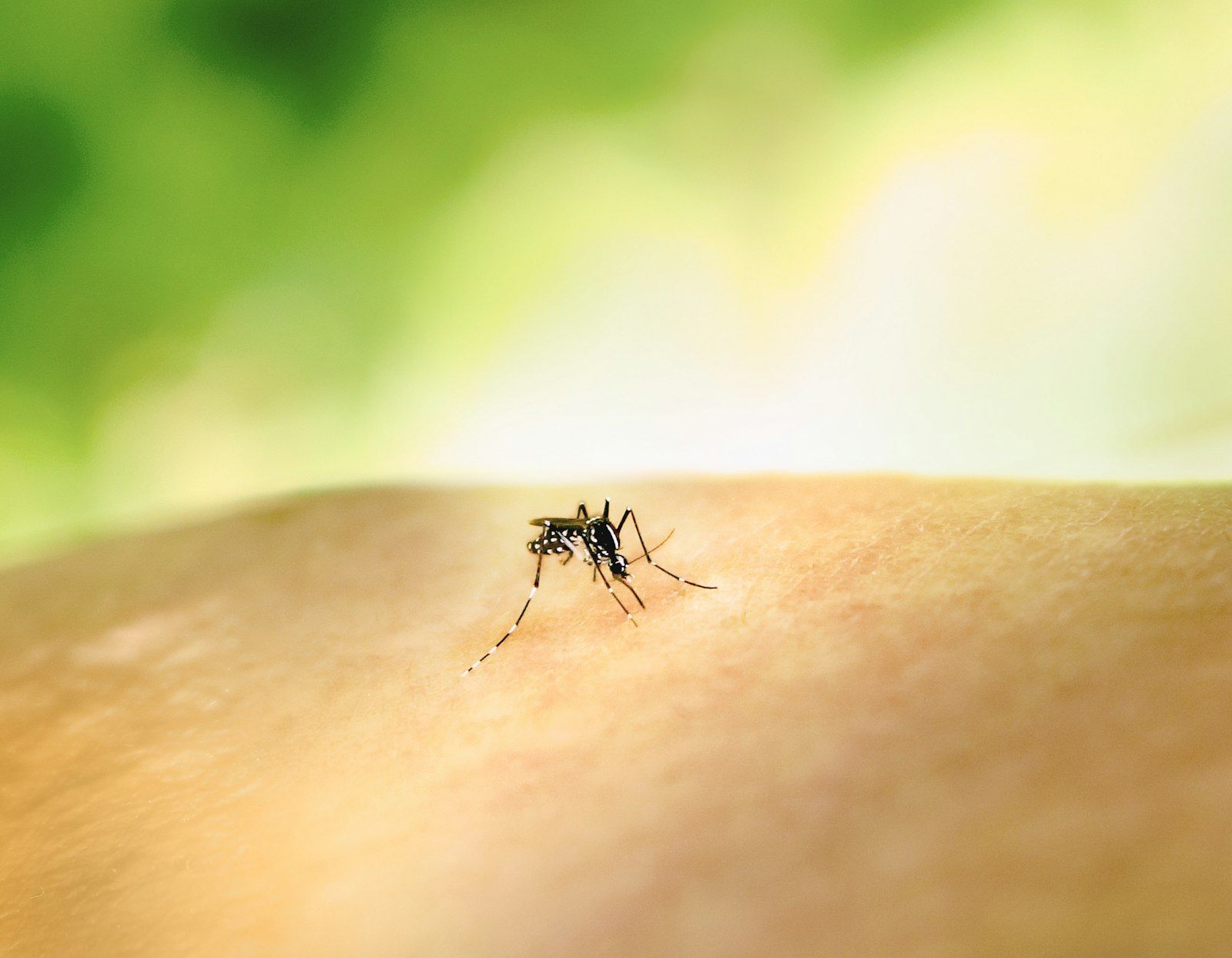
Mosquito habits decide when protection is needed. The World Health Organization states that protection against bites during the day and early evening is a key measure, especially for pregnant women, women of reproductive age and young children. Zika is transmitted mainly by Aedes aegypti and also Aedes albopictus, the same species that transmit dengue, chikungunya and urban yellow fever. Pregnant women and young children should sleep under mosquito nets if sleeping during the day or early evening. WHO also advises reducing breeding sites by covering water storage containers, removing standing water from flowerpots, and clearing trash and used tyres. The same body recommends repellents containing DEET, IR3535 or icaridin, applied according to the product label.
Sources
- Bite prevention: UK Health Security Agency
- Insect and tick bite avoidance: National Travel Health Network and Centre (NaTHNaC)
- Using Insect Repellents Safely and Effectively: United States Environmental Protection Agency
- Zika virus: World Health Organization