For the first time, England and Wales have a peer-reviewed, climate-aware map of where their *Culex* mosquitoes actually live. A 2026 *BMC Public Health* study from the University of Liverpool, UKHSA and APHA models the three near-identical taxa, *Cx. p. pipiens*, *Cx. p. molestus* and *Cx. torrentium*, separately, and finds the heaviest densities in the eastern and estuarine half of England. It is the baseline the UK's West Nile and Usutu preparedness has been waiting for.
England and Wales now have something they have never had before: a nationwide, climate-aware map of where their Culex mosquitoes live, and in what numbers. Published on 23 June 2026 in BMC Public Health and led by the University of Liverpool with the UK Health Security Agency (UKHSA), it is built from two seasons of stratified field trapping, 2023 as a baseline and 2024 as an adaptive follow-up, and it uses generalised linear mixed-effects models to predict the abundance of three separate Culex taxa across the whole country. The mosquitoes are the point. Culex pipiens is the principal carrier of West Nile virus in Europe, and until now nobody could say, on evidence, where in England and Wales it ran thickest.
Three mosquitoes that look alike and behave nothing alike
To the naked eye they are one insect, and that is the trouble. Culex pipiens sensu lato, the common European house mosquito, is not one thing but several, and the differences decide who gets bitten. Inside it live two forms of Cx. pipiens that lead separate lives: Cx. pipiens pipiens, which feeds on birds and keeps to rural and suburban ground, and Cx. pipiens molestus, which feeds on mammals, humans included, and thrives underground and in cities. Flying alongside them is a distinct species, Culex torrentium, almost impossible to tell from Cx. pipiens under a lens yet unlike it in where it lives and how it behaves.
The difference is not pedantry. The three are not interchangeable as carriers of West Nile virus, and molestus is the one that reaches people: it bites humans, and in doing so it can carry the virus out of the bird population and into ours. Most earlier work pooled everything as Cx. pipiens s.l. and modelled it as a single entity, which, the authors argue, blurs the very signal a public-health map exists to sharpen. So they modelled each taxon on its own. That one decision is what the paper turns on.
The east and the estuaries
Read the map and a pattern steps forward. Cx. p. pipiens is more abundant than either of the other two taxa across most of England, and it is thickest in the east and in estuarine country. Numbers fall away in the north-west of England, across most of Wales, and up into the North Pennines and the Yorkshire Dales. Higher ground, the authors note, "showed markedly lower abundances."
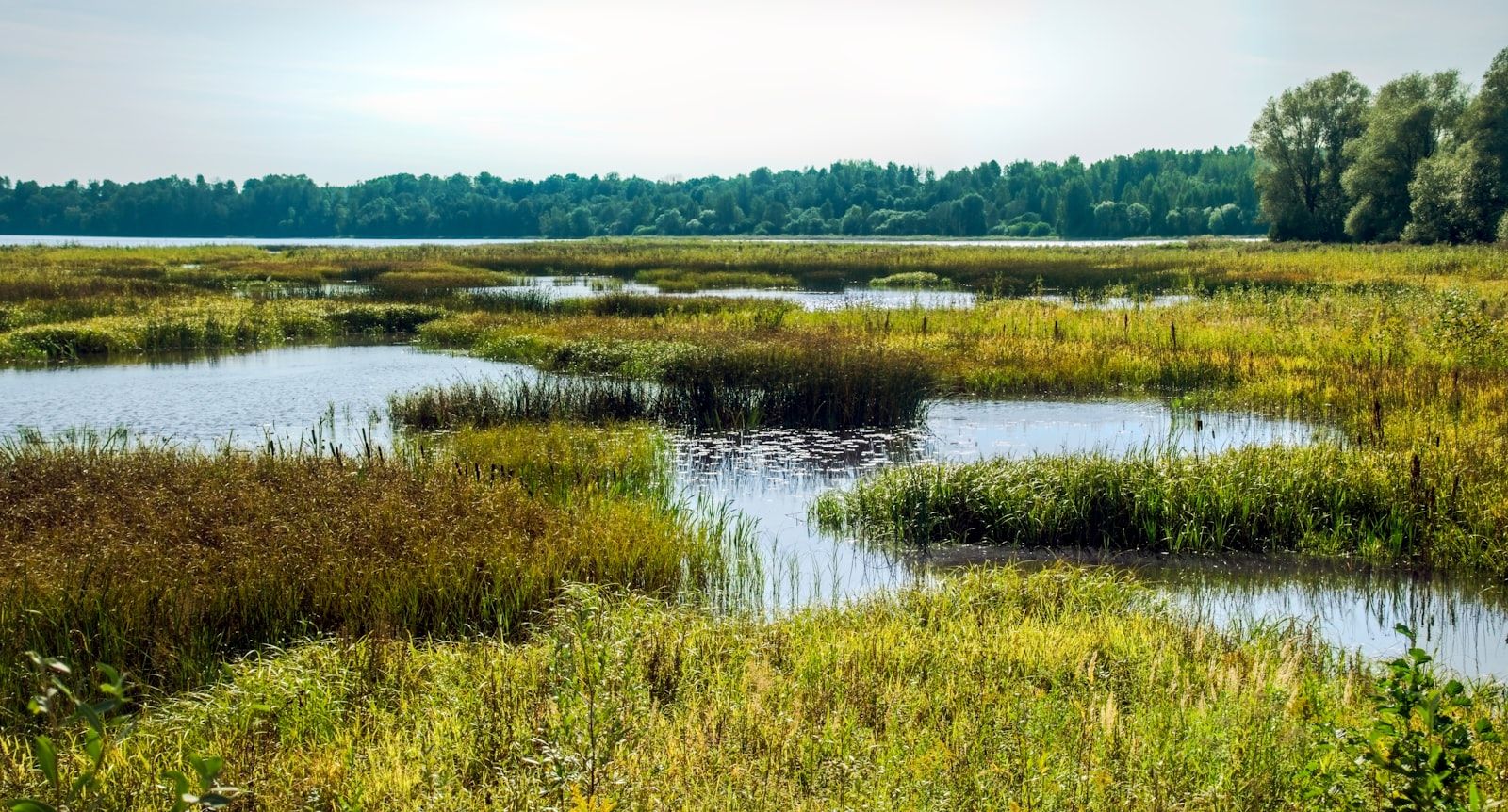
None of this is accident. Cx. pipiens favours the nutrient-rich standing water of lowland agricultural drainage, river floodplains and coastal wetlands, which is precisely the make-up of eastern and estuarine England. The cool, wet uplands of Wales and the northern hills do the reverse, holding populations down. Field entomologists had long suspected as much. What the 2023-24 surveillance adds is the proof: assumption turned into a measured, national picture.
Rain feeds one form, heat feeds the other
The two forms of Cx. pipiens answer to different masters, and that is exactly why they are worth separating on a forecast. Cx. p. pipiens, the rural bird-feeder, follows the rain: wetter conditions fill the surface pools its larvae need, so precipitation is its strongest driver. Cx. p. molestus follows the heat. It is the form at home in warm, enclosed, human spaces, metro systems, the basements of large buildings, utility conduits, where warmth can sustain breeding through much of the year and lengthen the biting season at both ends.
Hence the authors' warning. Model "the two forms" together and the arithmetic breaks in both directions: it understates the human-biting risk in warm cities, where molestus does the biting, and overstates it in the countryside, where pipiens dominates but seldom chooses people. A single blended figure for Cx. pipiens hides both mistakes at once.
Why a map, and why now
Over the past decade, West Nile virus has pushed steadily north across Europe, and the same window produced the first WNV-positive mosquitoes ever detected in the Netherlands, Germany and the UK. Usutu virus, a close relative kept alive in a cycle between birds and mosquitoes with the occasional spillover into people, has now been found in birds and mosquitoes across northern Europe and is considered endemic in parts of Germany, Belgium, the Netherlands and France.
The UK has not yet recorded a single human case of either virus caught on home soil. But the ingredients are present: the vector sits in genuine density across the eastern half of England, and its competence to carry these viruses is established. What has been missing is the one thing every response leans on, a baseline that states plainly where the vector is and how much of it there is. Targeted trapping, guidance to clinicians, blood-donor deferral rules, surveillance of horses and birds, none of it can be aimed without that underlying distribution. This study supplies it, the first peer-reviewed nationwide map for England and Wales.
Who paid for it, and who did the work
The study was funded under grant BB/X018172/1 from UK Research and Innovation and the Department for Environment, Food and Rural Affairs (Defra), the joint biosecurity and public-health line through which the UK funds its readiness for vector-borne disease. Its authors sit across the University of Liverpool, where Luigi Sedda is the senior author, the UKHSA's Medical Entomology group, the Animal and Plant Health Agency, and a number of regional public-health partners. That it landed in BMC Public Health, open-access and pitched at public health rather than entomology alone, is itself a signal: the data is meant to be used, not filed.
What comes next, and what it means for the east
The next test is already in the ground. Data from the 2025 field season, once published, will be the first real trial of the adaptive method and will add a third year to the models. Liverpool and the UKHSA entomologists are also the obvious team to run any future genomic surveillance of these viruses in UK mosquitoes; the wider European field is moving towards routine PCR testing of mosquito pools for flaviviruses, a layer the UK has not yet committed to build.
For anyone living along the eastern and estuarine edge of England, East Anglia, the Humber, the Thames, the Kent and Essex coast, the message is awareness, not alarm. The vector is there, in numbers, right through the summer. The ordinary defences work as well against Cx. pipiens as against any other European mosquito: cover up at dusk, use a repellent based on DEET or picaridin, empty standing water from the garden every week, and put treated netting over the beds in rural and peri-urban lodging. A repellent wears off and has to be reapplied. A screen on the window and a net over the bed do not, which is why a physical barrier stays the steadiest household layer across a whole night's exposure.
For the clinicians and public-health teams in those same counties, the paper marks a change of register, from the hypothetical to the operational. Whenever the first home-grown case of West Nile or Usutu does arrive, it will surface inside the geography this map has already drawn.
What we know
- First nationwide stratified active mosquito surveillance in England and Wales, conducted in 2023 with adaptive follow-up in 2024, modelling abundance of Cx. p. pipiens, Cx. p. molestus, and Cx. torrentium. de Klerk JN et al., BMC Public Health 2026 Jun 23 (PMID 42337508)
- Higher Cx. p. pipiens abundance across most of England, particularly in eastern regions and estuarine areas, with markedly lower abundance in higher-elevation Wales, the North Pennines and the Yorkshire Dales. de Klerk JN et al., BMC Public Health 2026
- Environmental drivers differ between the two Cx. pipiens forms: precipitation-related covariates drive Cx. p. pipiens; temperature covariates drive Cx. p. molestus. de Klerk JN et al., BMC Public Health 2026
- The work is directly motivated by the northward expansion of West Nile virus in Europe and the established vector competence of Cx. pipiens s.l. for WNV and Usutu virus. de Klerk JN et al., BMC Public Health 2026
- Funded under UKRI/Defra grant BB/X018172/1 as part of UK preparedness for WNV and USUV emergence. de Klerk JN et al., BMC Public Health 2026
Sources cited
- de Klerk JN, Haziqah-Rashid A, Widlake E, Wilson R, Pilgrim J, Vaux AGC, Tanianis-Hughes J, Delnicka A, Jealous AS, Abbott AJ, Haines C, Johnston CJ, Miller F, Sherlock K, Bursali F, Gandy S, Biddlecombe SM, Medlock JM, Blagrove MSC, Baylis M, Sedda L. Climate-based forecasting from national Culex mosquito surveillance to support West Nile and Usutu virus preparedness in England and Wales. BMC Public Health 2026 Jun 23 (online ahead of print). DOI: 10.1186/s12889-026-28033-5. PMID 42337508. https://pubmed.ncbi.nlm.nih.gov/42337508/
- UK Research and Innovation / Department for Environment, Food and Rural Affairs (UKRI/Defra), grant BB/X018172/1, vector-borne disease preparedness programme. https://www.ukri.org/
- UK Health Security Agency, Medical Entomology group, research and surveillance portal. https://www.gov.uk/government/collections/mosquitoes