Every June the algorithm rediscovers mosquitoes, and this year's viral hacks are a rotting "bucket of doom," a dab of vanilla extract, and a smouldering tin of coffee grounds. We sort them by evidence: the bucket is real larvicide science, an EPA-registered Bti dunk that kills larvae before they grow wings; the vanilla is harmless theatre that can even backfire; the coffee is a genuine maybe. The dull truth wins: tip out the standing water, treat what you cannot tip with Bti, and put a physical barrier between skin and bite.
Every June, the algorithm rediscovers mosquitoes. This year's crop of viral "hacks" includes a five-gallon bucket of rotting pond water, a dab of vanilla extract behind the ears, and a smouldering tin of old coffee grounds on the patio table. One of these works rather well. One does nothing. One is a maybe. The interesting part is that most people would guess the wrong one.
The hack that works is the one that looks least appealing.
The "bucket of doom" is just public-health science in a bucket
The recipe doing the rounds is deliberately grim. You fill a five-gallon bucket with water, then add grass cuttings, leaf litter and garden debris to make it rot. Mosquitoes, which adore a stagnant, organic-rich puddle, lay their eggs in it. Then, and this is the step that matters, you drop in a "mosquito dunk": a small doughnut-shaped pellet of Bacillus thuringiensis israelensis, mercifully abbreviated to Bti.
Bti is not a folk remedy. It is a naturally occurring soil bacterium and an EPA-registered larvicide, and it is one of the genuine workhorses of professional mosquito control. The US Environmental Protection Agency describes it plainly: Bti "contains spores that produce toxins that specifically target and only affect the larvae of the mosquito, blackfly and fungus gnat." The larvae eat it, the toxin ruptures their gut, and they die before they can grow wings. Crucially, the same agency notes that Bti "has no toxicity to people and is approved for use for pest control in organic farming operations." It does not harm birds, fish, bees, butterflies or your dog.
So the "bucket of doom" is, underneath the theatrics, an ovitrap: a lure that invites females to lay eggs in the one puddle in your garden that is quietly lethal to their offspring. As Mental Floss put it in its level-headed write-up, the bacteria "kill off larvae before they have a chance to turn into biting adults." That is real, and it is the same chemistry a municipal vector-control team would use on a storm drain.
Three honest caveats keep it from being a miracle. First, Bti only kills larvae, it does nothing to the adults already whining around your ankles tonight. Second, the dunks lose potency after roughly 30 days, and faster in some conditions, so the bucket needs topping up. Third, an open bucket of water is a drowning hazard for small children and wildlife, and the mesh some versions use can entangle animals. A bucket of doom should be covered, screened, and kept where a toddler cannot reach it.
The deeper point is the one the bucket accidentally teaches: the mosquito problem is a water problem. Every saucer under a flowerpot, every blocked gutter, every forgotten watering can is a nursery. You do not strictly need the theatre of a rotting bucket, emptying the standing water you already have achieves most of the same end. But if the bucket is what gets someone to take larval breeding seriously, it has earned its place.
The vanilla extract is pleasant, harmless theatre
The second hack is gentler and far more popular: dab pure vanilla extract on your wrists and neck, or mix it with water into a spray, and the mosquitoes supposedly keep their distance. It smells lovely. It also does very little.
Cleveland Clinic put the question to Dr Christopher Bazzoli, an emergency-medicine physician who specialises in wilderness and environmental medicine. His verdict was blunt: "Vanilla might mask your body odor for a short time, but it's not actually repelling insects." Masking is not repelling. Vanilla may briefly muddle the cocktail of carbon dioxide and skin compounds a mosquito homes in on, but the effect is short, enthusiasts themselves recommend reapplying every half hour, and it does not make you unappetising. Dr Bazzoli gave it "two big thumbs down."
There is a sting in the tail, and it is the bit worth remembering. The hack only has even a sporting chance with pure vanilla extract. Most kitchen cupboards hold imitation vanilla, which is sugar-rich, and sugar is precisely the sort of thing that attracts insects rather than repelling them. So the cheaper, commoner version of this hack may leave you slightly more bitten than if you had done nothing at all. A natural remedy that quietly works against you is the worst kind.
The coffee grounds are a genuine maybe
The third hack is the murkiest. Burn a tin of dried coffee grounds, the story goes, and the smoke drives mosquitoes off the terrace. Here the evidence is real but thin, and it points sideways rather than straight at the claim.
The honest answer comes from an associate certified entomologist writing for Mosquito Squad, who lays out both halves. On one side, there is laboratory support for coffee against larvae: a 2012 study found brewed coffee diluted in water had larvicidal properties, and later work showed "mosquito larvae could not survive in water bodies containing brewed coffee," with the changed pH and water clarity raising larval mortality. On the other side, the case for burning grounds to repel adults rests largely on a more potent smell and a good deal of anecdote. Her own caveat is the one to keep: coffee and coffee grounds "are not officially recognized or registered by the EPA," and "there is a good chance that the results will vary." It is not a thing to stake an evening on.
What the algorithm rewards, and what actually works
The pattern across all three is instructive. The hacks that spread fastest are the ones that are novel, photogenic and a little bit silly, a rotting bucket, a baking ingredient, a smoking tin. The dull truth gets no engagement at all, which is a shame, because the dull truth is also the one that works.
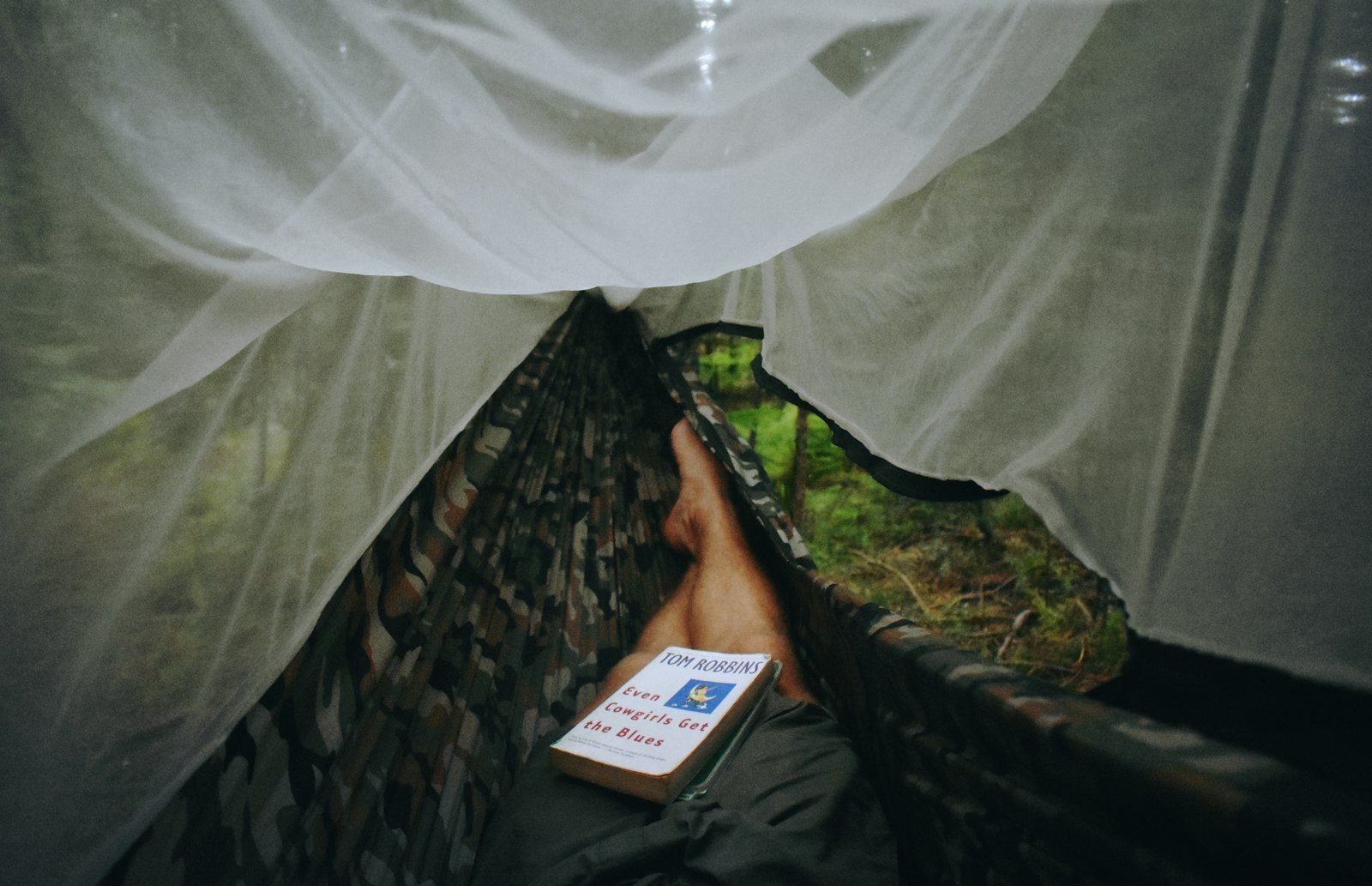
It is this: tip out the standing water, every week, everywhere it collects. Treat the water you cannot tip out, ponds, blocked drains, water butts, with Bti, which is cheap, safe and genuinely effective. Then put a barrier between you and the bite: a screen on the window, a net over the bed, the one layer that does not wear off, wash away, or need reapplying at dusk. A net does not care how recently you sprayed or what the mosquito has learned. And if you reach for a repellent on top of that, reach for an EPA-registered one: the agency's evaluated ingredients, DEET, picaridin, IR3535 and oil of lemon eucalyptus, have at least been measured against biting mosquitoes and hold them off for hours, not minutes. But treat it as a layer, not a force field. It degrades, it has to be reapplied, and a recent Virginia Tech study even found mosquitoes can learn to bite through DEET over repeated exposure. The barrier is the part that doesn't move. No bucket required, though you are welcome to one.
The viral hacks are not all nonsense, one of them is a professional tool in a homemade costume. But sorting the real from the merely shareable is precisely the work an honest summer demands. Next time a hack crosses your feed, ask the only question that matters: does it kill the larvae, or does it just make a good video?
What we know
Sources cited
- Mental Floss, The "Bucket of Doom" Mosquito Hack: Pros and Cons · https://www.mentalfloss.com/animals/insects/tiktok-bucket-of-doom-mosquito-hack-pros-cons
- Cleveland Clinic Health Essentials, Does Vanilla Extract Repel Mosquitoes? · https://health.clevelandclinic.org/does-vanilla-extract-mosquito-repellent-work
- Mosquito Squad, Does Coffee Really Repel Mosquitoes? (associate certified entomologist) · https://www.mosquitosquad.com/blog/miscellaneous/does-coffee-really-repel-mosquitoes/
- US Environmental Protection Agency, Bti for Mosquito Control · https://www.epa.gov/mosquitocontrol/bti-mosquito-control
- US Environmental Protection Agency, Skin-Applied Repellent Ingredients · https://www.epa.gov/insect-repellents/skin-applied-repellent-ingredients