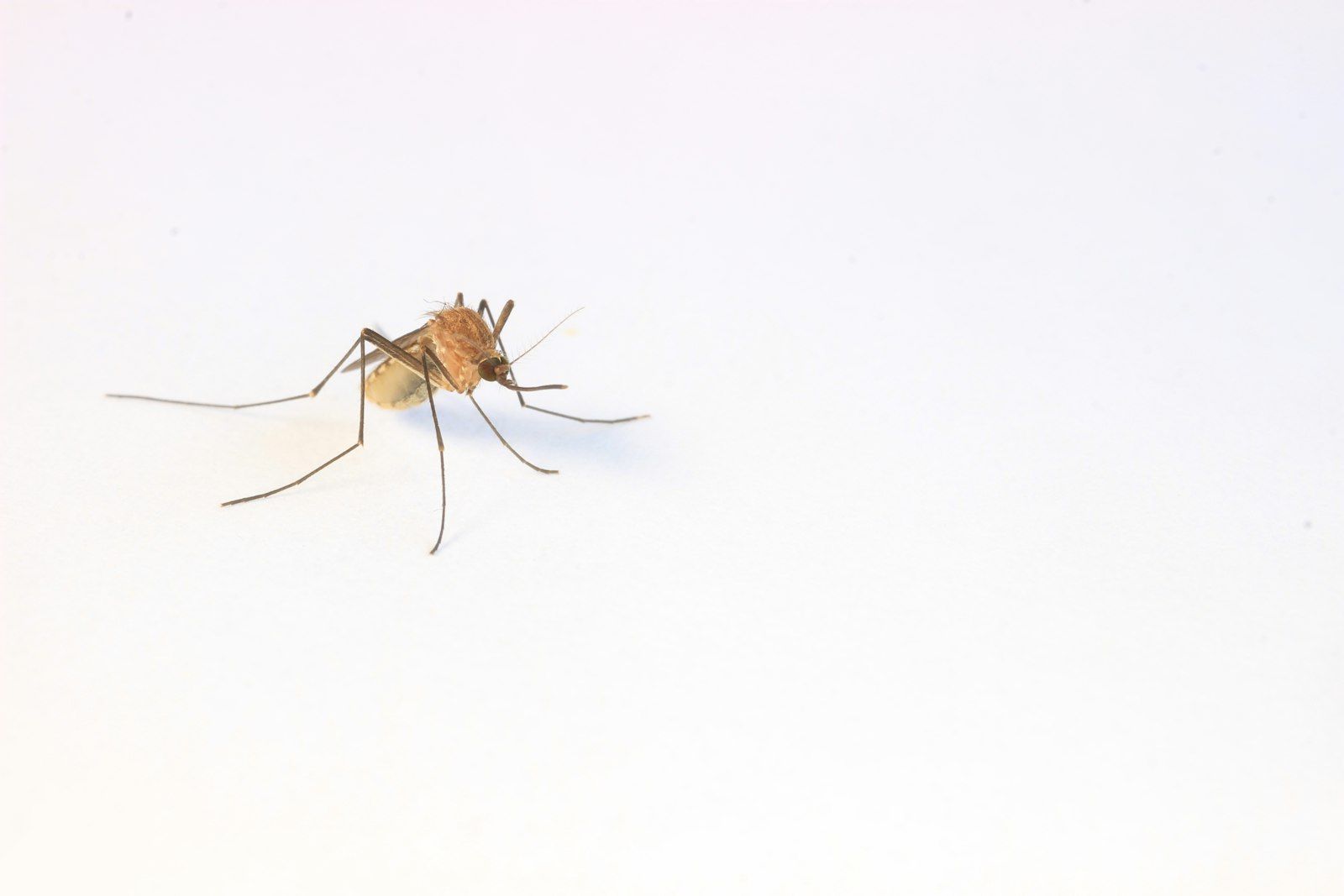
Aedes albopictus, the Asian tiger mosquito, is now established across 369 regions in 16 European countries, up from 114 a decade ago. As its range moves north and locally-acquired chikungunya and dengue seasons lengthen, the practical question for a household is simple: what keeps biting mosquitoes out of a bedroom. This is a look at what Europe's monitoring data show, why the vector is expanding, and why the durable answer at home is the physical barrier, the untreated net, the window screen and the emptied saucer of standing water.
A decade ago, a mosquito net over a European bed was an artefact of travel. You packed one for a trek in the tropics, a research trip to South-East Asia, a holiday near the equator. You did not hang one over a bed in a continental European apartment. The Asian tiger mosquito, Aedes albopictus, has changed that calculation.
The change is not a fashion. It is a measurable shift in where a biting, disease-competent mosquito can live, breed and feed. This piece looks at what the European monitoring data actually show, why the vector is moving north, what the 2025 transmission season looked like, and what a household can realistically do about it. The short answer for the home is old and unglamorous: the physical barrier. A close-mesh untreated net, a screened window, and an empty saucer where standing water used to sit are the most reliable defences a European bedroom has.
What the maps show
The European Centre for Disease Prevention and Control (ECDC) tracks invasive mosquitoes region by region and publishes the maps openly. In its World Mosquito Day 2025 update, the agency reported that Aedes albopictus is now established across 369 regions in 16 European countries, up from 114 regions a decade earlier. That is more than a threefold increase in established range in ten years, and the trend line points in one direction.
The tiger mosquito is a container breeder and a daytime biter. Unlike the malaria mosquitoes of the tropics, which feed mostly at night, Aedes albopictus is most active in daylight, with peaks in the early morning and the late afternoon and early evening. It lays its eggs in small volumes of standing water: a plant saucer, a blocked gutter, a discarded tyre, a forgotten bucket. That biology is exactly why source reduction around a home matters as much as any net.
A second signal sits alongside the range map. Between ECDC's June 2025 and April 2026 distribution updates, a new introduction of Aedes aegypti, the yellow-fever mosquito and a more efficient vector of urban dengue and chikungunya, was reported in Luxembourg. Introductions of this species have been recorded in Europe before, and one record does not make an established population. But it is precisely the kind of early signal the surveillance system exists to catch.
Why it is moving north
The driver is climate. Aedes albopictus is held back at its northern edge by cold winters and short days. The European Environment Agency's Climate-ADAPT indicator for the tiger mosquito describes the mechanism plainly: the species enters winter diapause when autumn temperatures fall below roughly 9.5 C and daylight drops under about 13.5 hours. As European autumns warm and the suitable season lengthens, the band of the continent where the mosquito can complete its life cycle pushes northward and the active season runs longer.
The wider climate context is not in dispute. The World Meteorological Organization and the Copernicus Climate Change Service, in their European State of the Climate 2025, found Europe's 2025 heat among the most severe on record. The Lancet Countdown on health and climate change, in its 2026 Europe report, tracks rising heat-attributable mortality and the gaps in the continent's adaptation. Warmer, longer summers are precisely the conditions in which a container-breeding mosquito thrives.
Modelling now maps that suitability onto specific cities. In January 2026 the European Commission's environment directorate published a news article reporting a peer-reviewed study (Radici and colleagues, Global Change Biology, 2025) that identified several major European cities, among them London, Paris, Frankfurt, Vienna and Zagreb, as becoming climatically suitable for the tiger mosquito. Suitability is not an outbreak, and a climate model is not a case count. What it describes is a rising probability: places that were once too cool for the vector are moving inside its envelope.
What the 2025 season actually looked like
The clearest real-world read comes from France, which runs the most developed enhanced surveillance in the region. As of 1 January 2025, Sante publique France recorded Aedes albopictus as colonising 81 of the 96 metropolitan departments. Colonisation means the mosquito is established there. It does not by itself mean local disease transmission, and the two should not be conflated.
Transmission is counted separately. For the 2025 season, Sante publique France reported 809 locally-acquired chikungunya cases and 30 locally-acquired dengue cases in mainland France, published on 6 May 2026. The agency attributed the high number of cases, and their early onset in the season, to the chikungunya epidemic in the Indian Ocean, particularly on Reunion. These cases were clustered across a limited number of regions, chiefly in the warmer south, rather than spread evenly, which is how autochthonous transmission behaves: it appears where an infected traveller returns, is bitten, and a local mosquito population is dense enough to pass the virus on.
Italy has followed a similar path, and researchers increasingly treat it as a European forerunner. A 2025 risk assessment in Nature Communications (Menegale, Manica and colleagues) modelled the local transmission of chikungunya and dengue in Italy and set out how, and where, self-sustaining transmission can take hold in a temperate European setting. These models do not predict tropical-scale epidemics in Europe. They describe a real, rising, seasonal risk that concentrates in the warmest weeks and the most heavily colonised areas.
The costs of these seasons are not only medical. A 2026 study in IJID Regions (Apouey and colleagues) traced the health, economic and social effects of arboviral epidemics in mainland France, from clinical care to lost working days to the public cost of the vector-control response. Prevention that stops bites from happening in the first place is, on that accounting, the cheap end of the problem.
The limits of chemical control
Insecticides are the default tool of vector control, and they are under pressure. A 2025 study in Parasites and Vectors (Pichler and colleagues) tracked the knock-down resistance mutations F1534C and I1532T in Aedes albopictus across Europe and found them spreading, concentrated in the eastern Mediterranean. The study did not sample every country, so this is a European trend rather than a claim about any single nation, but the direction is clear: the pyrethroids that treated nets, sprays and foggers rely on are losing ground against the vector in parts of its European range.
This matters for how a household thinks about protection. Chemical control has a resistance problem that will not resolve quickly. A physical barrier does not. A mosquito cannot evolve resistance to a mesh it cannot pass through. That is the central, unglamorous case for the untreated net and the fitted screen: their effectiveness does not decay as the insect's genetics change.
None of this makes repellents useless. Skin-applied repellents such as DEET work, and public-health bodies recommend them as a supplement, particularly outdoors and during the day when the tiger mosquito bites. The point is not chemical against physical. It is that the barrier is the durable foundation, and the repellent is the supplement layered on top.
What actually protects a household
For a home in a colonised European region, the protective layer is physical, and it is made of three ordinary things.
An untreated net over the bed. A close-mesh, untreated canopy keeps mosquitoes and other small biting insects off a sleeper without introducing any insecticide into the bedroom. The mesh has to be fine enough to exclude the insect, and the fabric breathable enough that the bed does not become a heat trap on a warm night. The opening has to be closed and kept closed. It carries no active substance, so it is not a biocidal product; WHO prequalification covers insecticidal vector-control products such as treated nets, and the EU Biocidal Products Regulation governs biocidal products (WHO; BfR; Regulation (EU) 528/2012).
Screens and source reduction. A fitted insect screen on a bedroom window lets a household sleep with the window open on a hot night without letting the vector in. Outdoors, the single most effective habit is emptying standing water: saucers under plant pots, blocked gutters, buckets, watering cans, anything that holds a few days of rain. The tiger mosquito breeds in exactly these small containers, so removing them removes the next generation at the source.
Protection for infants and travellers. For a baby too young for skin-applied repellents, paediatric guidance points consistently to the physical barrier, an untreated canopy over the cot or pram, as the appropriate protection. The American Academy of Pediatrics and the CDC set age thresholds below which some repellents are not advised, and France's ANSES and Germany's BfR publish their own age and concentration guidance (AAP; CDC; ANSES; BfR). For travel to malaria-endemic regions the calculation is different. There, insecticide-treated nets are the established, evidence-based tool, assessed under the World Health Organization's prequalification programme for insecticidal vector-control products (WHO). In the European market, biocidal products such as insecticidal nets are regulated under Regulation (EU) 528/2012 (BfR). A treated net earns its place on a trip to a high-burden setting. For routine protection in a European bedroom, the untreated barrier is the sensible default, and national travel-health guidance such as the UK Health Security Agency's and the CDC Yellow Book set out the distinction.
What a household can do tonight
The European mosquito map has changed, and it will keep changing. A household cannot slow the climate trend or redraw the surveillance map on its own. What it can do is simple, cheap and durable, and it does not wait on the surveillance system updating its estimate of local risk.
Close the mesh over the bed. Screen the bedroom window. Walk the garden or balcony once a week and tip out anything holding water. Keep a repellent for the hours spent outdoors. Pack a treated net for the next trip to a malaria-endemic region, and leave it packed the rest of the year.
The era when Europeans slept under a mosquito net only on safari is ending. The reason is not fear, and it is not fashion. It is a mosquito that now lives where Europeans live, and a set of plain, physical defences that still work against it.
Sources
- ECDC, World Mosquito Day 2025. Aedes albopictus established across 369 regions in 16 European countries, up from 114 a decade earlier.
- ECDC, invasive mosquito distribution maps. Region-by-region monitoring of Aedes albopictus and other invasive species in Europe.
- ECDC, Aedes albopictus factsheet. Species biology, daytime biting and container breeding.
- ECDC, current known distribution of Aedes aegypti, April 2026. A new introduction of Aedes aegypti reported in Luxembourg between the June 2025 and April 2026 updates.
- Sante publique France, chikungunya, dengue and Zika in metropolitan France, 2025 report. 809 locally-acquired chikungunya cases and 30 locally-acquired dengue cases, published 6 May 2026.
- Sante publique France, enhanced surveillance data 2025. Aedes albopictus colonising 81 of the 96 metropolitan departments as of 1 January 2025 (colonisation, not transmission).
- European Commission, Directorate-General for Environment news, 14 January 2026. Reports Radici et al., Global Change Biology, 2025: London, Paris, Frankfurt, Vienna and Zagreb among cities becoming climatically suitable for the tiger mosquito.
- Menegale F, Manica M, et al. Nature Communications, 2025. Risk assessment and perspectives of local transmission of chikungunya and dengue in Italy, a European forerunner.
- Pichler V, et al. Parasites and Vectors, 2025;18:506. Tracking pyrethroid resistance mutations I1532T and F1534C in Aedes albopictus across Europe; resistance spreading, concentrated in the eastern Mediterranean.
- Apouey B, et al. IJID Regions, 2026;20:100922. The health, economic and social effects of arboviral epidemics in mainland France.
- European Environment Agency, Climate-ADAPT: climatic suitability for the tiger mosquito. Autumn diapause below about 9.5 C and photoperiod under about 13.5 hours; season length 1971-2099.
- WMO and Copernicus Climate Change Service, European State of the Climate 2025. Europe's 2025 heat among the most severe on record.
- Kriit HK, et al. The Lancet Public Health, 2026;11(6):e386-e407. The 2026 Europe report of the Lancet Countdown on health and climate change.
- World Health Organization, prequalification of vector-control products. Assesses insecticidal vector-control products such as treated nets.
- Regulation (EU) 528/2012, Biocidal Products Regulation. Governs products containing an active substance intended to act against harmful organisms.
- UK Health Security Agency, mosquito bite avoidance advice for travellers.
- American Academy of Pediatrics (HealthyChildren), insect repellents. Guidance on repellents and children, including age thresholds.
- CDC Yellow Book 2026, mosquitoes, ticks and other arthropods.
- ANSES (France), guidance on mosquito repellents and protecting children.
- BfR (Germany), FAQ on repelling mosquitoes, ticks and flies.
This article is general information, not medical advice. Ask a doctor or pharmacist about your own health.