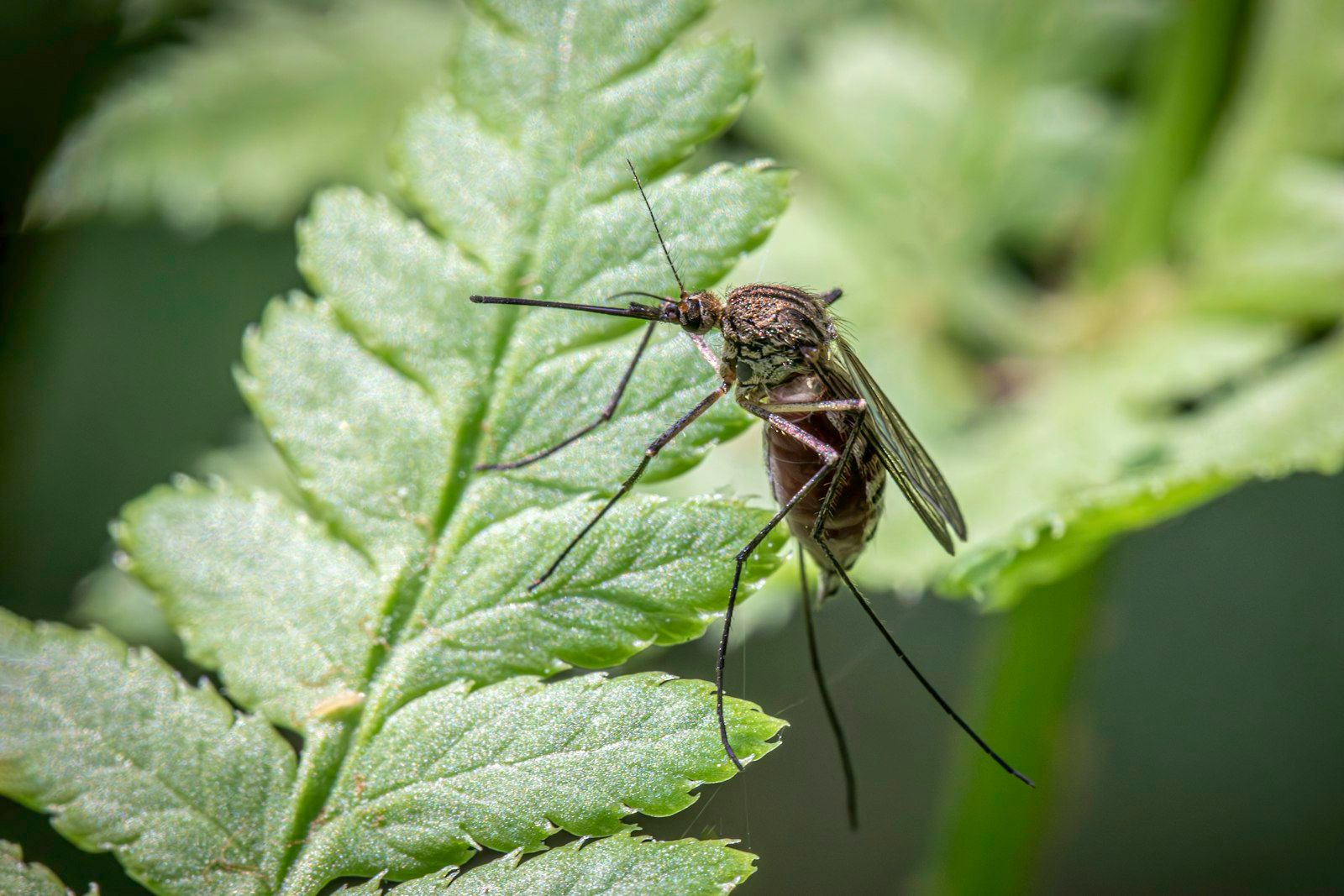
Aedes albopictus, the Asian tiger mosquito, is now established in parts of southern Germany and Austria, which places several districts in the ECDC risk category where household-level prevention becomes a reasonable behaviour. Germany and Austria recorded no local dengue transmission in 2026. Their cases remain travel-imported, while autochthonous chains further south in the EU/EEA are tracked in the ECDC weekly threats reporting. This article lays out what the data actually says, where the current risk sits in Germany and Austria, and how a household can act on it without buying into fear.
Aedes albopictus (the Asian tiger mosquito) has expanded northward across Europe, and the warming of European urban summers has lengthened the window in which it is active. ECDC vector-distribution data now places established populations in parts of southern Germany and Austria. Through the summer of 2026, the European Centre for Disease Prevention and Control's weekly threats reporting has tracked autochthonous transmission activity in mainland EU/EEA neighbourhoods further south, including active autochthonous case chains in parts of France and Italy. The question that residents of Munich, Vienna, Frankfurt, Berlin, Salzburg, Stuttgart, Linz or Dusseldorf actually want answered is whether their specific city is in a risk category where household-level protection becomes a reasonable behaviour in 2026, and if so, what the ECDC framework says to do about it.
This article says what the data actually says, where Germany and Austria sit in the ECDC framework today, what the Austrian (AGES) and German (RKI) surveillance references report, and how a household can act on it without buying into fear or commercial framing.
What the risk projections say, and what they do not say
The northward spread of Aedes albopictus is a multi-year trend, not a single-season event. ECDC vector-distribution data describes established and establishing populations across Europe, and the intersection of those populations with dense urban heat islands, warming summers, and connectivity to endemic regions through travel is what raises the probability of autochthonous transmission chains taking hold in the summer months. That a city has an established vector population, or sits in a warming corridor, is not a statement that autochthonous dengue transmission has been documented there in 2026.
The distinction matters. A multi-year projection is a planning input for health authorities, urban planners, and households. It is not a season-current statement that a city's residents are at imminent personal risk. Coverage that strips projection language down to "Vienna is now at risk of dengue" is unhelpful at best and fearmongering at worst. The honest framing, in 2026, is that Vienna, Frankfurt, Munich, Berlin, Salzburg, Stuttgart, Linz and Dusseldorf sit in a zone where autochthonous transmission chains could establish in the medium term, and where the ECDC four-level framework already gives them a discrete category to act on.
What the ECDC four-level Aedes risk framework actually says
The ECDC public health guidance for assessing and mitigating risk from locally acquired Aedes-borne viral diseases, published 1 July 2025, sorts every area of the EU/EEA into one of four categories. The categories are not arbitrary. They map onto concrete criteria about whether the vector is established, whether autochthonous transmission has been documented in the current season, and whether the local chain is sustained without imported seeding. For a household deciding what to do, the level tells you what kind of protection is proportionate to the actual risk.
Level 1: areas without established vector populations. Vector competence and import risk are present, but there is no established Aedes albopictus or Aedes aegypti population. The household action at this level is information and traveller awareness: if a household member travels to an endemic region, they should know that returning with fever requires medical attention and that preventing imported cases from seeding local transmission is a community contribution.
Level 2: areas with the vector established but no autochthonous transmission detected this season. Aedes albopictus is reproducing locally; surveillance is active; no autochthonous chain has been documented this season. Many southern German Lander and parts of lower Austria sit in this level. The household action at this level is layered prevention, with priority on eliminating standing water, sealing the house against mosquitoes, and being prepared to act at Level 3 if autochthonous transmission is reported nearby.
Level 3: areas with autochthonous transmission detected this season. A documented autochthonous chain exists in the current season. Several French departments and Italian regions reached this level in 2025. The household action at this level adds bed-net use during sleep and siestas, increased attention to daytime biting (because Aedes albopictus is a daytime biter with dawn and dusk peaks), and heightened clinical vigilance for fever-with-symptoms after potential exposure.
Level 4: areas with sustained transmission without import dependence. The chain is self-sustaining. No EU/EEA continental area is at this level in 2026. Some tropical and subtropical regions are.
The important household point: most German and Austrian urban areas sit at Level 1 or Level 2 in 2026, and the ECDC framework treats Level 2 as the trigger for proportionate household action. The framework does not require every household in a Level 2 area to buy specific products, install permanent structures, or adopt medical countermeasures. It requires the right information, a few seasonal habits, and attention to the framework level changes that health authorities publish weekly through the summer.
What the Austrian and German surveillance references say
The Austrian national reference is the AGES (Osterreichische Agentur fur Gesundheit und Ernahrungssicherheit) Dengue fever factsheet, which sets out case definitions, travel-associated and autochthonous case reporting, and the public-health pathway for confirmed cases. The German national reference is the Robert Koch-Institut (RKI) Dengue fever factsheet, which serves the same function, with the additional responsibility of integrating case reports with vector surveillance across the German Lander, including the active Aedes albopictus monitoring in several southern Lander.
The pattern these references document is consistent with the ECDC distribution data. Established Aedes albopictus populations are present in parts of Baden-Wurttemberg, Bayern (Bavaria), Rheinland-Pfalz, and Hessen. In Austria, established populations are present in parts of lower Austria, Burgenland, Steiermark (Styria), Karnten (Carinthia), and Wien (Vienna). The vector's range has expanded north and west across both countries since the ECDC factsheet update of April 2026.
What neither the AGES nor the RKI references document, in their publicly accessible materials as of mid-July 2026, is autochthonous dengue transmission in Germany or Austria in the current season. The 2025 autochthonous chains that put parts of France and Italy at ECDC Level 3 have not, to date, seeded autochthonous chains in German or Austrian neighbourhoods. The framework position is therefore Level 1 to Level 2 for most of urban Germany and Austria, with a sharp attention gradient to Level 3 if weekly ECDC reporting in July, August or September names a German or Austrian district in an autochthonous chain.
What "conditions now favourable" means in ECDC language
The phrase "conditions now favourable" appears in ECDC Aedes-borne disease assessments as a specific signal. It does not mean autochthonous transmission has occurred. It means the climate, vector density, imported-case pressure, and urban heat profile together meet the criteria that the ECDC framework treats as enabling autochthonous chains. In the July 2026 heat window, those enabling conditions have been present across several central European urban areas, including Munich, Vienna, Frankfurt and Berlin. That is a statement about conditions, not about transmission: none of these cities has a documented autochthonous chain in the current season.
For a household, the phrase is a signal to act at the ECDC Level 2 prevention framework. It is not a signal to panic, seek medical prophylaxis that does not exist, or treat single daytime mosquito bites as emergencies. It is a signal that the season has arrived where the household-level actions, eliminating standing water, sealing the house against mosquitoes, having a bed-net plan for sleep and siestas, and heightened clinical awareness for fever-after-travel or fever-without-travel that does not resolve in 48 hours, become reasonable seasonal behaviours rather than overcautious ones.
What a household in Germany or Austria can actually do this season
The ECDC framework does not require expensive equipment, exotic purchases, or permanent modifications. It requires attention, a few habits, and the willingness to act at the appropriate level. Six actions cover the Level 2 household.
1. Eliminate standing water once a week. Aedes albopictus breeds in small containers: flower-pot saucers, blocked gutters, open buckets, bird-bath overflow, neglected tarpaulins, discarded cups. The most effective household intervention in ECDC Level 2 areas is free, requires no purchase, and is the action with the highest documented impact per the ECDC framework. Check balconies, terraces, gardens, shared courtyards, and the parts of the building envelope where water collects.
2. Seal the house against mosquitoes. Window screens and door screens, intact and without gaps. For German and Austrian apartments where the landlord has not installed permanent screens, removable self-adhesive magnetic screens are a low-cost, removable option that fits typical European window dimensions. The objective is to make the indoor environment one that mosquitoes cannot enter, not to wage open warfare against the indoor environment.
3. Plan for bed-net use during sleep and siestas. This is the level at which the regulatory distinction between treated and untreated nets matters. Nets treated with permethrin, an insecticide of the pyrethroid class, are authorised at EU level under the Biocidal Products Regulation, family authorisation EU-0026815-0000, and are constructed to WHO specifications. They are designed for situations of higher autochthonous risk, travel to endemic regions, or sustained vector pressure. Untreated nets, untreated canopies, and untreated fine-mesh screens are physical barriers only. They hold the mosquito away from the person by mechanical exclusion, with nothing absorbed, inhaled, or re-applied. For an ECDC Level 2 household in Germany or Austria in 2026, an untreated bed net, an untreated canopy, or intact untreated window screens are proportionate. For ECDC Level 3, or for travel to endemic regions, treated nets become the proportionate option.
The distinction matters because the regulatory language for treated nets does not extend to untreated products. Treating untreated nets as if they carried BPR authorisation, or applying "WHO prequalified" language to untreated mesh, would be factually wrong and legally fragile. For households, the operational rule is to match the net type to the ECDC level and the use case, and to use the correct claim language when describing what they have bought.
4. Apply skin repellent for outdoor time at dawn and dusk. DEET-based, picaridin-based, or IR3535-based repellents at the concentrations recommended on the label. In Germany and Austria, these are available through pharmacies (Apotheke) and well-stocked Drogerie and Reformhaus outlets. The product complements, it does not replace, the structural household measures.
5. Cover skin at dawn and dusk. Long sleeves, long trousers, socks. Particularly on balconies, terraces, and outdoor seating areas during the ECDC Level 2 peak hours.
6. Heighten clinical awareness. Fever above 38.5 degrees Celsius with severe headache, retro-orbital pain, myalgia, arthralgia, or rash, after travel to an endemic region, or after a known mosquito exposure without travel, is a reason to consult a Hausarzt or Allgemeinmediziner promptly. Dengue is rarely fatal in non-endemic populations but it is unpleasant, the arthralgic form is prolonged, and the warning signs that warrant emergency attention (severe abdominal pain, persistent vomiting, mucosal bleeding, lethargy, sudden haematocrit change) need to be understood in advance rather than recognised late.
What the FAQ looks like for a German or Austrian household in 2026
Is there a dengue vaccine available in Germany or Austria in 2026? Two dengue vaccines are licensed in the EU: Qdenga (TAK-003) and Dengvaxia (CYD-TDV). Their indication, eligibility, and recommended populations differ, and a clinical decision about vaccination is a Hausarzt or travel-medicine conversation, not a household decision. Travel-medicine clinics in Berlin, Munich, Vienna and other major cities can advise on individual eligibility.
Is there a prophylaxis (preventive medication) for dengue? No. There is no chemoprophylaxis for dengue. Prevention is structural and behavioural at the household level, plus vaccination where indicated. Treatment for confirmed dengue is supportive: hydration, antipyretics, monitoring for warning signs.
What is autochthonous transmission and is it the same as a local outbreak? Autochthonous transmission means a documented local chain of infection without imported seeding. It is the ECDC Level 3 trigger. It is not the same as a community outbreak, which is a Level 4 condition. Most EU/EEA continental events in 2025 were at Level 3, not Level 4.
If I have not travelled, can I still get dengue in Munich or Vienna in 2026? The honest answer in mid-July 2026 is that autochthonous chains in Munich or Vienna have not been documented in the current season to the date of writing, while the ECDC framework treats both as Level 2 areas where the enabling conditions are met. Whether autochthonous transmission takes hold in the coming weeks depends on imported-case pressure, the heat profile, and vector density. Household-level preparation at Level 2 is proportionate either way.
What should I do if I find a tiger mosquito on my property? Report it to the local vector-monitoring programme. In Germany, the Muckenatlas citizen-science project and regional Gesundheitsamt accept citizen reports with photographs. In Austria, AGES coordinates similar reporting. The reports matter because they refine the local vector distribution data that drives the ECDC level assignment.
What this article is not
This article does not recommend a specific product, brand, or retailer. It does not link to a shop. It does not make a commercial case for any category of net, screen, or repellent. The Foundation, which publishes this article, explains what protects people and why. It does not sell, and it does not route to a shop.
The treated-net-versus-untreated-net distinction that appears in the household-action section is a regulatory category distinction, not a recommendation. It exists because the EU BPR authorisation for permethrin-treated mosquito nets (family authorisation EU-0026815-0000) covers a specific product class with specific claims, and that class does not extend to untreated nets, untreated canopies, or untreated fine-mesh screens. Households in ECDC Level 2 areas in Germany and Austria in 2026 have multiple proportionate options, and the choice among them is a household decision informed by the level, the use case, and personal preference.
This article also does not address the canopy bed, the baby-and-infant segment, or any vulnerable-population framing. The household decision-maker assumed by this article is an adult planning a season's behaviour in their own home. Different audiences require different framings, and infant, pregnancy, and elderly-care contexts are handled in dedicated articles rather than folded into a city-risk pre-position piece.
Sources
- European Centre for Disease Prevention and Control. Communicable Disease Threats Report, weekly. Week 26 (19 to 26 June 2026) and Week 27 (data cutoff 1 July 2026). https://www.ecdc.europa.eu/en/publications-and-data/monitoring/weekly-threats-reports
- European Centre for Disease Prevention and Control. Aedes aegypti, current known distribution in the EU/EEA. April 2026. https://www.ecdc.europa.eu/en/publications-data/aedes-aegypti-current-known-distribution-april-2026
- European Centre for Disease Prevention and Control. Public health guidance for assessing and mitigating risk from locally acquired Aedes-borne viral diseases in the EU/EEA. Published 1 July 2025. https://www.ecdc.europa.eu/en/publications-data/public-health-guidance-assessing-and-mitigating-risk-locally-acquired-aedes-borne
- AGES (Osterreichische Agentur fur Gesundheit und Ernahrungssicherheit). Denguefieber factsheet. https://www.ages.at/mensch/krankheit/krankheitserreger-von-a-bis-z/dengue-fieber
- Robert Koch-Institut (RKI). Dengue fever factsheet. https://www.rki.de/DE/Themen/Infektionskrankheiten/Infektionskrankheiten-A-Z/D/Dengue/dengue-node.html
- World Health Organization. Prequalification of Vector Control Products. Applies to insecticide-treated nets. https://extranet.who.int/pqweb/vector-control-products
Medical disclaimer
This article summarises public-health surveillance data and a household-level prevention framework drawn from ECDC, AGES and RKI public references. It does not replace personalised medical advice. If a household member develops fever above 38.5 degrees Celsius with severe headache, retro-orbital pain, myalgia, arthralgia, or rash, particularly after travel to a dengue-endemic region or a known mosquito exposure without travel, consult a Hausarzt (Germany) or Allgemeinmediziner (Austria) promptly. For warning signs that warrant emergency care (severe abdominal pain, persistent vomiting, mucosal bleeding, lethargy, or rapid clinical deterioration), present to emergency services without delay. The Foundation does not make vaccine recommendations and does not conduct vaccine programmes; vaccination decisions are a clinical conversation between a patient and their physician, ideally informed by a travel-medicine clinic for travel-related questions.