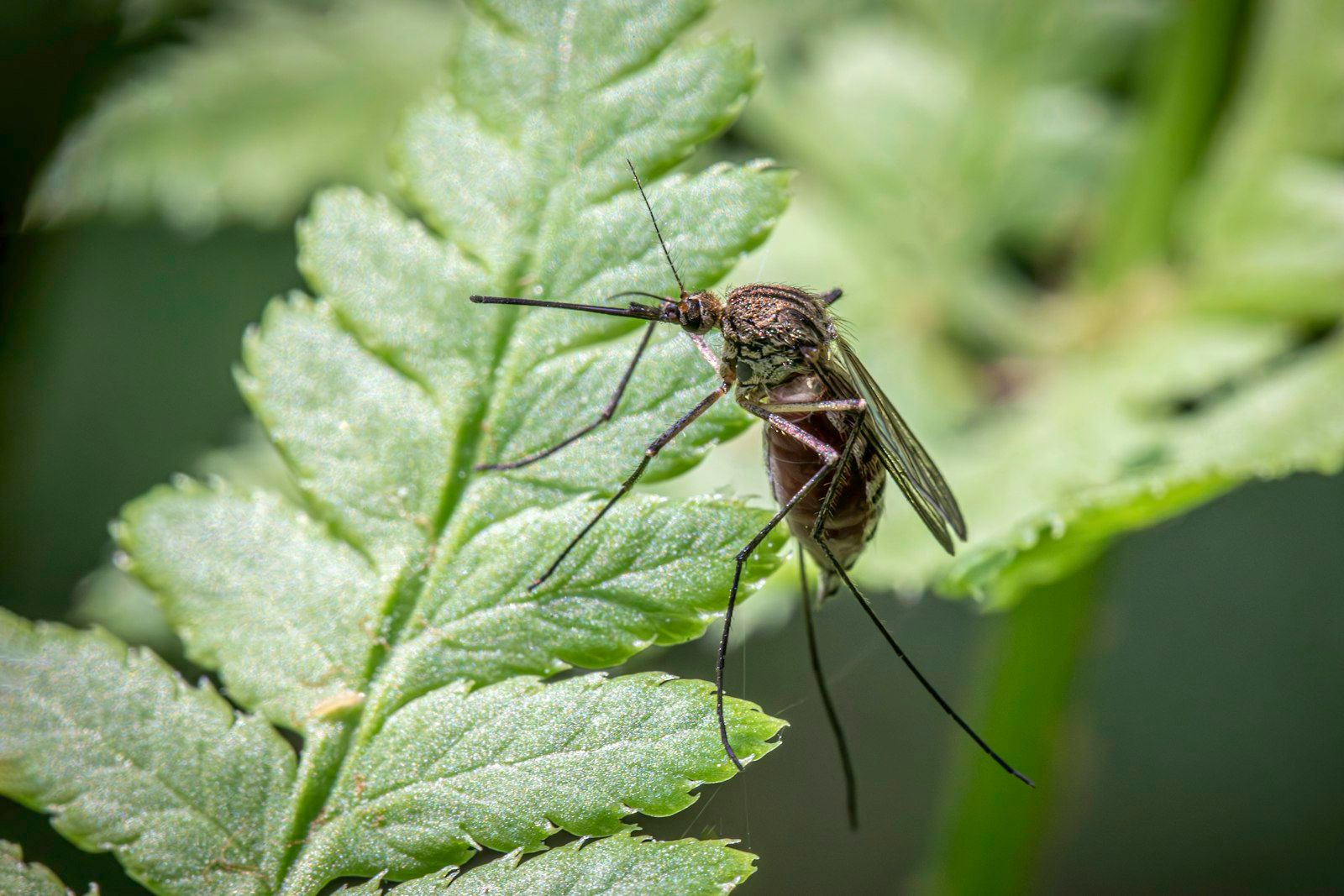
Spanish health surveillance and the Mosquito Alert citizen-science platform confirm the tiger mosquito is now established in Andalusia, has reached Galicia for the first time and has been detected inland in Extremadura. The ECDC now maps Aedes albopictus across 16 European countries and 369 regions.
The Spanish Ministry of Health entomological surveillance system, working with the Mosquito Alert citizen-science platform, has confirmed 2026 establishment of Aedes albopictus in Andalusia (Málaga city and surrounding areas, first confirmed breeding populations in Granada province, expansion along the Costa del Sol), the first established populations in Galicia (Pontevedra), and new detections in Extremadura (Cáceres) in the week of 2026-07-06 to 2026-07-09. The European Centre for Disease Prevention and Control Aedes invasive-mosquito distribution map, updated 2026-06-03, records Ae. albopictus now established in 16 European countries and 369 regions, with Aedes aegypti also expanding into new surveillance traps. The Iberian inland and northward expansion plus the pan-European atlas pair to anchor the consumer-protection editorial frame at the human-vector interface across the Mediterranean basin, the Black Sea coast, the Balkans, and the Sahel.
What the Spanish and ECDC surveillance lines actually report
The Spanish surveillance system combines official entomological trap data from regional and provincial health authorities with citizen-science reports submitted through the Mosquito Alert platform. The two data streams corroborate each other for the 2026 reporting period, and the combination is the strongest Iberian-invasive-vector signal of the cycle.
In Andalusia, the surveillance system has confirmed Ae. albopictus establishment in Málaga city and the surrounding areas, with the first confirmed breeding populations in Granada province and expansion along the Costa del Sol. The Costa del Sol expansion is particularly notable because it represents the south-eastern Mediterranean tourist corridor where outdoor hospitality, residential gardens, and ornamental water features create high-density habitat for the tiger mosquito.
In Galicia, the surveillance system has recorded the first established populations in Pontevedra province. The Pontevedra establishment is the first confirmed Ae. albopictus presence on the Atlantic coast of north-western Spain, well north of the previously established Mediterranean and southern Atlantic distribution, and represents a structural northward expansion along the Portuguese and Galician coast.
In Extremadura, the surveillance system has recorded new detections in Cáceres province. The Cáceres detections are the first confirmed Ae. albopictus presence in inland western Spain, well away from the coastal corridor, and represent a structural inland expansion through central Iberia.
The ECDC pan-European atlas is the comparative context. The 16 countries and 369 regions where Ae. albopictus is now established is the largest distribution recorded in the ECDC invasive-mosquito mapping programme to date, and the 2025 to 2026 period has been framed by ECDC commentary as a potential new normal for European mosquito-borne disease activity. The Ae. aegypti expansion into new surveillance traps is a parallel signal, with the yellow fever mosquito establishing or expanding in Cyprus, Greece, and the Portuguese Atlantic islands in addition to its long-standing presence in Madeira and the Black Sea coast.
Why the Iberian inland and northward expansion matters for the 2026 cycle
The Iberian inland and northward expansion matters for four reasons. First, it confirms that the Ae. albopictus invasion front is no longer confined to the Mediterranean and southern Atlantic coastal corridors and is now moving inland through central Iberia and northward along the Atlantic coast. Second, it pairs naturally with the Sturiale et al. BMC Biology autogeny mechanism to explain how the tiger mosquito is establishing across so many habitat types, including those where vertebrate host density is low. Third, it pairs naturally with the Doumbia et al. PLoS Neglected Tropical Diseases Sahel dengue emergence context to extend the Ae. albopictus editorial frame from the EU and the Mediterranean basin into the Sahel and Afrique-sub-Saharienne regions where the same invasive-vector dynamics are amplifying dengue, chikungunya, and Zika transmission risk. Fourth, it anchors the consumer-protection editorial frame at the household, traveller, and outdoor worker level across the new establishment regions, where the in-season consumer-protection guidance is the structural complement to the upstream institutional surveillance and the upstream molecular and physiological research.
The first point is the most important for the 2026 European vector-borne disease editorial cycle. The Costa del Sol, the Pontevedra Atlantic coast, and the Cáceres inland corridor are three distinct habitat types, each with a different combination of climate, host density, and human activity. The tiger mosquito is establishing in all three. The pattern is consistent with the ECDC pan-European atlas showing 16 countries and 369 regions, and with the Sturiale et al. autogeny mechanism showing that Ae. albopictus can establish and maintain populations in low-host-density habitats.
The second point is the most important for the molecular and physiological context. The Sturiale et al. paper, also published this week, identifies the molecular and physiological basis for autogeny in invasive Ae. albopictus. The Iberian inland and northward expansion is the field-level confirmation that the autogeny mechanism is operationally relevant in the European and Mediterranean context. The two together supply the strongest molecular-to-field 2026 Ae. albopictus arc of the cycle.
The third point is the most important for the Sahel and Afrique-sub-Saharienne extension. The Doumbia et al. paper, also published this week, identifies dengue as a growing public health threat in Mali through a 2,022-patient acute undifferentiated fever cohort. The Sahel and Afrique-sub-Saharienne dengue emergence context is the southern extension of the same Ae. albopictus and Ae. aegypti invasive-vector dynamics that are driving the Iberian inland and northward expansion. The two together supply the strongest north-south Ae. albopictus editorial arc of the cycle.
The fourth point is the most important for the consumer-protection editorial frame. The W25 platform Y-2 message ("physical barrier is the layer available now, for everyone, with no supply ceiling and no excluded cohort") is the durable consumer-protection framing. The Iberian inland and northward expansion, the ECDC pan-European atlas, the Sturiale et al. autogeny mechanism, and the Doumbia et al. Sahel dengue emergence context all reinforce the structural relevance of the consumer-protection layer at the household, traveller, and outdoor worker level across the new establishment regions and the new epidemiological contexts.
What the Iberian expansion does NOT say
The Spanish and ECDC surveillance lines do not address several adjacent questions that the editorial frame should not over-claim. The Spanish surveillance system does not establish autochthonous chikungunya, dengue, Zika, or West Nile virus transmission in the new establishment regions. Entomological establishment is a precondition for autochthonous transmission but is not equivalent to autochthonous transmission. The ECDC pan-European atlas does not establish the prevalence of autochthonous arbovirus transmission in the 369 regions where Ae. albopictus is established. The atlas records entomological presence, not transmission intensity. The Sturiale et al. autogeny mechanism does not establish that all field populations of invasive Ae. albopictus are autogenous. The selected-line experiments show that the autogeny trait can evolve rapidly under laboratory selection, but the prevalence of autogeny in field populations across the 16 European countries and 369 regions is not quantified. The Doumbia et al. Sahel dengue context does not establish that the Iberian invasive Ae. albopictus populations are the same populations as the Sahel Ae. albopictus populations. The two contexts are linked by the editorial frame of invasive-vector dynamics but are distinct epidemiological settings.
What to watch next
The 2026 W28 editorial platform should track four near-term developments. First, the ECDC W28 weekly bulletin and W28 Communicable Disease Threats Report, both expected on Friday 2026-07-10, will record the latest EU and European Economic Area autochthonous arbovirus transmission picture for the 2026 season, including any autochthonous chikungunya, dengue, Zika, or West Nile virus transmission in Ae. albopictus established areas. Second, the Spanish Ministry of Health next quarterly entomological report will record the latest establishment and expansion picture for the 2026 reporting period, including any further inland and northward expansion in central and northern Spain. Third, the Mosquito Alert citizen-science platform next data release will record the latest citizen-science reports of Ae. albopictus and Ae. aegypti across Spain and the broader European and Mediterranean basin. Fourth, the consumer-protection editorial frame should follow the ECDC invasive-mosquito distribution map updates to track the next inland and northward establishment events across the 16 countries and 369 regions now mapped, and pair those updates with practical consumer-protection guidance for households, travellers, and outdoor workers in established and newly established Ae. albopictus regions.
The institutional recognition of the Iberian inland and northward expansion, the ECDC pan-European atlas, the Sturiale et al. autogeny mechanism, and the Doumbia et al. Sahel dengue emergence context is the upstream signal. The consumer-protection layer is the in-season complement that operates at the human-vector interface across the new establishment regions and the new epidemiological contexts, and the W25 platform Y-2 message is the durable consumer-protection framing that pairs with all four institutional signals without supplanting any of them.
Published 2026-07-10 · Mosticare Editorial