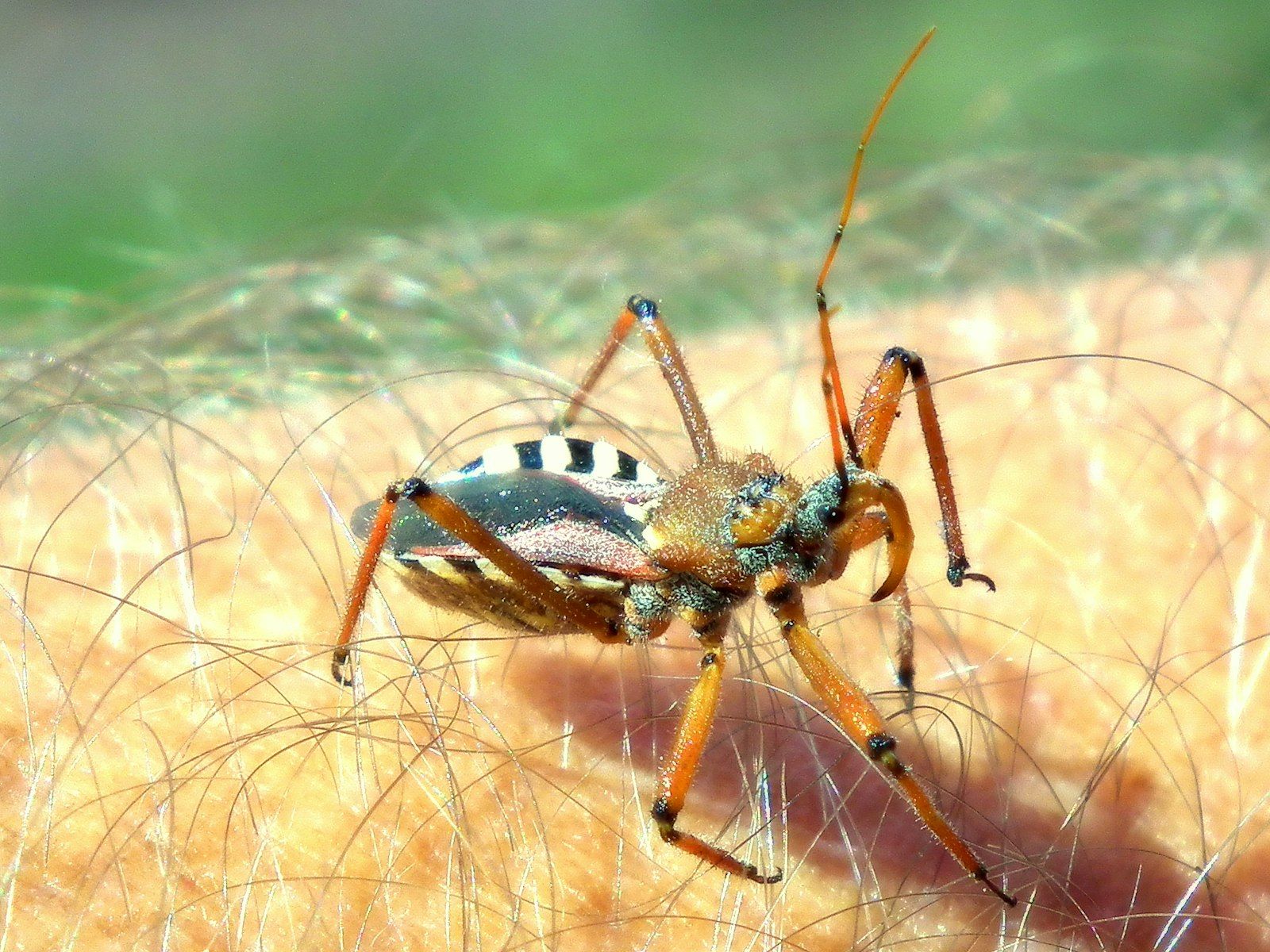
Some tiger mosquitoes can lay a first batch of eggs without ever taking a blood meal. A US research consortium, writing in BMC Biology, has identified the genetic and physiological basis of that trait, helping explain how Aedes albopictus keeps establishing across Europe even where hosts are scarce.
A 6-institution United States consortium led by Georgetown University and Yale University, working with Ohio State University, University of Oregon, Montclair State University, University of California Riverside, and the American Museum of Natural History, published the first combined life-history, genomic, and gene-expression analysis of autogeny in invasive Aedes albopictus in BMC Biology on 9 July 2026. Autogeny is the capacity of a female mosquito to produce a first clutch of eggs without consuming a vertebrate blood meal, and the new work shows that blood-independent Ae. albopictus females exhibit a longer larval development period, larger adult body size, elevated larval expression of amino acid and lipid storage genes (hex1.1 and lsd-2), a 40 Mb differentiated genomic region between selected and control lines, and differential abundance of microRNAs and mRNAs related to reproductive physiology. The paper supplies the molecular and physiological foundation for understanding why the tiger mosquito continues to establish across the European Union, the Mediterranean basin, the Black Sea coast, the Balkans, and the Sahel even in low-host-density habitats and across seasonal troughs when vertebrate hosts are scarce.
What Sturiale et al. actually measured
The team integrated three complementary approaches. First, life-history measurements compared a population of Ae. albopictus selected for blood-independent reproduction with a blood-dependent control population across multiple generations. Second, genomic analyses used linkage mapping and FST outlier scans to identify regions of the genome that differed systematically between the selected and control lines. Third, transcriptomic analyses profiled messenger RNA and microRNA abundance in both larvae and adults from the two lines.
The life-history signal is unambiguous. Blood-independent females take longer to develop as larvae and emerge as larger adults than blood-dependent controls, which the authors interpret as evidence that blood-independent larvae sequester more nutrients during the larval stage and carry those reserves forward into the adult stage. The genomic signal is concentrated in a ca. 40 Mb region that is highly differentiated between the selected and control lines, identifying a candidate genomic interval that contains genes contributing to the autogeny phenotype. The transcriptomic signal is a coherent set of differentially abundant mRNAs and microRNAs linked to reproductive physiology, with the larval stage showing elevated expression of two storage-protein genes (hex1.1 and lsd-2) that are central to amino acid and lipid reserve management in insects.
The integration of the three lines of evidence is what makes the paper a primary milestone rather than another descriptive vector-biology study. The longer larval development plus larger adult body size is the life-history phenotype. The 40 Mb differentiated genomic region is the candidate locus. The elevated hex1.1 and lsd-2 expression plus altered microRNA and mRNA abundance is the molecular mechanism. Together, they support a coherent model in which larval nutrient sequestration and altered vitellogenesis regulation combine to enable blood-independent reproduction, with the candidate genes in the 40 Mb region supplying the heritable substrate.
Why the autogeny peg matters for the 2026 cycle
The autogeny finding is structurally important for three reasons. First, it identifies a molecular and physiological basis for one of the most consequential adaptations in invasive Ae. albopictus: the ability to maintain populations in low-host-density habitats. Second, it provides a foundation for the development of novel paradigms to suppress disease transmission by vector mosquitoes, as the authors note explicitly. Third, it pairs naturally with the 2026 ECDC invasive-mosquito distribution map and the same-week Spanish surveillance updates to anchor the consumer-protection editorial frame at the human-vector interface across the EU, the Mediterranean basin, the Black Sea coast, the Balkans, and the Sahel.
The first point is the most important for consumer-facing editorial framing. A female mosquito that can produce a first clutch of eggs without biting a vertebrate host is a mosquito that can establish a breeding population in a habitat where vertebrate hosts are scarce, intermittent, or absent. Urban containers, ornamental ponds, discarded tyres, and the water reservoirs of ornamental plants all qualify. The implication is that the consumer-protection layer cannot assume that Ae. albopictus populations will track host availability in the way that obligate-blood-feeding mosquito populations do. The autogeny finding is the first formal molecular and physiological documentation of the mechanism behind that disconnect.
The second point is the most important for the longer-term research agenda. The authors frame the work explicitly as a foundation for developing novel paradigms to suppress disease transmission by vector mosquitoes. The candidate genes and the 40 Mb genomic region identified here are potential targets for genetic control strategies, including Wolbachia-based incompatible insect technique, sterile insect technique, and gene-drive approaches. The paper is therefore not only a primary research contribution but also an enabling resource for downstream vector-control research.
The third point is the most important for the 2026 European and Mediterranean editorial cycle. The ECDC invasive-mosquito distribution map updated 2026-06-03 records Ae. albopictus now established in 16 European countries and 369 regions. The Spanish surveillance system, working with Mosquito Alert citizen-science data, confirmed 2026 establishment of Ae. albopictus in Andalusia (Málaga, Granada), first established populations in Galicia (Pontevedra), and new detections in Extremadura (Cáceres) in the week of 2026-07-06 to 2026-07-09. The autogeny mechanism provides the molecular explanation for why the tiger mosquito is now present across so many regions and so many habitat types, including those where vertebrate host density is low.
What the autogeny peg does NOT say
The Sturiale et al. paper does not address several adjacent questions that the editorial frame should not over-claim. The paper does not establish that all invasive Ae. albopictus populations are autogenous. The selected-line experiments show that the autogeny trait can evolve rapidly under laboratory selection, and the genomic and transcriptomic signals identify candidate loci and mechanisms, but the prevalence of autogeny in field populations across the 16 European countries and 369 regions is not quantified. The paper does not establish that autogeny is the dominant driver of Ae. albopictus establishment in any particular region. Autogeny is one adaptation among several, including cold tolerance, photoperiodism, desiccation resistance, and competitive advantage against Ae. aegypti, that contribute to the tiger mosquito's invasive success. The paper does not establish a direct link between the autogeny mechanism and any specific disease transmission pattern. The work is foundational molecular and physiological research, not an epidemiological study. The paper does not address the consumer-protection layer directly. The authors frame the work as a foundation for developing novel paradigms to suppress disease transmission, but the immediate consumer-protection implications (repellent effectiveness, physical barrier performance, source reduction guidance) are downstream applications, not findings reported in this study.
What to watch next
The 2026 W28 editorial platform should track four near-term developments. First, the ECDC W28 weekly bulletin and W28 Communicable Disease Threats Report, both expected on Friday 2026-07-10, will record the latest EU and European Economic Area autochthonous arbovirus transmission picture for the 2026 season, including any autochthonous chikungunya, dengue, Zika, or West Nile virus transmission in Ae. albopictus established areas. Second, the EpiCentro Istituto Superiore di Sanità 2026 WNV and Usutu virus bulletin, expected mid to late July 2026, will record the latest Italian WNV and Usutu virus transmission picture for the 2026 season, including any autochthonous transmission in Emilia-Romagna, Veneto, Lombardia, or Piemonte. Third, the first peer-reviewed European-field confirmation of autogeny prevalence in invasive Ae. albopictus populations, building on the Sturiale et al. candidate loci, would establish the public-health relevance of the autogeny mechanism in the European and Mediterranean context. Fourth, the consumer-protection editorial frame should follow the ECDC invasive-mosquito distribution map updates and the Spanish Ministry of Health entomological reports to track the next inland and northward establishment events, and pair those updates with practical consumer-protection guidance for households, travellers, and outdoor workers in established and newly established Ae. albopictus regions.
The consumer-protection layer for the 2026 European and Mediterranean Ae. albopictus season is the in-season complement to the molecular and physiological research reported by Sturiale et al. The autogeny mechanism explains why the tiger mosquito is so difficult to suppress at the population level; the consumer-protection layer operates at the human-vector interface independent of host antiviral response, independent of blood supply screening, and independent of any specific genetic control strategy. The two are complementary rather than substitutable, and the W25 platform Y-2 message ("physical barrier is the layer available now, for everyone, with no supply ceiling and no excluded cohort") is the durable consumer-protection framing that pairs with the Sturiale et al. foundational research without supplanting it. The institutional recognition of the molecular and physiological basis of Ae. albopictus invasiveness is the upstream signal; the consumer-protection layer is the in-season complement that operates at the household, traveller, and outdoor worker level across the 16 European countries and 369 regions now mapped by the ECDC invasive-mosquito surveillance atlas and across the Sahel and Afrique-sub-Saharienne regions where the autogeny mechanism amplifies the same invasive-vector dynamics reported by Doumbia et al. for the dengue-Sahel-emergence editorial pillar.
Published 2026-07-10 · Mosticare Editorial