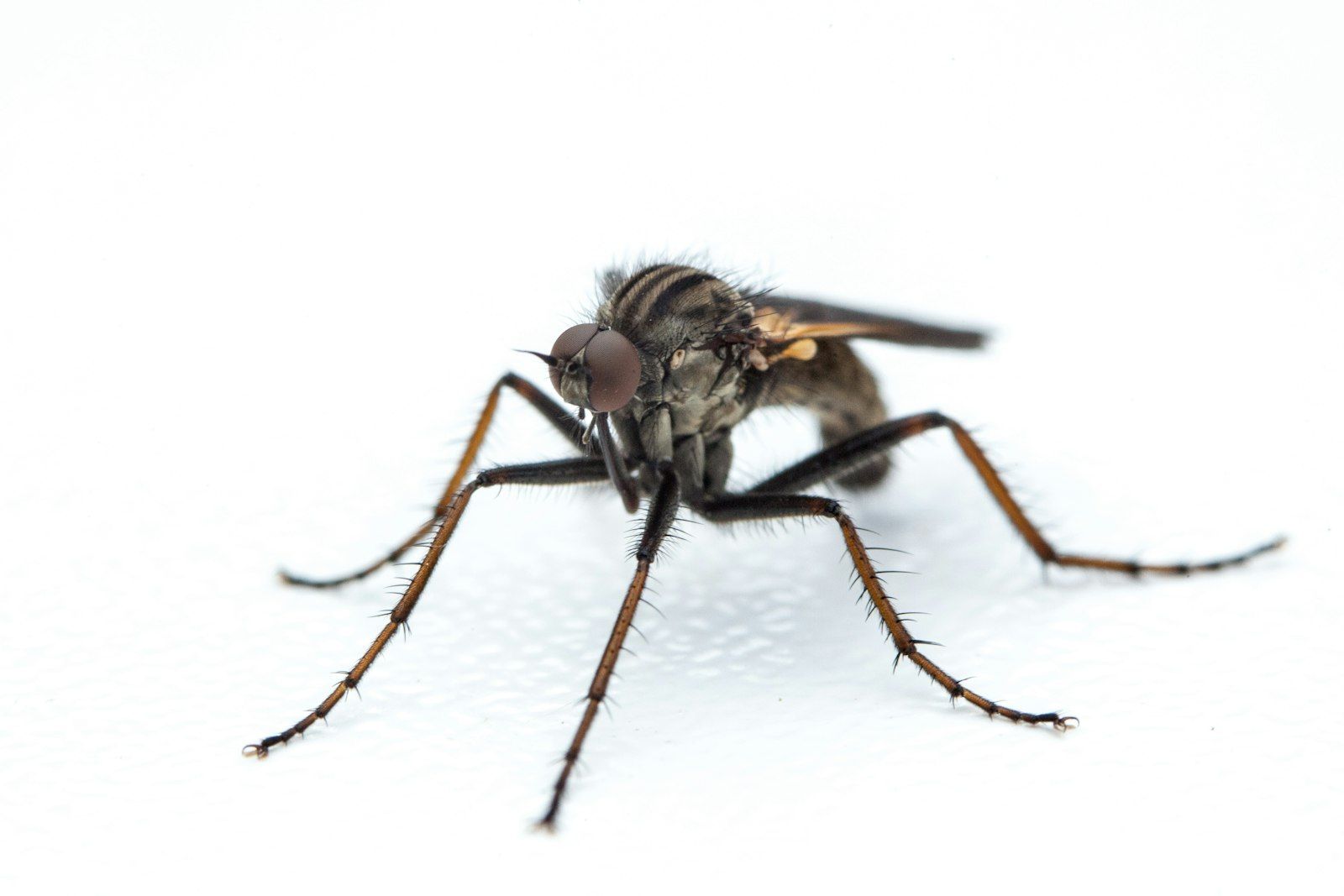
Between mid-June and late September 2025 the southern Chinese city of Foshan logged 16,452 locally transmitted chikungunya cases, the largest such outbreak in mainland Chinese history. The vector was Aedes albopictus, the same Asian tiger mosquito now established in 369 NUTS-3 regions across 26 European countries, carrying a strain with three mutations tuned to it.
In the summer of 2025, the southern Chinese city of Foshan ran a public-health experiment nobody asked for. Between mid-June and late September, more than 16,000 of its residents fell ill with chikungunya, the largest locally transmitted outbreak of the disease ever recorded in mainland China. The vector was the Asian tiger mosquito. The same insect now lives in Bologna, Barcelona, Marseille and the suburbs of Munich.
If you live in a European city with a tiger mosquito problem, and most of the EU's southern half now does, Foshan is the case study you want to read.
What happened in Shunde
The first symptoms appeared on 16 June 2025. By 9 July, Foshan's authorities were officially notifying the national system. Ten days later, on 19 July, the city counted 681 new chikungunya cases in a single 24-hour period, the peak of the curve. By 26 July, China CDC Weekly was reporting 4,824 confirmed cases across Guangdong Province, of which 4,754 (98.5%) were in Foshan, and 4,208 (87.2%) in a single district called Shunde.
The curve did not stop there. By 20 August, more than 15,000 cases had been logged (International Journal of Infectious Diseases). By 27 September, when the books were closed on the wave, Guangdong had recorded 16,452 locally transmitted chikungunya cases, the largest such outbreak in China's history. Eleven cities outside Foshan logged a combined seventy. The story was, almost entirely, one district's story.
And yet, and this is the figure that should stop the reader for a moment, there were no deaths. Of the cases reviewed by China CDC, "all" were "mild" with "no severe illness or death" reported. The cost of 16,452 chikungunya infections was paid in stiff joints, lost work, hospital isolation rooms, and one of the most aggressive vector-control campaigns ever mounted by a Chinese city. It was not paid in lives. That is a remarkable, and underreported, public-health success.
The mosquito, and where it travels
Chikungunya is carried by Aedes mosquitoes, historically Aedes aegypti in the tropics, but increasingly Aedes albopictus, the so-called Asian tiger mosquito, in places that used to be too cold for arboviral disease. Foshan sits at roughly 23 degrees north, on the Pearl River Delta. Hot and humid in summer, yes, but a long way from any cliché about tropical disease. The neighbourhoods worst hit are dense, mid-rise, working-age, and look more like a Chinese Lyon than a tropical village.
The reason the virus moved so fast is now well understood. Genomic work, summarised in a follow-up paper by China CDC, shows the Foshan strain belongs to the East-Central-South African (ECSA) genotype, Middle African Lineage, but carries three mutations (E1-A226V, E2-L210Q, E2-I211T) that are normally associated with the Indian Ocean Lineage. Each mutation is known to make the virus replicate faster inside Aedes albopictus and shorten the time between mosquito bite and infectiousness. In the authors' phrasing, the strain shows "adaptive changes" tuned to the tiger mosquito.
Phylogenetically, the closest match to the Foshan virus is the strain that drove the 2024-2025 chikungunya epidemic on La Réunion, the French Indian Ocean island. The most parsimonious story is therefore the simplest one: a viraemic traveller arrived in Guangdong from the Indian Ocean during the early summer rains, was bitten by a local tiger mosquito, and a virus that had spent two years optimising itself for Aedes albopictus found a city of them waiting.
How Foshan stopped it
The Chinese response was unusually muscular. Confirmed cases were placed in mandatory hospital isolation under bed nets for seven days or until they tested PCR-negative. Within a 100-metre radius of every case's home and workplace, public-health teams sprayed adulticides and emptied breeding sites. Households received insecticide-treated window screens and bed nets. Surveillance teams tracked the Breteau Index and Area Density Index, two standard measures of Aedes larval density, and reported that mosquito densities fell to safe levels in 78% of affected communities.
Two ingredients made this work. The first was speed: the response was visible within days of notification, not weeks. The second was a willingness to accept the social cost of seven-day hospital isolation for a non-fatal disease, a tool not many European democracies have in their box, and one Mosticare's editorial line would not advocate for. But the underlying lesson is portable: dense, fast, source-reduction-based vector control works against Aedes albopictus, and it works without a vaccine.
Why Europe should care, gently
Europe's tiger mosquito map is no longer a curiosity. As of June 2025, the European Centre for Disease Prevention and Control reports established Aedes albopictus populations in 369 NUTS-3 regions across 26 countries, from Athens to the suburbs of Paris, from Catalonia to the Po Valley, with footholds now confirmed in southern Germany and northern France. France alone recorded 480 locally acquired chikungunya cases in 2025, including the country's first ever case in Alsace.
What Foshan demonstrates, in painfully clear numbers, is that a single imported case dropped into a dense albopictus city can, in eight weeks, produce sixteen thousand more. The ingredients are not exotic. They are: the right mosquito (in place), the right virus lineage (a flight away), the right summer (warmer every year), and a delay in the public-health response. The first three of those ingredients are now present, on most summer days, in dozens of European cities.
The Mosticare reading of Foshan is not alarm. It is the older, duller virtue: the boring habits compound. Empty the saucers under the flowerpots. Sleep under a treated net when you travel to anywhere the tiger lives. Support your municipality's source-reduction work the way you support its bins. Foshan's success was that nobody died. Its lesson is that the curve can climb very fast indeed before anyone notices.
What to watch next
Three signals will tell us whether the Foshan playbook is the new normal or a one-off.
- The 2026 albopictus season in Réunion and in Guangdong. A second consecutive outbreak in either place would suggest the ECSA-MAL strain is now permanently optimised for tiger mosquitoes.
- The first 2026 autochthonous chikungunya case in mainland Europe. Italy and France are the two countries epidemiologists watch. Whichever territory it lands in will reset every European public-health communication plan for the summer.
- Whether the EMA or national authorities adjust travel-vaccination guidance for the Ixchiq and Vimkunya chikungunya vaccines. Neither is a tourist staple yet. After Foshan, that may begin to change.
What we know
Sources cited
- China CDC Weekly, "An Outbreak of Chikungunya Fever in China, Foshan City, Guangdong Province, China, July 2025", https://weekly.chinacdc.cn/en/article/doi/10.46234/ccdcw2025.172
- China CDC Weekly, "Outbreak of Chikungunya Virus with Aedes albopictus-Adaptive Mutations, Guangdong Province, China, 2025", https://weekly.chinacdc.cn/en/article/doi/10.46234/ccdcw2025.260
- International Journal of Infectious Diseases, "Explosive chikungunya virus outbreak in China," 2025, https://doi.org/10.1016/j.ijid.2025.108089
- Journal of Infection, genomic paper on the 2025 Guangdong outbreak, https://doi.org/10.1016/j.jinf.2025.106591
- European Centre for Disease Prevention and Control, "Aedes albopictus, current known distribution," June 2025, https://www.ecdc.europa.eu/en/publications-data/aedes-albopictus-current-known-distribution-june-2025
- World Health Organization, "Chikungunya" fact sheet, https://www.who.int/news-room/fact-sheets/detail/chikungunya