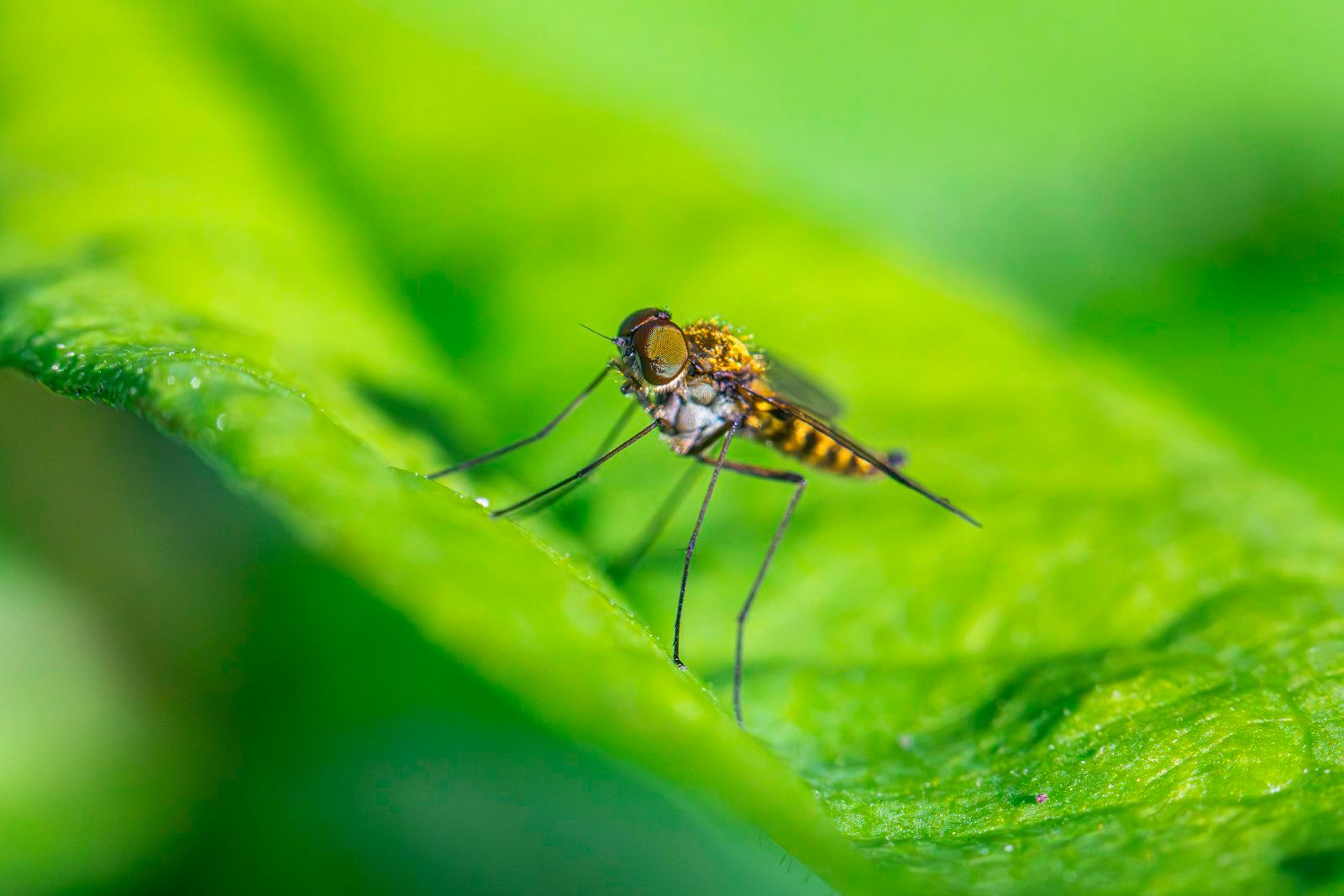
A study published 27 May 2026 in *Frontiers in Cellular and Infection Microbiology* runs ensemble species-distribution models across 16 IPCC climate scenarios and projects the climatically suitable zone for chikungunya expanding into north-central Europe, north-eastern North America and East Asia by 2100. The mosquito that carries the virus in temperate climates, *Aedes albopictus*, the Asian tiger mosquito, is already established across 83 of France's 96 départements. The researchers' advice is to prepare before 2040, not at the end of the century.
A virus that most Europeans still think of as a tropical souvenir has just been mapped onto Germany, Britain and New England. Not today, by 2100. But the mosquito that would carry it is already in 83 of France's 96 départements, which makes the forecast less a sci-fi scenario and more a slow-motion arrival you can already watch.
The map comes from a study published on 27 May 2026 in Frontiers in Cellular and Infection Microbiology, led by researchers in China including Ye Xu and Yang Wu. They built ensemble species-distribution models, several modelling approaches pooled together to reduce the bias of any single one, and ran them against 16 climate scenarios from the Intergovernmental Panel on Climate Change. The question was simple: as the world warms, where does chikungunya become possible?
The headline number, and the one underneath it
Start with where we are. The study finds that 21.26% of the world's land area, across 139 countries, is already climatically suitable for chikungunya transmission, overwhelmingly in the tropics and subtropics. That is the baseline. Roughly a fifth of the planet's land could, in principle, host the virus today.
The projection is that this suitable zone marches polewards. By 2100, the models push transmission risk into north-central Europe, north-eastern North America and East Asia, naming the United Kingdom, Germany, the United States, China and Japan among the territories drawn into the frame. These are not places that feature in most people's mental map of mosquito-borne disease. That is precisely the point.
The mechanism is a single, cold-tolerant insect. Chikungunya in the temperate world travels on Aedes albopictus, the Asian tiger mosquito, rather than its more famous tropical cousin Aedes aegypti. The tiger mosquito copes with cooler conditions, overwinters as eggs, and has spent two decades creeping north across Europe. As the climate warms, it gains ground, and the virus can follow only where the vector already lives.
There is a temperature window doing the quiet work here. Between roughly 18°C and 28°C, the chikungunya virus develops four to five times faster inside the mosquito. Warm a temperate summer by a couple of degrees and you do not just make the insect more comfortable, you shorten the time between a mosquito biting an infected traveller and that same mosquito becoming infectious itself. Small shifts in the thermometer produce outsized shifts in risk.
Why 2100 is the wrong date to fixate on
It is tempting to read "by 2100" and file the whole thing under problems-for-the-grandchildren. The researchers, sensibly, do not. Their guidance is that countries in the newly suitable zones should prioritise preparedness before 2040, surveillance, clinician training, the unglamorous public-health plumbing, rather than waiting for the end-of-century map to arrive.
And the present already argues their case. Chikungunya is not waiting for 2100 to test Europe. In 2025, Santé publique France recorded 809 indigenous chikungunya cases, infections acquired on French soil, with no travel involved, and the tiger mosquito is now established across the overwhelming majority of metropolitan France. French Guiana has seen the virus return after a decade of silence. The 2025 global tally ran past half a million reported cases and into the hundreds of deaths across dozens of countries. The model is not describing a different world. It is describing the trajectory of this one.
This is the useful way to read a long-range projection: not as a prophecy about 2100, but as a direction of travel you can already verify against this summer's surveillance bulletins. The vector is here. The model tells you what the virus does as the climate keeps catching up to the mosquito.
What a temperate chikungunya season would actually look like
Worth being precise, because alarm is easy and accuracy is more useful. Chikungunya rarely kills, the name comes from a Makonde word for the stooped posture of its sufferers, because its signature is not death but joint pain, sometimes severe and sometimes lingering for months. A temperate outbreak would look less like a catastrophe and more like a public-health nuisance with a long tail: clusters of fever and aching joints in late summer, concentrated where the tiger mosquito is densest, mostly self-limiting, occasionally debilitating for the elderly and the unlucky.
That is not a reason to panic. It is a reason to prepare, which is a different and calmer activity. The countries the model flags have time, the researchers' own framing, and the interventions are well understood.
Where the Mosticare lens fits
The honest implication of a study like this is undramatic. A warming climate hands the tiger mosquito more territory, and the virus rides along behind it. You cannot easily un-warm the climate on a single summer's timescale, and you cannot vote the mosquito out of 83 départements. What you can do is deny it the two things it needs locally: somewhere to breed and a clear run at people.
Both are physical, not chemical. The mosquito breeds in standing water you can tip out, saucers under flowerpots, blocked gutters, the forgotten bucket. It reaches people through windows and doorways that a screen closes, and over beds that a net covers. None of this depends on the end-of-century map being exactly right. Source reduction and barriers lower the risk in a hot summer in Bologna today and in a warmer one in Birmingham decades hence. They are the interventions that do not care what the IPCC scenario turns out to be.
That is the quiet advantage of preparing for the vector rather than forecasting the virus. The forecast may be off by a decade or a degree. The mosquito in your garden is not a forecast.
What to watch next
Three signals. First, the indigenous case counts from Santé publique France, the Italian ISS and Germany's RKI through this season, the real-world ground truth against which any 2100 model is eventually judged. Second, replication: ensemble models are stronger than single ones, but a second independent group reaching the same temperate-hotspot conclusion would harden it considerably. Third, the vaccines, a licensed chikungunya vaccine now exists, and how quickly temperate health systems stock and deploy it will shape whether the model's 2040 warning is heeded or filed away. The map says the virus is coming north. The open question is whether the preparation arrives first.
What we know
Sources cited
- Frontiers in Cellular and Infection Microbiology, "Predicting the global risk of chikungunya virus under climate change using ensemble species distribution models," 27 May 2026. https://www.frontiersin.org/journals/cellular-and-infection-microbiology/articles/10.3389/fcimb.2026.1808175/full
- Frontiers, "North America and Europe could become hotspots for chikungunya virus due to climate change," news release, 27 May 2026. https://www.frontiersin.org/news/2026/05/27/frontiers-cellular-and-infection-microbiology-forecast-chikungunya-virus-spread-into-temperate-zone-by-2100
- Euronews Health, "Europe could become a chikungunya virus hotspot as climate change expands mosquito habitat," 27 May 2026. https://www.euronews.com/health/2026/05/27/europe-could-become-a-chikungunya-virus-hotspot-as-climate-change-expands-mosquito-habitat
- Santé publique France, 2026 arbovirus surveillance activation (2025 indigenous case data). https://www.santepubliquefrance.fr/en/press/2026-stepped-efforts-combat-tiger-mosquito-activation-surveillance-and-control-system