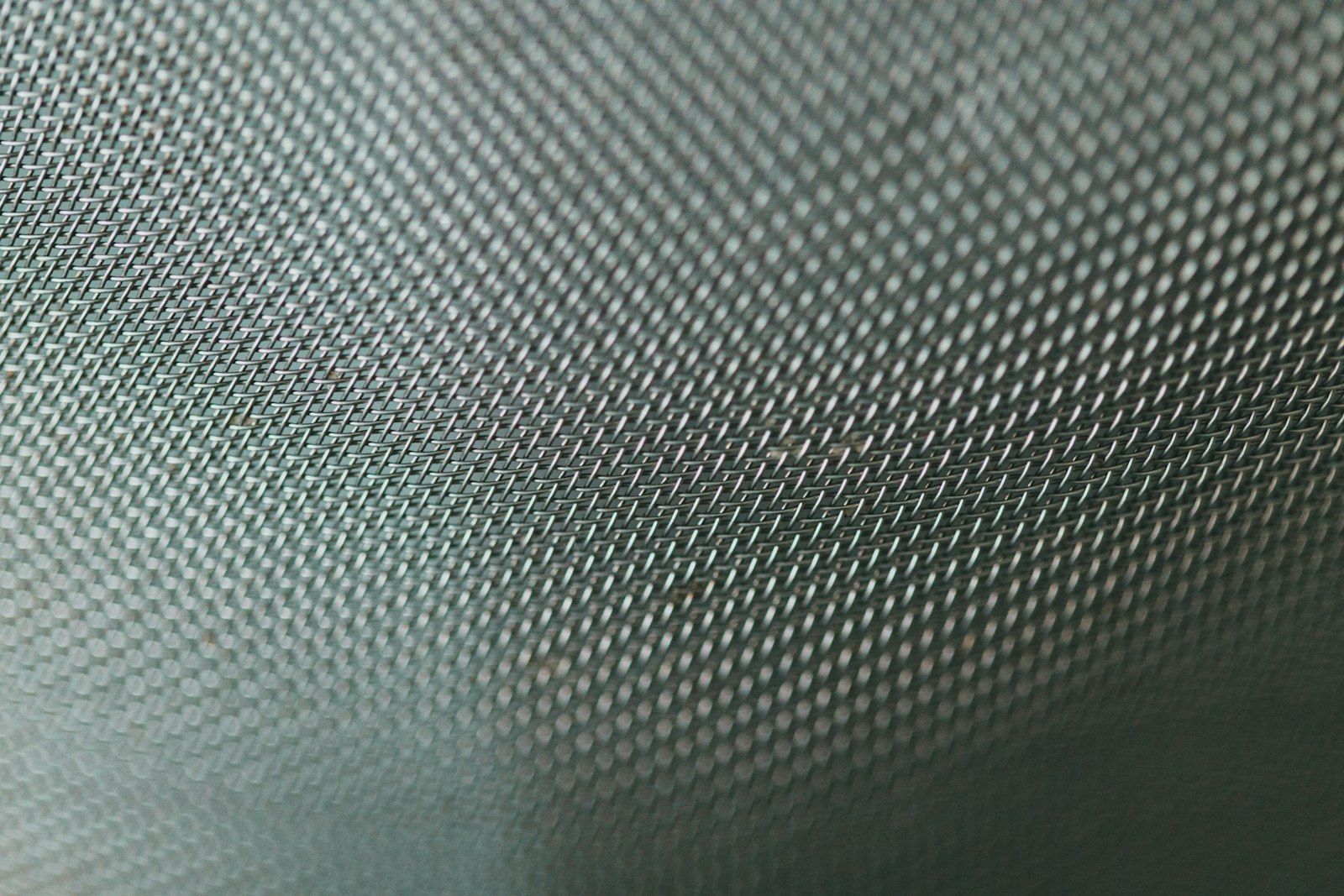
A generic net sold as a marketplace listing can look like protection and still fail on the details that matter. The mesh may be too coarse for the tiger mosquito, the listing may carry no certification and no durability rating, and a treatment claim may have nothing behind it. Ask for the mesh count, the standard, and the durability rating before you buy.
Generic, uncertified mosquito nets are sold as marketplace listings on Temu, AliExpress, Wish, and among the unbranded results on Amazon and similar platforms. Many of them look exactly like the real thing. That resemblance is the reason they deserve a close look. A net is judged by one thing only: what happens when a mosquito reaches it.
Consider the rest of the low-cost mosquito shelf for context. A coil can release the fine particulate of dozens of cigarettes when it burns. The uncertified net is a clearer case still, because a net promises the simplest form of protection there is. It is a physical barrier, and a barrier either stops the insect or it does not.
The seller's intent is not the subject here. No one can know what any given seller believes, and it does not change what the object does. What follows is about the net, not the seller.
Why a net is a serious idea in the first place
Start with why this category matters. Vector-borne diseases cause more than 700,000 deaths a year, the great majority through malaria, which alone accounts for more than 608,000 deaths. Dengue can be fatal as well. That is not a reason to be frightened tonight. It is the reason honesty about protection matters more than a sales pitch. Chikungunya is often severely disabling but rarely fatal, and it is mentioned here so that no one exaggerates it.
Against that backdrop, a physical barrier is one of the oldest and most trusted ideas in the field. A good net places a textile mesh between a person and the insect. There is nothing to inhale, nothing left on the skin, and nothing to reapply at three in the morning. A correctly made net protects a bed, a cot, a balcony, or a garden enclosure. That is the promise a net is supposed to keep.
Where an uncertified net fails
An uncertified marketplace net fails on the attributes a buyer can check.
The mesh is often too coarse. The tiger mosquito, Aedes albopictus, is small. It is now established across much of Europe, and it carries dengue and chikungunya. A net only works if the holes are smaller than the insect. A generic listing rarely states its mesh count at all, and a mesh that a mosquito can pass through is not a protective net.
There is no certification. Effective protection is measurable, and certification records that measurement. Insecticide-treated nets are a WHO-recommended intervention evaluated against documented criteria. The WHO keeps a public prequalified-product list so that a net's claims can be checked against a record. A typical marketplace listing carries none of that, and "as pictured" is not a standard.
There is no durability rating. A net lasts for years or it does not. Real specifications describe how the fabric holds up over its expected life and repeated washing. A listing that says only "durable" has described a feeling, not a fact.
Sometimes it claims a treatment it does not carry. A listing may use the word "insecticidal". It may suggest a treated fabric with no authorisation behind the claim. A net that genuinely carries a regulated active ingredient has a specific authorisation, and that authorisation can be checked. When such an authorisation is absent, the treatment claim should be treated as absent too.
Put those points together and the picture is plain. A net with a mesh wide enough to let the mosquito through looks like protection and is not. It gives the appearance of a barrier without the effect, and a buyer who trusts it may not look for protection that works.
Untreated is not the same as useless
Untreated does not mean useless. A correctly rated, intact, well-used physical barrier is real protection whether or not it carries a treatment. The failure in an uncertified net is never that it "lacks chemistry". It is the wrong mesh, no certification, no durability rating, and misuse.
Repellents are not the problem either. DEET and picaridin work. Their honest limit is that they are a supplement worn on skin, not a barrier around a bed. Repellents protect only while they are reapplied as the label directs. That is a matter of how they are used, not a mark against their efficacy.
So the test is simple, and any buyer can run it on a net before purchase. What is the mesh count, what standard is it built to, and what is the durability rating? A listing that cannot answer those questions has not shown that the net protects anyone. A good net is a plain, specific, checkable object. Ask for the facts, because the honest products carry them.
Sources: WHO, Vector-borne diseases | ECDC, Aedes albopictus | WHO, vector control | WHO prequalified vector control products | Fradin and Day 2002, NEJM | US EPA, using insect repellents safely and effectively | Liu et al. 2003, Environmental Health Perspectives
Mosticare Editorial is the house byline for mosticare.org. Corrections: corrections@mosticare.org
This article is general information, not medical advice. For travel health, disease risk, or symptoms, consult a qualified healthcare professional.