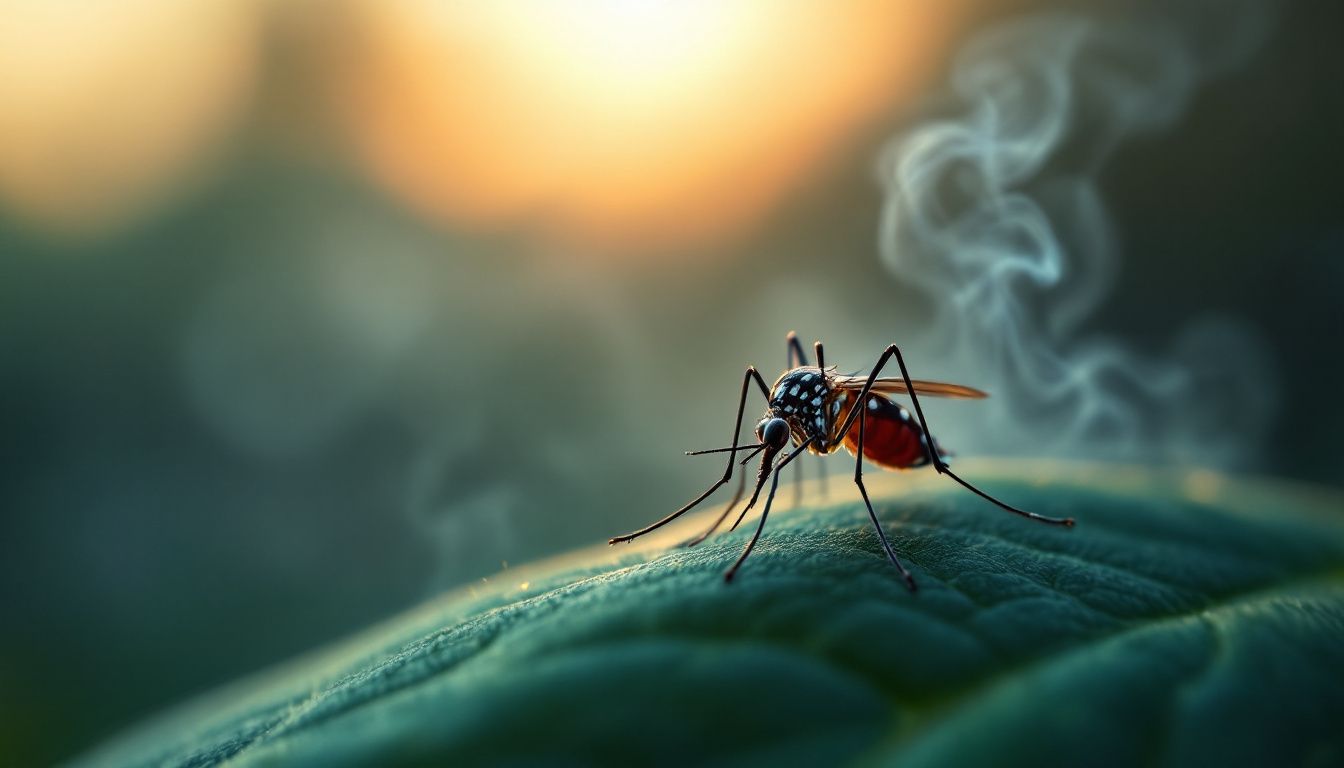
A mosquito coil is a spiral of plant filler and binder dosed with a small amount of pyrethroid insecticide, and you set it alight indoors. The insecticide is not the real problem. The smoke is. Peer-reviewed testing found that burning one coil releases as much fine particulate as burning between 75 and 137 cigarettes, which is why the coil is the clearest actively harmful case in the whole aisle.
We will not be polite about snake oil. But the coil is different from the candles and the gadgets that simply do nothing. A mosquito coil does something. That is the problem.
Of all the products on the mosquito shelf, the coil is the clearest case of a thing sold as protection that can measurably harm the person using it. So let us be precise about what it is, what happens when you light it, and what the evidence actually says. No panic, just the facts, so you can decide.
What is in the spiral
A mosquito coil is not complicated. Peel back the branding and you find three parts.
First, a filler: usually a base of sawdust or similar combustible plant material, pressed into that familiar spiral. This is the fuel. It is what smoulders, slowly, for hours.
Second, a binder to hold the spiral together, and often a dye and a fragrance to colour it and soften the smell of combustion.
Third, and this is the working part, a pyrethroid insecticide, historically allethrin or a related compound, mixed into the filler at a low percentage. Pyrethroids are the same broad chemical family used across many household insect products. When the coil smoulders, the heat carries the active into the air with the smoke, and that is what is meant to keep mosquitoes at bay. This basic construction, a plant-based combustible filler with a binder and a pyrethroid active, is well documented.
Here is the honest bit: the insecticide is not really the issue. The dose in a single coil is low. The issue is the smoke itself, and specifically the fine particulate it produces.
What happens when it burns
Burning any solid fuel indoors produces PM2.5, fine particulate matter smaller than 2.5 micrometres across. The WHO explains that particles this small penetrate deep into the lungs and pass into the bloodstream, which is why PM2.5 is one of the most closely watched measures in air-quality science. WHO also notes that fine particulate matter is linked to cardiovascular and respiratory disease and to cancers.
A mosquito coil is a solid-fuel source that you deliberately set smouldering, often in a bedroom, often with the window shut, often for the whole night while you sleep beside it. When researchers measured what a burning coil actually emits, the comparison was hard to unsee. A 2003 study in Environmental Health Perspectives found that burning one coil released as much PM2.5 as burning somewhere between 75 and 137 cigarettes, and it also identified carbonyls such as formaldehyde and a range of other combustion products in the smoke. The point of that comparison is not that one coil equals a fixed number of cigarettes for your health. It is that the particulate load is real, indoor, and easy to underestimate because the smoke looks so thin.
That is the difference between a coil and a citronella candle. A candle that does nothing wastes your money. A coil that fills your sleeping air with respirable particulate can affect the airways of the people breathing it, and children, older people, and anyone with asthma or another respiratory condition are the most exposed.
The honest limits of what we are saying
We are not telling you a coil is poison, and we are not telling you one evening on a breezy terrace will harm you. Ventilation matters enormously, and outdoors the smoke disperses. The concern is the repeated, enclosed, overnight use that coils are actually marketed for.
We are also not naming a villain. Coils are made and sold by many manufacturers and through many channels, from corner shops to large online marketplaces. This is a critique of a product category and a use pattern, not an accusation against any one company. The harm is structural: the product only works by producing smoke, and smoke indoors is the trade-off.
And we keep the stakes honest. Mosquitoes are the reason honesty about protection is a public-health duty rather than a marketing tactic. WHO counts more than 700,000 deaths a year from vector-borne diseases, the great majority from malaria, with dengue and West Nile also present in Europe as ECDC tracks the spread of Aedes albopictus north. That is a reason to protect people properly. It is not a reason to accept a protection method that harms the air you breathe.
What actually protects a bed
The mode of action that carries none of this is the oldest one: a physical barrier. A properly rated, intact mesh net puts a wall between you and the mosquito, with nothing to inhale and nothing left on your skin. It is the base layer.
Repellents sit on top of that base layer, and they genuinely work. In the landmark NEJM comparison by Fradin and Day, DEET gave by far the longest protection of any product tested, while botanical and citronella products lasted only around twenty minutes or less. So DEET and picaridin are effective. The honest point is that they are an outdoor supplement, not a barrier, and their protection ends the moment you forget to reapply.
A net will not drain a breeding site or clear a whole garden, and we say so plainly. But it protects the bed, the pram, the balcony enclosure, for years rather than hours. A treated net adds one WHO-recommended active bound into the fibre (EU BPR authorised: permethrin, EU-0026815-0000), reinforcing the barrier at the point of contact, and it does all of that without asking you to breathe smoke to sleep safely.
That is the whole case. A coil asks you to accept indoor particulate as the price of protection. You do not have to make that trade.
Sources: Liu et al. 2003, mosquito-coil emissions, Environmental Health Perspectives | Fradin and Day 2002, comparative repellent efficacy, NEJM | WHO air quality guidelines explainer | WHO ambient air pollution and health | WHO vector-borne diseases | ECDC mosquito-borne diseases | EU biocidal-product authorisation, EUR-Lex
This article is general information, not medical advice. If you have a respiratory condition or specific health concerns, speak to a qualified clinician.
This article is general information, not medical advice. Ask a doctor or pharmacist about your own health.