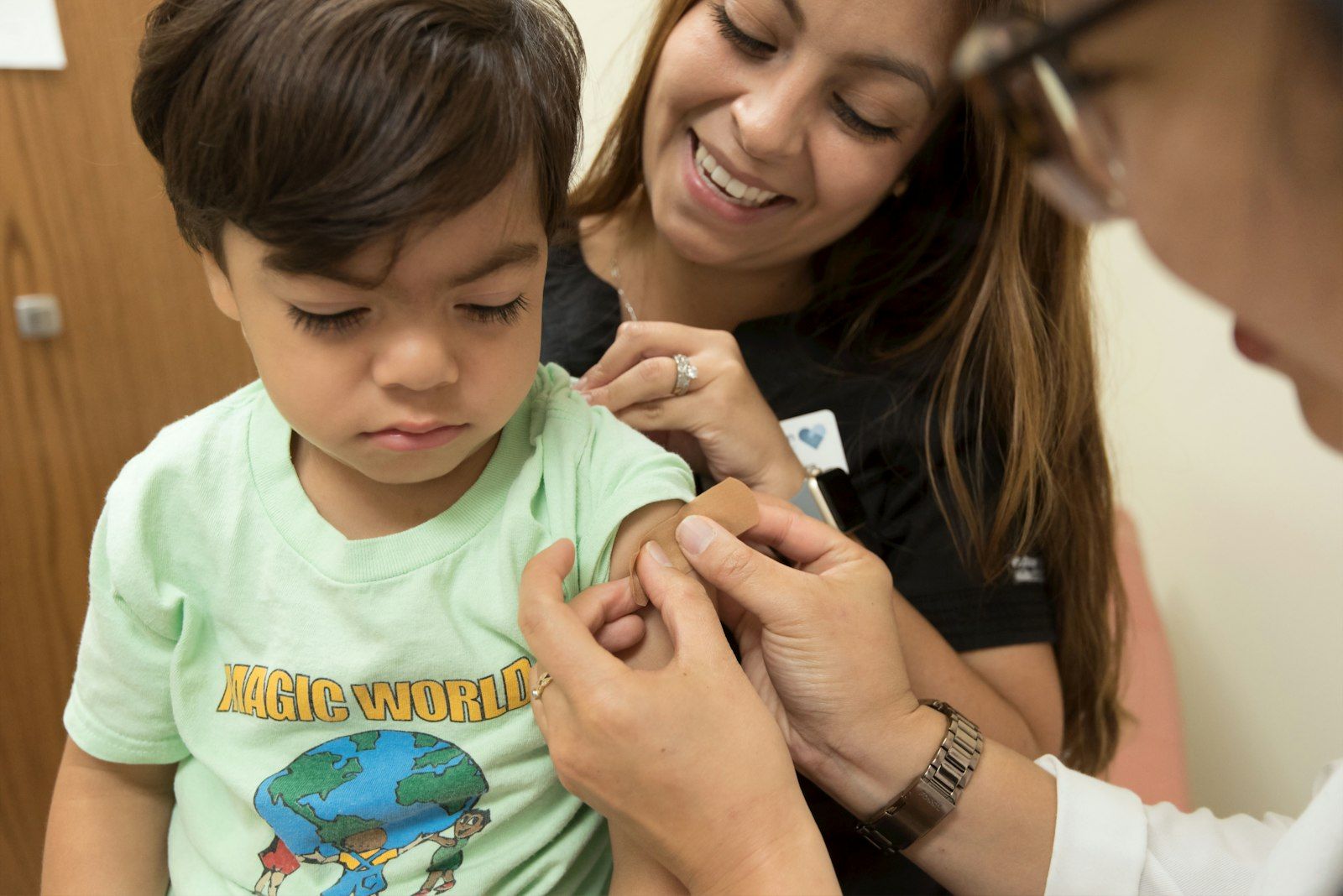
Erasmus MC has documented the first orthoflaviviral proxy-first case: a 25-year-old Dutch post-thymectomy patient received YF-17D-204 after TAK-003 confirmed immune competence through dengue-specific antibody and T-cell responses. A single-patient observation rather than a guideline change, but a working template travel-medicine clinics can use to clear the thymectomy contraindication for carefully screened patients.
The contraindication was always the price. Yellow fever vaccine is the gold-standard defence against a haemorrhagic disease that kills around 30,000 to 60,000 people a year, but it has carried a formal warning against use in anyone with a history of thymus disorder, because of the rare but frequently fatal complication called YF vaccine-associated viscerotropic disease. For a generation of post-thymectomy patients, the list of countries where the certificate was effectively unobtainable has been quietly uncomfortable. A case report published on 29 June in NPJ Vaccines suggests a careful way back.
The report, led by Emilie Rijnink and Muriel Aguilar-Bretones at Erasmus University Medical Center in Rotterdam, describes a 25-year-old woman who had her thymus removed in childhood as treatment for acetylcholine-receptor-antibody-positive generalised myasthenia gravis. The myasthenia was in long-term remission. She was no longer on immunosuppressive therapy. She needed the yellow fever vaccine. The standard route was closed to her.
What the team at Erasmus MC actually did
The first move was a structured immunological work-up, not a vaccination. The team used an orthoflaviviral "proxy immunisation" with the live-attenuated tetravalent dengue vaccine TAK-003, which belongs to the same flavivirus family as yellow fever and shares enough antigenic machinery that an immune response to dengue can be read as an indicator that the patient's immune system is functional. The patient had mild reactogenicity, which in this context is actually useful: it tells you the immune system is paying attention. She mounted dengue-specific antibody and T-cell responses, and her B-cell maturation pathway was preserved.
The second move, only after the proxy confirmed competence, was the yellow fever vaccination itself: the live-attenuated 17D-204 strain, the same vaccine used worldwide for over eighty years. It was well tolerated. The patient had transient viraemia (the expected viral blip that accompanies live-attenuated vaccination), seroconverted, and developed functional YF-specific B- and T-cell responses. The case is a single patient. The authors are careful to call it a proof of feasibility rather than a generalisable protocol. The methodological idea, though, generalises: an orthoflaviviral proxy can serve as a controlled stress test of immune competence before exposing a contraindicated patient to the live yellow fever vaccine they actually need.
Why the contraindication exists, and why it matters now
Yellow fever vaccine's contraindication in thymectomy patients is anchored in roughly 30 years of post-marketing surveillance. YF vaccine-associated viscerotropic disease, where the live-attenuated vaccine behaves more like the wild-type virus it is meant to mimic, has been reported in people with thymic disorders at a rate that public-health bodies consider unacceptable. The contraindication lists are conservative. They are also blunt instruments: they exclude everyone with a thymectomy history, including people whose immune systems are entirely intact today.
The matter is no longer academic. Yellow fever transmission is expanding geographically, and global travel has reopened fully since the pandemic. As the NPJ Vaccines authors put it, "as YF transmission expands and global travel increases, protection may still be indicated for selected patients with prior thymectomy". The list of countries requiring an International Certificate of Vaccination or Prophylaxis for entry, or recommending it strongly for transit, runs into the dozens; several West and Central African states, parts of the Amazon basin, and a long, slowly northward-moving band of Latin American countries. For a Dutch resident whose childhood surgery removed her thymus before vaccines were updated to include thymus history as a flag, the map has historically been the constraint, not the disease.
The ECDC and WHO technical pages on yellow fever still carry the thymus contraindication front and centre. The Erasmus case report does not argue with that. It argues that there is an immunologically guided, individually tailored path through it.
What "proxy immunisation" actually proves
The intellectual heart of the paper is the framing of an orthoflaviviral proxy. TAK-003, the tetravalent live-attenuated dengue vaccine developed by Takeda and now approved in the European Union, the United Kingdom, Brazil and a growing list of endemic countries, is not being deployed here as a dengue vaccine. It is being deployed as a controlled flaviviral challenge. The dengue virus and the yellow fever virus share enough of their structural and non-structural protein machinery that a competent immune response to a live-attenuated dengue vaccination implies a competent response to a live-attenuated yellow fever vaccination, provided the patient's contraindication is rooted in immune dysregulation rather than in some other mechanism.
The proxy concept has analogues in other parts of infectious-disease medicine: the use of controlled varicella exposure in heavily immunosuppressed contacts as a marker for VZV reactivation risk, the use of measles-mumps-rubella serology to flag live-vaccine eligibility in transplant recipients, and the slowly growing literature on "vaccine challenge" studies to confirm restoration of immune competence after cancer therapy. The novelty here is the application: a structured flaviviral proxy to clear a specific contraindication to a single, irreplaceable vaccine.
The case report is published with explicit funding disclosure (Erasmus MC departmental funding), declared no competing interests from the authors, and an unusually detailed methods section for what is, in form, a single-patient observation. That detail is what makes the report usable as a template.
What this is not
Three caveats matter. First, the report is a single-patient observation, and the authors say so. A generalisable protocol would need a small clinical series, ideally with a defined immunological threshold above which vaccination is offered and below which it is not. Second, the proxy is itself a live-attenuated vaccine, and the same thymic-disorder contraindication that flags YF-17D also flags TAK-003 in many national guidelines; the case involved a patient with a thymectomy, not active thymic disease, and the immunological workup was as much about excluding dysregulation as confirming competence. Third, the report does not address the other half of the thymus-related concern, which is YF vaccine-associated neurotropic disease, the second of the two rare serious adverse events flagged in the contraindication list.
None of these caveats diminish the report. They bound its claim. The claim is that an immunologically guided, proxy-first approach can open YF vaccination to a defined subset of post-thymectomy patients, in a controlled clinical setting, with prospective consent and structured follow-up. For the thousands of post-thymectomy patients in travel-medicine clinics worldwide, that is a meaningful shift, even before any guideline body revises the contraindication language.
What to watch next
The NPJ Vaccines paper is unlikely to change WHO or national yellow fever guidance on its own. What it may do is provide the immunological scaffolding for a small prospective study, and a defensible off-label clinical pathway for selected patients in travel-medicine clinics. The next moves to look for are: (i) a published clinical series from Erasmus or a collaborating centre; (ii) a position statement from a national travel-medicine society on proxy-first YF vaccination in post-thymectomy patients; and (iii) any movement on the European Medicines Agency or WHO technical pages to acknowledge the proxy framework as an off-label route. The contraindication language will not be revised in 2026. The door, however, has been reopened.
What we know
- A 25-year-old Dutch woman with a childhood thymectomy for myasthenia gravis has received the live-attenuated yellow fever vaccine 17D-204 after a structured immunological workup that used the live-attenuated tetravalent dengue vaccine TAK-003 as an orthoflaviviral proxy. [Rijnink EC et al. NPJ Vaccines 2026 Jun 29; PMID 42374049]
- The immunological workup found preserved B-cell maturation and dengue-specific antibody and T-cell responses after TAK-003, supporting a determination of immune competence before YF-17D-204 administration. YF vaccination was well tolerated, with transient viraemia, seroconversion, and functional YF-specific B- and T-cell responses. [Rijnink EC et al. NPJ Vaccines 2026 Jun 29; PMID 42374049]
- The contraindication of yellow fever vaccination in patients with thymic disorders reflects surveillance dating back approximately 30 years and is anchored by YF vaccine-associated viscerotropic disease (YEL-AVD), a rare but frequently fatal adverse event. The proxy-immunisation approach does not contest this contraindication; it identifies a defined subset of post-thymectomy patients in whom immune competence can be confirmed under controlled conditions. [Rijnink EC et al. NPJ Vaccines 2026 Jun 29; PMID 42374049; ECDC yellow fever page; WHO yellow fever fact sheet]
Sources cited
- Rijnink EC, Aguilar-Bretones M, de Vries RD, Veenbergen S, Aynekulu Mersha DG, van Kessel CHG, Koopmans MPG, van Doorn PA, Slobbe L, Brooimans RA, van Nierop GP, Rokx C. Proxy immunization enabling yellow fever vaccination after thymectomy. NPJ Vaccines. 2026 Jun 29. doi:10.1038/s41541-026-01520-x. PMID 42374049. https://pubmed.ncbi.nlm.nih.gov/42374049/
- European Centre for Disease Prevention and Control. Yellow fever virus disease. https://www.ecdc.europa.eu/en/yellow-fever
- World Health Organization. Yellow fever fact sheet. https://www.who.int/news-room/fact-sheets/detail/yellow-fever
Published 2026-07-01 · Mosticare Editorial