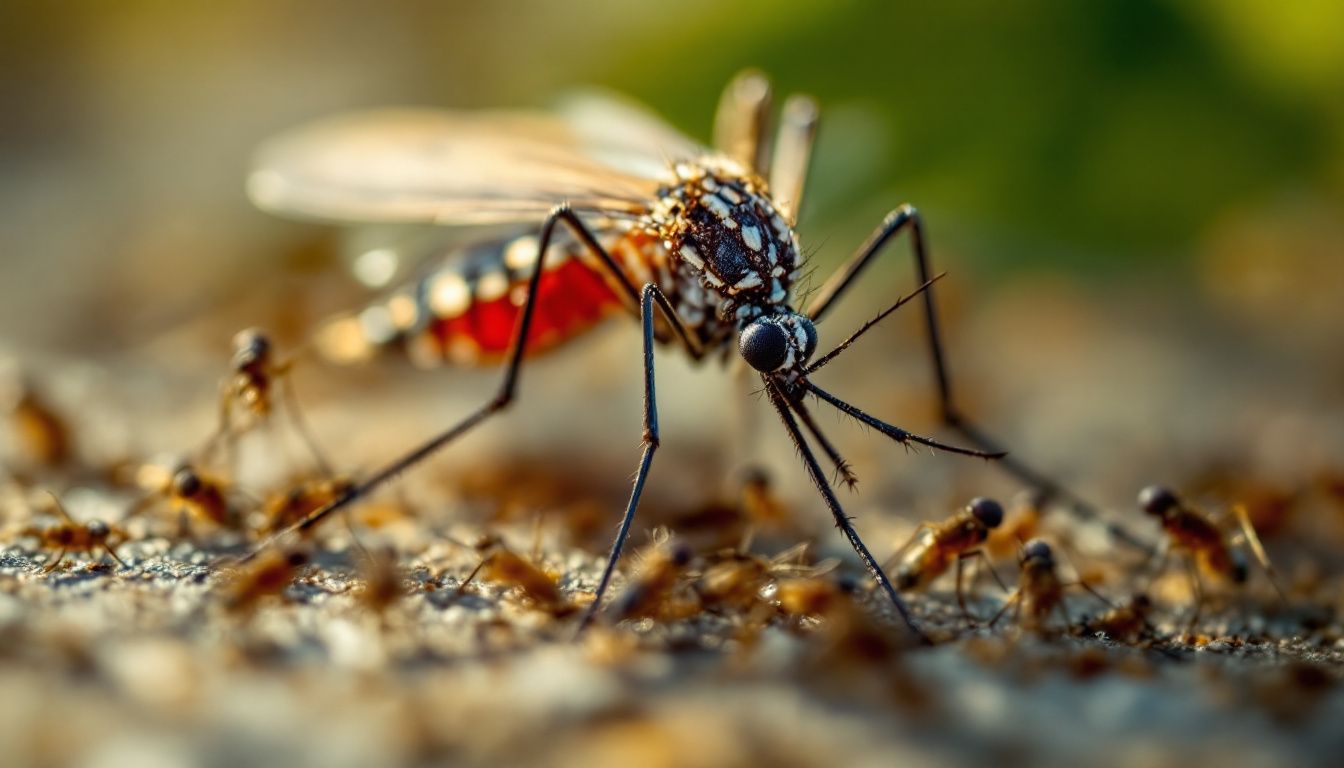
2-undecanone (methyl nonyl ketone), a compound derived from wild-tomato chemistry, is one of the active ingredients the US EPA lists for skin-applied insect repellents, alongside DEET, picaridin, IR3535 and oil of lemon eucalyptus. In the European Union, any skin repellent active reaches market through the separate, slower Biocidal Products Regulation.
The United States Environmental Protection Agency keeps a public list of the active ingredients cleared for skin-applied insect repellents. Most people recognise two of the names on it: DEET, registered in 1940, and picaridin, registered in 1980. Further down the same list sits a quieter entry with an unusual origin. 2-undecanone, also written methyl nonyl ketone, is an EPA-registered skin-applied repellent active ingredient, and the chemistry behind it comes from a wild tomato.
2-undecanone is not a recent arrival. It has been on the EPA's pesticide register for years (the compound was first registered as a repellent active around 2007) and it appears on the current skin-applied repellent ingredient list alongside DEET, picaridin, IR3535, oil of lemon eucalyptus (PMD), oil of citronella and catnip oil. It is one option among several, not a replacement for the others, and it is worth understanding on its own terms: where it comes from, what it does, and how it is regulated on either side of the Atlantic.
Repellent chemistry is one of the most cautiously regulated categories in personal care, and one of the slowest moving. The established actives have anchored the conventional consumer market for decades, because the safety and efficacy bar for adding to that shortlist is high. That is the context in which 2-undecanone belongs: a registered active with a well-documented natural origin, not a headline breakthrough.
Where the molecule came from
The origin is biomimicry. Wild tomato plants, the close relatives of the cultivated Solanum lycopersicum, produce an aromatic chemistry that many nuisance insects avoid. Part of that chemistry is 2-undecanone (also written methyl nonyl ketone or undecan-2-one), released from the glandular trichomes, the tiny hairs on the plant's stems and leaves. The compound has been known to the EPA's biopesticide programme since the late twentieth century, largely in agricultural contexts. What is more recent is its formulation for human skin application, assessed against the same standards as the other actives on the skin-applied list.
Duration is the axis on which repellent actives are usually compared: how many hours of protection a given concentration provides against mosquitoes, and separately against ticks. Protection time rises with concentration and varies by formulation, which is why like-for-like comparisons rest on independent, protocol-based testing rather than on label wording. For any active, 2-undecanone included, the useful question is not whether it works at all but how its tested protection window compares with an equivalent concentration of an established active such as DEET or picaridin.
What this is and is not
A skin repellent, whatever its active ingredient, is not a substitute for source reduction. It is not a substitute for treated nets at night. It is not a replacement for the physical-barrier engineering (window screens, long-lasting insecticidal nets) that still beats topical chemistry on every honest comparison for night-time and indoor exposure. The place a topical active earns its keep is the evening outdoors: the after-dusk garden hours, the terrace dinner, the dawn walk, where the practical alternative is DEET, picaridin, or no protection at all. 2-undecanone is one more registered option in that setting.
It is also not a public-health-grade vector-control intervention. Topical repellents reduce bite exposure for the person wearing them. They do not reduce community-level vector density and they do not break transmission chains the way Wolbachia-replacement programmes or sustained source-reduction campaigns do. The sound order of protection is the same as it has always been: start with physical barriers and source reduction (empty the saucers under flowerpots, screen the windows, use treated nets where night-biters bite), and add skin chemistry only where a barrier is impractical. A topical active belongs at the top of that stack, not at its base.
Why the registration matters in Europe
EPA registration is a United States process. In the European Union, a skin-applied repellent active reaches the market through the Biocidal Products Regulation, a separate, more onerous and substantially slower process administered by the European Chemicals Agency (ECHA). Registration in the United States does not carry over to the European Union automatically. An active that appears on the EPA list, 2-undecanone included, still has to complete its own BPR assessment before it can be sold as a repellent in the EU. What US registration does provide is a body of regulatory-grade evidence (toxicology, efficacy data, manufacturing controls) that a BPR application can build on.
In practice, the presence of a repellent active on the US market is not a reliable signal of near-term EU availability. Where an active has not completed BPR review, EU access can be limited or absent for years. The honest expectation for European readers is a multi-year regulatory timeline rather than a next-season one, and the ECHA active-substance register is where that progress becomes visible.
What to watch next
Two developments would tell a European reader most about where 2-undecanone is headed.
The first is independent, protocol-based efficacy data at field strength. Peer-reviewed laboratory and semi-field results, of the kind published in journals such as the Journal of Medical Entomology or Parasites and Vectors, are what allow an active to be compared head to head with DEET, picaridin and IR3535. That body of evidence, rather than any single product roundup, is what should anchor a confident duration claim.
The second is the ECHA Biocidal Products Regulation record. An application listed in the ECHA active-substance register is the signal that a route to EU shelves has actually opened. Until such a filing progresses, 2-undecanone remains, for European purposes, a US-registered active rather than an EU-available one.
What we know
What to do
- Keep the barrier-first approach: physical screens, source reduction, and treated nets for night-time exposure. A topical repellent is an add-on, not a replacement.
- When choosing a skin repellent, compare like with like: an EPA-registered active at a stated concentration, with a tested protection window, against another registered active such as DEET or picaridin. The meaningful comparison is between registered options, not between one product and "doing nothing".
- In the European Union, check whether an active has cleared Biocidal Products Regulation review before expecting to find it on the shelf. The ECHA active-substance register is the reference.
- For the most exposed groups (pregnant women, young children, older adults), follow established public-health guidance on physical barriers and registered repellents, and consult a clinician before changing repellent actives.
Sources cited
- United States Environmental Protection Agency, Skin-Applied Repellent Ingredients. Lists 2-undecanone (methyl nonyl ketone) among the registered skin-applied repellent active ingredients, alongside DEET, picaridin, IR3535, oil of lemon eucalyptus (PMD), oil of citronella and catnip oil. https://www.epa.gov/insect-repellents/skin-applied-repellent-ingredients
- United States Environmental Protection Agency, Insect Repellents: use, effectiveness and consumer information (context). https://www.epa.gov/insect-repellents
- European Chemicals Agency, Biocidal Products Regulation, approval of active substances (context). https://echa.europa.eu/regulations/biocidal-products-regulation/approval-of-active-substances