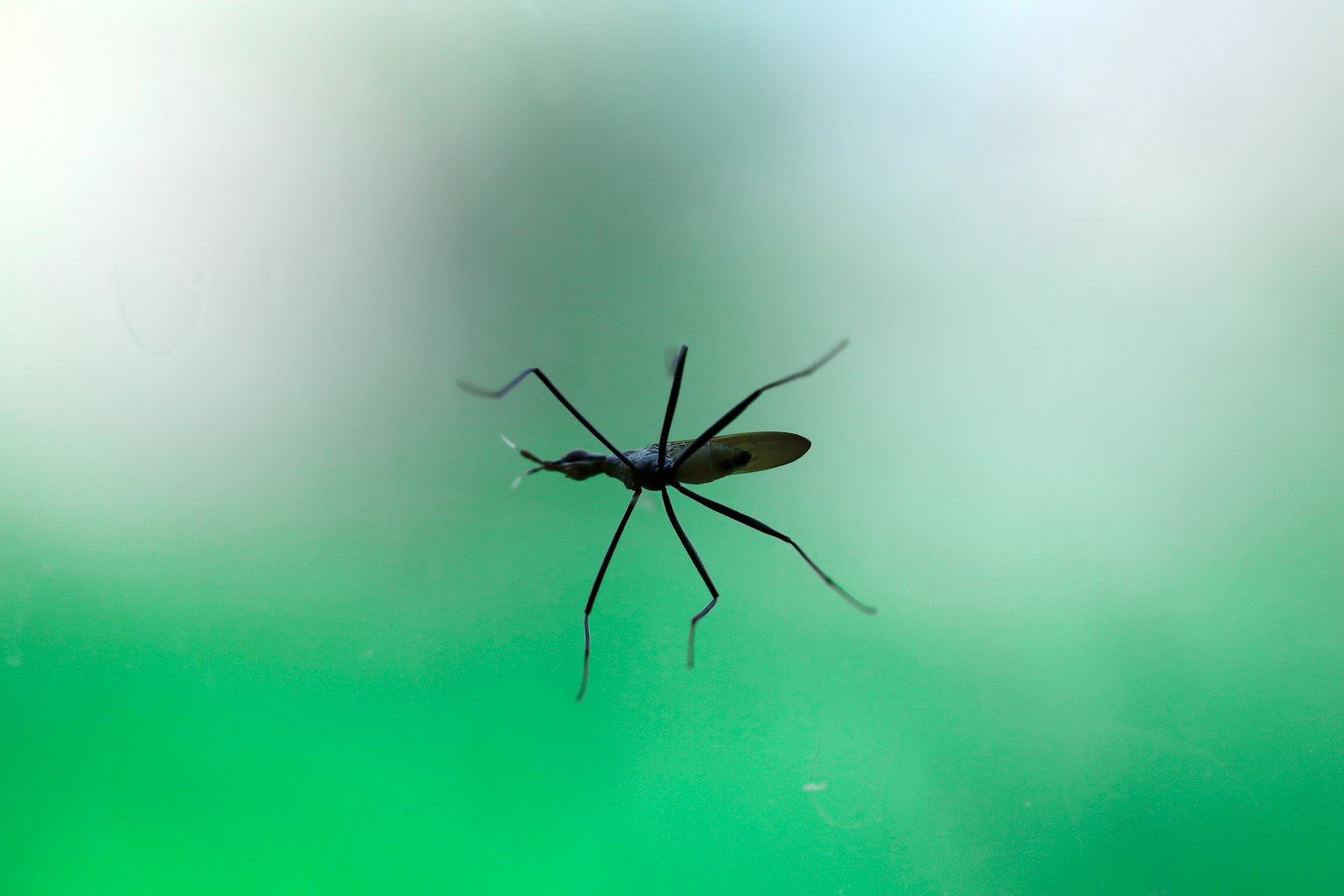
PAHO's 2025 chikungunya count, 313,000 cases and 170 deaths across 18 South American countries, is the headline. The structural lesson from a 21-author Lancet Regional Health Americas letter is that vertical, country-by-country Aedes control programmes are now structurally inadequate to a disease that does not respect borders, and the only credible regional architecture is the WINSA-led shift from passive case reporting to active, genomics-informed surveillance.
The case count is the smallest piece of the story. In 2025, according to the Pan American Health Organization (PAHO), chikungunya produced more than 313,000 cases and 170 deaths across 18 South American countries. The cases and deaths matter for the families involved and for the health systems that had to absorb them. The policy lesson is in the structure, not the totals. A letter in The Lancet Regional Health Americas puts that lesson bluntly: the 2025-2026 wave is the predictable result of vertical, country-by-country Aedes control programmes on a disease that does not respect borders.
The letter is signed by 21 authors led by Vincent Corbel of the Institut de Recherche pour le Développement in Montpellier and Ademir Jesus Martins of the Oswaldo Cruz Foundation (FIOCRUZ) in Rio de Janeiro, with co-authors from national vector-control programmes in Guyana, Suriname, Bolivia, Peru, Ecuador, Colombia, Venezuela, Chile, Paraguay, Argentina and Uruguay, plus the US Centers for Disease Control and Prevention. It is, in form, a commentary. In substance, it is a multi-country policy diagnostic.
What the 2025 number actually captures
The 313,000-case and 170-death count for 2025 is drawn from the PAHO Integrated Arbovirus Platform. PAHO also reported continued transmission expansion in 2026 in Suriname, Bolivia, Brazil and Argentina. The transmission geometry matters: chikungunya's South American footprint has historically followed the distribution of Aedes aegypti, the urban-adapted yellow-fever mosquito that has also driven the region's dengue cycle for decades, with the more recent appearance of Aedes albopictus extending range into cooler and more vegetated environments.
What the count does not capture is the surveillance asymmetry that produces it. National notification systems, diagnostic capacity, laboratory confirmation rates, and case definitions vary widely across the region. The 313,000-case total almost certainly undercounts the true burden in countries with the weakest surveillance, and may slightly overcount or undercount the burden in countries with the strongest. The structural problem is that country-level case totals, layered on country-level surveillance systems, are being read by country-level health authorities. The continental picture is an aggregation of 18 different signal-to-noise ratios.
What Corbel and colleagues argue is being missed
The letter has four structural arguments. First, chikungunya has re-emerged as a major South American public-health concern over the past decade, with the 2025 wave as the largest single-year outbreak since the virus's introduction to the region. Second, vaccines exist, but WHO has not yet issued recommendations for chikungunya vaccination, and several significant questions about long-term protection, optimal schedules and supply remain unresolved. Third, climate and environmental change are reshaping the genomic diversity and behaviour of Aedes vectors, with implications for population dynamics, vector competence, and resistance patterns. Fourth, and most importantly, the regional Aedes surveillance and control architecture is "largely reactive rather than proactive". PAHO has issued an epidemiological alert, but the underlying systems have not caught up.
The argument the letter makes for a regional rather than national architecture is methodological. Aedes aegypti and Ae. albopictus populations do not recognise borders. Insecticide resistance, which has been documented across the region, does not respect them either. Modelling work the letter cites from Kramer and colleagues shows overlapping habitat suitability for both species across large parts of the continent, with the warmest and wettest regions favouring Ae. aegypti and cooler and more vegetated regions favouring Ae. albopictus. National programmes that produce vertical control within their own borders leave the regional vector population ungoverned at the seams.
What the WINSA network is, and why the letter anchors there
The Worldwide Insecticide Resistance Network (WIN), and its South American regional affiliate WINSA (formerly WIN-LA), is the institutional vehicle through which the authors propose a coordinated response. WINSA provides a regional framework for filling knowledge gaps in vector biology and control, for harmonising surveillance systems across countries, and for coordinating training and research efforts. The network is the only regional body that currently combines laboratory, field and policy capacity across the South American Aedes problem at the scale required.
The letter is explicit on the role for genomic surveillance: shifting from passive, outbreak-driven reporting to active, genomics-informed decision-making that lets countries respond to changes in vector competence and insecticide resistance before they translate into case clusters. The framework's component diagram in the published paper pairs Aedes distribution modelling with resistance monitoring and intervention targeting at the regional scale. None of this requires a new supranational institution. It requires a regional coordination function that already exists being asked to do the work it was set up to do.
The funding line matters here too. The letter acknowledges EU Horizon grant 101086257 (the INOVEC Project), which has supported Corbel's secondment to FIOCRUZ. The LMI Sentinela joint laboratory between the University of Brasília, FIOCRUZ, and IRD is the operational expression of this South American-European coordination. The structural argument is that this kind of cross-border research consortium, not the national vertical programme, is the correct unit for tackling a continental vector.
What the constraints actually are
Two real constraints hold back the shift to regional architecture, and the letter is honest about both. The first is that the available vaccine options, while promising, are not yet deployable at regional scale: WHO has not issued recommendations, safety concerns in specific populations remain, manufacturing and supply are constrained, and the long-term protection and efficacy questions in endemic areas and high-risk groups are still open. The second is that national surveillance systems in several South American countries are still working from reported-cases data rather than vector-population and resistance data, and the institutional capacity shift from case-based to vector-based surveillance is non-trivial.
The letter is also careful about what an active, genomics-informed surveillance system would actually cost. Building and sustaining genomic surveillance capability for Aedes across a continental scale requires a laboratory network that does not currently exist in the proposed form. The WINSA framework is the closest available platform, but it is a research network, not a public-health service. The transition from one to the other is the meaningful policy problem.
What to watch next
The realistic signals on the 2026 chikungunya wave are: (i) any PAHO update on the regional case count, particularly in Suriname, Bolivia, Brazil and Argentina where the letter notes expansion in early 2026; (ii) any movement on the WHO chikungunya vaccine recommendation, which would change the deployable toolkit against the wave; (iii) any explicit multi-country procurement or financing mechanism for chikungunya vaccine once the WHO recommendation is in place; (iv) any institutional shift at PAHO or at a South American national health authority towards vector-population rather than case-based surveillance, with insecticide resistance monitoring as the leading indicator.
For residents and travellers in the affected regions, the operative chikungunya advice is the same as for dengue: cover exposed skin during the day, use a proven repellent, sleep under treated netting in affected areas, empty standing water weekly from any container that holds it for more than five days, and seek medical attention for the characteristic high fever and severe joint pain. The structural argument in the Lancet letter is that the regional architecture is what fails. The personal protection advice has not changed.
What we know
- The Pan American Health Organization reports more than 313,000 chikungunya cases and 170 deaths across 18 South American countries in 2025, with continued transmission expansion in 2026 in Suriname, Bolivia, Brazil and Argentina. [Corbel V et al. Lancet Reg Health Am 2026; PMID 42376050; PAHO Integrated Arbovirus Platform]
- A 21-author letter in The Lancet Regional Health Americas argues that the regional Aedes surveillance and control architecture is "largely reactive rather than proactive", and calls for a coordinated regional approach via the Worldwide Insecticide Resistance Network (WINSA) to shift from country-by-country vertical control to active, genomics-informed surveillance. [Corbel V et al. Lancet Reg Health Am 2026; PMID 42376050]
- WHO has not yet issued recommendations on chikungunya vaccination, and the authors identify the absence of WHO recommendations, safety concerns in specific populations, manufacturing and supply constraints, and open questions on long-term protection and optimal schedules in endemic and high-risk settings as the principal barriers to vaccine deployment at regional scale. [Corbel V et al. Lancet Reg Health Am 2026; PMID 42376050]
Sources cited
- Corbel V, Ahumada M, Bowman T, Doerdjan-Ramoutar K, Dias LDS, Duchemin JB, Duchon S, Figueroa L, Gonzalez CR, González-Brítez N, Harburguer L, Lenhart A, Pereira Lima JB, Lopez R, Morales D, Quiñones Pinzon ML, Roux E, Salcedo MP, Willat G, Martins AJ. Chikungunya resurgence highlights gaps in Aedes surveillance and control in South America. Lancet Reg Health Am. 2026 Jul;59:101538. doi:10.1016/j.lana.2026.101538. PMID 42376050; PMCID PMC13312582. https://pubmed.ncbi.nlm.nih.gov/42376050/
- Pan American Health Organization. Integrated Arbovirus Platform. https://www.paho.org/en/arbo-portal
- Worldwide Insecticide Resistance Network (WINSA, formerly WIN-LA). https://win-network.org/
- European Commission CORDIS. INOVEC Project (Horizon grant 101086257). https://cordis.europa.eu/project/id/101086257
Published 2026-07-01 · Mosticare Editorial