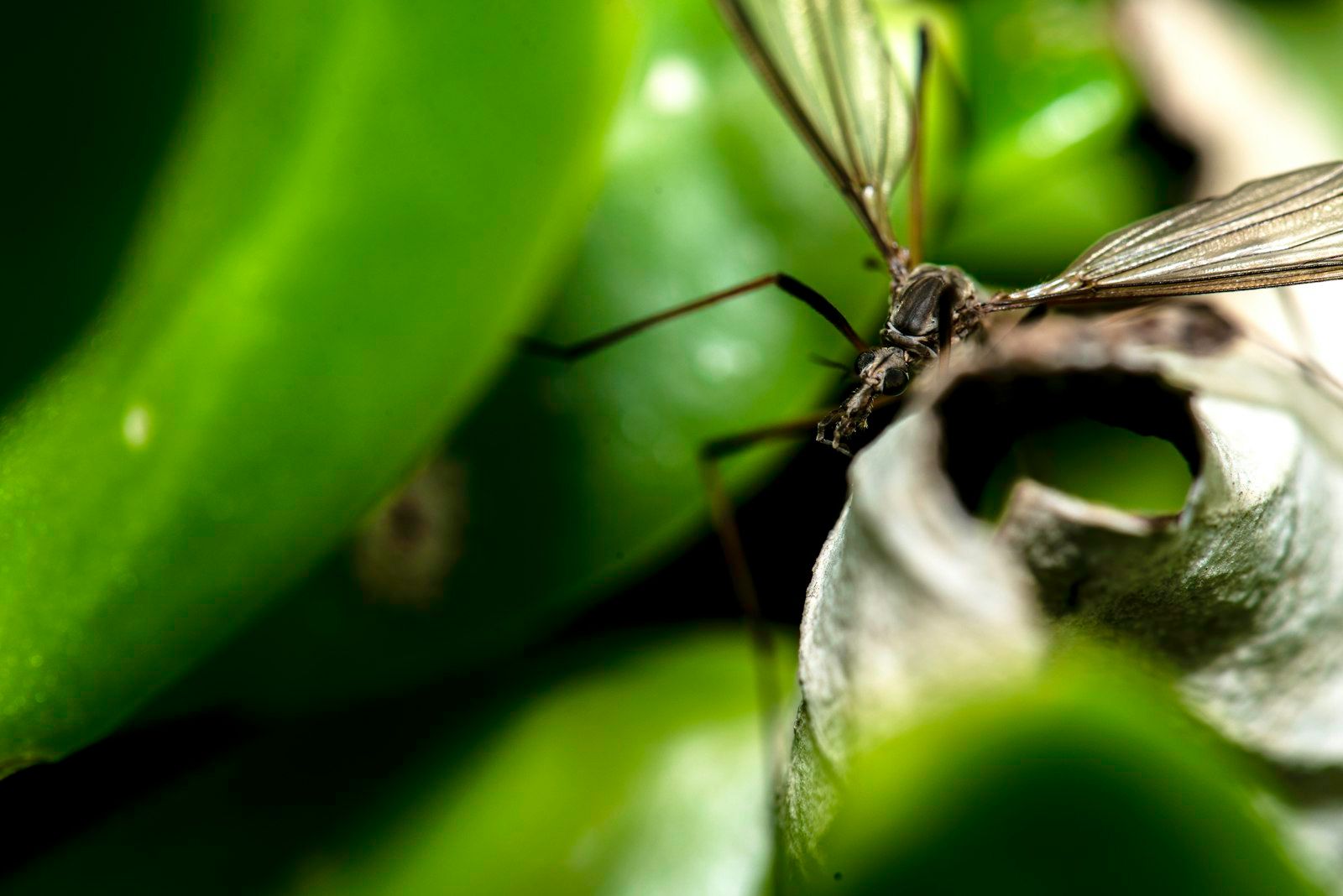
French Guiana has crossed 916 confirmed chikungunya cases for 2026, a 27 percent jump in two weeks, and Ile de Cayenne active clusters have tripled to seven. The strain is ECSA lineage *without* the E1-A226V mutation, which reduces onward transmission risk to mainland Europe but leaves the Caribbean basin vulnerable. The 2026 wave is on track to be the largest chikungunya epidemic in the territory's recorded history.
French Guiana has crossed 916 confirmed chikungunya cases for the 2026 outbreak, up from 723 at week 23, a 27 percent jump in roughly two weeks, and the number of active epidemic clusters in the Ile de Cayenne sector has tripled, from two to seven. The acceleration, formally logged in Santé publique France's Guyane chikungunya bulletin for week 25 (published 26 June 2026), is the clearest signal yet that 2026 is French Guiana's worst chikungunya year since the 2014-15 epidemic.
What the S25 bulletin says
The 25 June bulletin is the regional bulletin dedicated to chikungunya, published by Santé publique France's Guyane cell. The headline numbers: 916 biologically confirmed cases cumulatively since the end of January 2026 (week 4); 67 new cases in week 25 alone, marked as not yet consolidated; and three newly identified epidemic clusters inside the Ile de Cayenne sector, bringing the sector's active cluster count to seven. The two pre-existing epidemic sectors, Savanes and Littoral ouest, around the Centre Hospitalier de l'Ouest Guyanais (CHOG), continue to drive transmission. Maroni, covered by the Centre Départemental de Prévention et de Soins (CDPS), remains a focus zone but with lower case volume than the Littoral ouest.
The bulletin adds one operational detail that matters for travellers and residents: emergency-room attendances for chikungunya at the CHOG remain "élevé", high, even if slightly down on the previous week, which is Santé publique France's signal that hospital pressure is still climbing, not easing. The CHOG is the hospital of record for the western half of the territory, where the outbreak began.
What the peer-reviewed paper says
The institutional anchor behind the bulletin is a 14 May 2026 paper in Eurosurveillance, by a multinational team led by Petit Sinturel of Santé publique France with co-authors from the Institut Pasteur de Guyane (the national arbovirus reference centre), the Centre Hospitalier de l'Ouest Guyanais, and the Centre Hospitalier de Cayenne. The paper, Overview of chikungunya viral transmission, French Guiana, 2026, draws on weeks 4 to 18 of 2026 and is the first peer-reviewed characterisation of the strain and the spread.
The virus is the East/Central/South African (ECSA) lineage, but crucially, without the E1-A226V adaptive mutation that has driven explosive Aedes albopictus transmission in past ECSA outbreaks, most notably the 2005-06 Indian Ocean wave. The strain clusters phylogenetically with recent South American ECSA sequences, not with the 2025 Réunion Island strains. The authors' projected seroprevalence for 2026 is 16.2 percent of the territory's population, with the virus spreading eastward from the western French Guiana origin (Littoral ouest and Maroni).
The shape of the epidemic curve, in their reconstruction: two to three cases per week in weeks 4 to 7; ten or more per week from week 8 to week 15; more than 35 per week from week 16 onward. That 35-per-week floor was the early-summer signal; the SpF bulletin shows week 25 alone at 67 cases, almost double the paper's mid-May floor.
Why the strain matters
The ECSA lineage without E1-A226V is a deliberate piece of good and bad news. Aedes aegypti, the dominant urban vector in French Guiana, transmits it efficiently. Aedes albopictus, the more cold-tolerant species that has driven outbreaks in temperate Europe and the western Indian Ocean in recent years, transmits it less efficiently without that mutation. The authors of the Eurosurveillance paper therefore judge the risk of onward transmission to mainland France and continental Europe as reduced, but emphasise that Caribbean islands remain vulnerable because Aedes aegypti is present and dense.
The Caribbean vulnerability is the non-obvious editorial frame. An ECSA strain seeded in French Guiana, where Ae. aegypti is the urban vector, can travel with humans to the Caribbean, particularly to islands with high tourist and family-traffic volumes to Cayenne and the littoral, and ignite local transmission. The 2013-14 chikungunya wave in the Caribbean, which seeded autochthonous transmission across dozens of islands in roughly 18 months, is the historical reference point.
The territory in numbers
French Guiana is an overseas territory of France with a population of just under 300,000, bordered by Suriname to the west and Brazil to the south and east. About half the population lives in the Ile de Cayenne agglomeration (Cayenne, Rémire-Montjoly, Matoury). The Littoral ouest and Savanes sectors cover the western coastal strip toward Suriname and the inland savannah zone; both have been the sustained-transmission cores.
A 16.2 percent projected seroprevalence across the territory translates to roughly 48,000 people infected by the end of the outbreak. The 2014-15 outbreak, by comparison, infected an estimated 16,000 to 25,000 people in a smaller population. The 2026 wave, on the current trajectory, will be the largest chikungunya epidemic in French Guiana's recorded history.
What residents and travellers should take from this
For residents of French Guiana, the operative advice is straightforward and unchanged from past arbovirus seasons: cover up at dusk and dawn when Aedes aegypti is most active, empty any standing water from balconies, gutters and garden pots weekly, sleep under treated netting or in screened rooms, and use a proven repellent (DEET, picaridin, IR3535, or oil of lemon eucalyptus) on exposed skin. The CHOG emergency-room load is the most current operational signal, when the hospital load eases, the wave is past its peak; until then, personal protection is the immediately-actionable layer.
For travellers to French Guiana, and to the Caribbean basin more broadly, the S25 bulletin is the trigger to factor chikungunya into trip planning. Cayenne is not a high-volume leisure destination, but it is a working airport with regular links to Martinique, Guadeloupe, metropolitan France and Brazil. Travellers experiencing fever and severe joint pain within two weeks of returning from the territory should mention French Guiana specifically to their GP; chikungunya is widely under-diagnosed in returning-traveller presentations because the joint pain can be mistaken for other arboviruses or for non-infective arthritis.
What to watch over the next four weeks
The SpF Guyane team publishes the regional chikungunya bulletin on a roughly weekly cadence during the transmission season. The next three bulletins (S26, S27, S28) will tell whether the 67-cases-per-week level is the new floor or whether the eastern spread into Ile de Cayenne has more to give. The Sinturel Eurosurveillance paper will be updated with weeks-19-to-25 data in a follow-up analysis later in the year.
For the Caribbean, the structural question is whether the ECSA strain seeded in French Guiana establishes a sylvatic or urban cycle on a neighbouring island with high Ae. aegypti density. That is the editorial frame to watch across the next quarter.
What we know
- 916 biologically confirmed chikungunya cases in French Guiana cumulatively since week 4 of 2026, up from 723 at week 23, a 27 percent increase in roughly two weeks. Santé publique France Guyane, bulletin du 25 juin 2026 (S25), published 26 June 2026
- 67 new cases in week 25 alone, marked as non-consolidated. Santé publique France Guyane S25 bulletin
- Seven active epidemic clusters in the Ile de Cayenne sector, three of them newly identified in week 25; Savanes and Littoral ouest (around CHOG) continue to drive transmission. Santé publique France Guyane S25 bulletin
- The virus is the East/Central/South African (ECSA) lineage without the E1-A226V adaptive mutation, clustering with recent South American ECSA sequences rather than with the 2025 Réunion Island strains. Sinturel MP et al., Euro Surveill 2026;31(20):2600296 (PMID 42170750)
- Projected 2026 seroprevalence 16.2 percent of the French Guiana population; epidemic curve rose from 2-3 weekly cases (weeks 4-7) to over 35 per week from week 16 onward. Sinturel MP et al., Euro Surveill 2026;31(20):2600296
- Authors judge the risk of onward transmission to mainland France and continental Europe as reduced because the strain lacks E1-A226V; Caribbean islands remain vulnerable because Aedes aegypti is present. Sinturel MP et al., Euro Surveill 2026;31(20):2600296
Sources cited
- Santé publique France, Chikungunya en Guyane, Bulletin du 25 juin 2026 (S25), published 26 June 2026. https://www.santepubliquefrance.fr/regions-et-territoires/guyane/bulletin-regional/chikungunya-en-guyane-bulletin-du-25-juin-2026
- Petit Sinturel M, Rousset D, Enfissi A, Ramavoson T, Kezza C, Jourdain F, Djossou F, Succo T. Overview of chikungunya viral transmission, French Guiana, 2026. Euro Surveill 2026;31(20):2600296. DOI: 10.2807/1560-7917.ES.2026.31.20.2600296. PMID 42170750; PMCID PMC13197738. https://pubmed.ncbi.nlm.nih.gov/42170750/
- Santé publique France Guyane, bulletin landing page (regional arbovirus surveillance portal). https://www.santepubliquefrance.fr/regions-et-territoires/guyane
This article is general information, not medical advice. Ask a doctor or pharmacist about your own health.