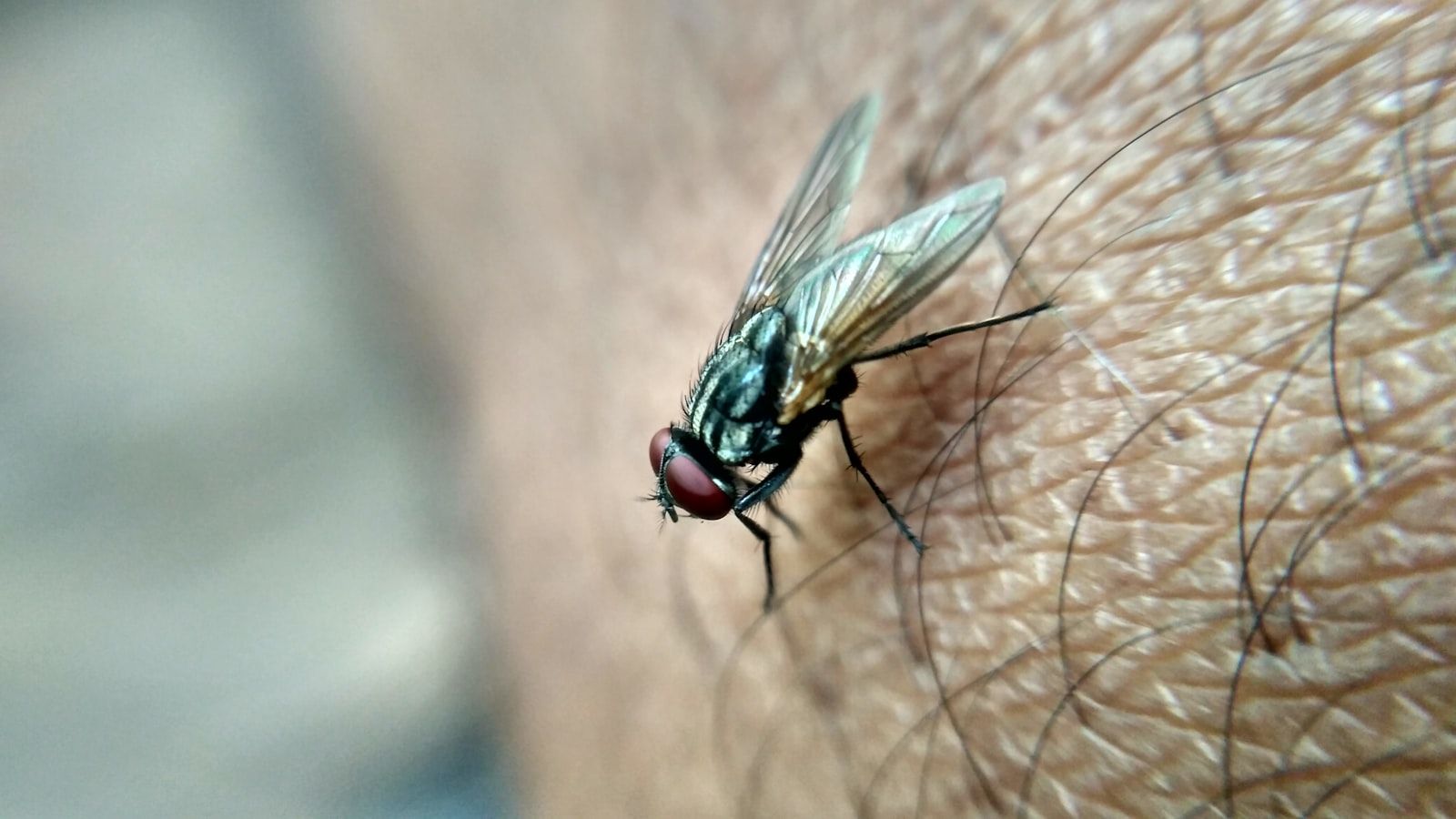
While Italy rolls out X-ray SIT and sterile-male trials to control Aedes albopictus, and Aedes koreicus expands across northern Italy, a third invasive Aedes, the Asian bush mosquito Aedes japonicus, has been quietly establishing itself across Belgium, the Netherlands, Germany, Switzerland, Austria, Luxembourg and northern France since the 2000s. The first global compendium on it was published last week.
Europe has a third invasive Aedes species, and it has been quietly establishing itself across a wide belt of the continent since the 2000s. The Asian bush mosquito, Aedes japonicus (Hulecoeteomyia japonica), is now established in Belgium, the Netherlands, Germany, Switzerland, Austria, Luxembourg, French Alsace and northern Italy, with separate expansion into mainland Spain confirmed in 2018. On 16 June 2026, Scientific Data published the first global compendium on the species: 4,618 validated geolocated records across 1950 to 2025, with field detection of La Crosse virus in wild populations. On 6 May 2026, Scientific Reports published the first Spanish paper on its invasion dynamics, anchored on the 2018 Asturias detection and the most plausible cross-Atlantic invasion route from the US East Coast to Bilbao and Gijón. The 2026 European Aedes invasion is now structurally a three-pillar story. Two of those pillars (the longstanding range of Aedes albopictus and the cold-tolerant expansion of Aedes koreicus) were already on the institutional and consumer-press radar. The third (Aedes japonicus) was structurally under-recognised until last month.
What the global compendium contains
The Scientific Data paper, led by Outammassine Abdelkrim and colleagues with co-authorship from the Istituto Zooprofilattico Sperimentale della Lombardia e dell'Emilia Romagna in Brescia, is structured as a data-descriptor paper rather than a primary research article. Its core contribution is a curated global repository of 4,618 validated, geolocated presence records for Ae. japonicus, drawn primarily from peer-reviewed literature and supplemented with validated national survey data and selected Global Biodiversity Information Facility records.
The compendium positions Ae. japonicus as "an underappreciated arbovirus vector of growing concerns" and confirms laboratory competence for chikungunya, dengue, Japanese encephalitis, West Nile and Zika viruses, plus field detection of La Crosse virus in wild populations. The authors argue that the species has been structurally under-studied relative to Ae. albopictus and Ae. aegypti, that the absence of a consolidated global dataset has held back spatial mapping and risk assessment, and that the new compendium provides the structural foundation for both. Pair it with the Scientific Reports Spanish paper, and the third Aedes now has the two research layers it has been missing: a continental-scale data resource, and a confirmed invasion mechanism in a European Union country at the warmest end of its continental climate niche.
What the Spanish invasion-dynamics paper adds
Lucati and colleagues, writing in Scientific Reports on 6 May 2026, analysed 635 Ae. japonicus samples from 14 countries using ITS2, COI and ND4 sequence data, microsatellite markers and Wolbachia screening. Most of the Spanish samples clustered with populations from College Park, Maryland, in the United States, near the Port of Baltimore. Northern Spain hosts major seaports at Bilbao and Gijón, and the nearest established continental Ae. japonicus population sits more than 1,000 km away in northeastern France. The most plausible invasion route is maritime transport from the US East Coast to northern Spanish seaports.
The 2018 Asturias detection is the load-bearing datapoint. From that founding population, the species has expanded to neighbouring regions in northern Spain, putting Mediterranean-Spain on the structural map of Ae. japonicus as well as the long-standing Ae. albopictus map. No clear haplotype-geography association emerged in the sequence data, and Wolbachia was not detected, simplifying the interpretation: the Spanish expansion is one dominant invasion event being tracked with population-genetic confirmation, and can be addressed with a correspondingly coherent surveillance architecture.
The paired-niche question: japonicus and koreicus side by side
The third paper, a Research Square preprint from Sangwoo Seok and colleagues at the University of Florida and Seoul National University posted on 21 May 2026, applies niche-overlap analysis to 2,623 Ae. japonicus and 501 Ae. koreicus occurrence records. The pair-level finding is that the two species occupy distinct niches in their native East Asian ranges but converge on similar niches in their non-native ranges, with high stability (0.821 for Ae. japonicus and 0.776 for Ae. koreicus) and low overlap, and subtle but significant niche differentiation between native and introduced populations. The authors infer that the Japanese population is the likely source of Ae. japonicus expansion, with Chinese populations representing a potential additional source for Ae. koreicus.
The editorial implication is that the third Aedes and the second Aedes are not just structurally adjacent in the European invasion story. They are doing the same kind of niche shift on introduction, a convergent pattern where being "invasive" is becoming more than the sum of the species-level traits. Both species tolerate cooler conditions than Ae. albopictus, both are container-breeders that exploit the same urban-adjacent water storage, and both have crossed from East Asia to Europe via globally traded goods rather than via natural range expansion. The Seok et al. result is the structural reason they should be modelled together, not just listed adjacently.
Where Aedes japonicus sits in the European Aedes portfolio
The pan-European establishment pattern (Belgium, the Netherlands, Germany, Switzerland, Austria, Luxembourg, French Alsace, northern Italy, plus the Spanish expansion since 2018) puts Ae. japonicus in a different ecological band from Ae. albopictus. The Asian tiger mosquito is well established across the Mediterranean basin and is expanding northward into the Benelux countries, southern Germany and parts of Switzerland. Ae. koreicus has been established in northern Italy (Veneto, Lombardy, Piedmont and Trentino) since at least 2011 and is now closing in on the Milan urban area. Ae. japonicus fills a third ecological band: temperate central Europe above the Mediterranean climatic line, where it survives cooler winters than either of its better-known relatives.
Three different climate envelopes, three different surveillance timelines, three different container-breeding colonisation histories, all running concurrently across the European continent. ECDC's VectorNet programme tracks Ae. albopictus distribution at NUTS-3 regional level, with the April 2026 update recording 384 established NUTS-3 regions across 16 EU/EEA countries. The Ae. koreicus distribution is documented at country-level granularity through national reporting. The Ae. japonicus distribution, until last month's Scientific Data compendium, was scattered across national records without a consolidated European map. The 4,618 validated records in the compendium are the structural foundation for that missing European map.
The shared vector-competence question
The vector-competence portfolio is where the three species converge on a single European public-health problem. Ae. albopictus has been the load-bearing vector for autochthonous arbovirus transmission in Europe since the 2007 Italian chikungunya outbreak (472 chikungunya cases in Italy in 2025, of which 384 autochthonous across six events in three regions, plus 4 autochthonous dengue, plus the 809 autochthonous chikungunya and 30 autochthonous dengue documented in mainland France). Ae. koreicus's vector competence for Japanese encephalitis and several filarial nematodes is under active study. Ae. japonicus has confirmed laboratory competence for chikungunya, dengue, Japanese encephalitis, West Nile and Zika, plus field detection of La Crosse virus in wild populations. The structural shift the compendium and the Spanish paper make visible is that the European autochthonous arbovirus problem is no longer a single-species problem dressed up as a continent-wide challenge. It is a three-species pressure surface running on a single continental footprint.
The personal-protection layer that works across all three
Container-breeding is the biology that unites all three species. Ae. albopictus, Ae. koreicus and Ae. japonicus all breed in small artificial containers (flower-pot saucers, roof gutters, blocked drains, water-butts, discarded tyres, the urban-rural interface where water sits for more than five days). Source reduction empties that substrate and works against all three at once. The long-standing personal-protection advice is unchanged: cover up at dusk and dawn when container-breeding Aedes activity peaks, use a proven repellent on exposed skin, sleep under treated netting or in screened rooms in affected areas, and clear small standing-water sources from gardens, balconies and roof gutters weekly. Permethrin-treated netting and BPR-compliant repellents are the chemistry layer for users who want it; intact mosquito netting, door and window screens, and long sleeves are the chemistry-free layer.
What to watch across the rest of the 2026 European summer
The realistic signals on the third invasive Aedes over the rest of summer 2026 are: any national surveillance report from BE, NL, DE, CH, AT, LU, FR-Alsace or IT-Northern extending the established range; any Spanish institutional statement integrating Ae. japonicus into the existing national Ae. albopictus surveillance architecture; any ECDC VectorNet quarterly release that adds Ae. japonicus range data at NUTS-3 level for the first time; and any peer-reviewed publication of the Seok et al. niche-dynamics paper, which would lift the comparative framing from preprint to load-bearing primary anchor. The Bolzano X-ray sterile-insect trial and the Bologna sterile-male pilot are the 2026 Italian institutional answer to Ae. albopictus; the Abdelkrim compendium is the data foundation for Ae. japonicus; the Lucati paper is the invasion-mechanism confirmation for Spain. The institutional layer is now in place for the third invasive Aedes. The personal-protection layer is unchanged.
What we know
- The first global compendium on Aedes japonicus (Hulecoeteomyia japonica), the Asian bush mosquito, was published in Scientific Data on 16 June 2026: 4,618 validated, geolocated records across 1950 to 2025, drawn from peer-reviewed literature, validated national surveys and selected Global Biodiversity Information Facility records, with field detection of La Crosse virus in wild populations supporting its role as an underappreciated arbovirus vector. [Abdelkrim O et al., Scientific Data 2026; DOI 10.1038/s41597-026-07481-z, PMID 42304005]
- A Scientific Reports invasion-dynamics paper on 6 May 2026 establishes the most plausible cross-Atlantic invasion mechanism for the 2018 Asturias detection of Ae. japonicus in mainland Spain: maritime transport from the US East Coast (Port of Baltimore area, College Park Maryland population) to northern Spanish seaports (Bilbao, Gijón), with the species having since expanded to neighbouring northern Spanish regions. [Lucati F et al., Scientific Reports 2026; DOI 10.1038/s41598-026-49121-x, PMID 42091943]
- A comparative niche-dynamics preprint posted on Research Square on 21 May 2026 pairs Ae. japonicus (2,623 records) with Ae. koreicus (501 records) and finds both species occupy distinct native niches but converge on similar non-native niches after introduction, with niche stability of 0.821 for Ae. japonicus and 0.776 for Ae. koreicus. [Seok S et al., Research Square preprint 2026; DOI 10.21203/rs.3.rs-9381631/v1, PMID 42239789]
- The established European range of Ae. japonicus spans Belgium, the Netherlands, Germany, Switzerland, Austria, Luxembourg, French Alsace and northern Italy since the 2000s, with Spanish expansion confirmed in 2018 and Pakistani, Slovenian, Croatian and Hungarian expansion in the institutional record. [Abdelkrim O et al., Scientific Data 2026; PMID 42304005]
- Aedes japonicus is a competent vector for chikungunya, dengue, Japanese encephalitis, West Nile and Zika viruses under laboratory conditions, with field detection of La Crosse virus in wild populations supporting its role as an arbovirus bridge vector. [Abdelkrim O et al., Scientific Data 2026; PMID 42304005]
- Europe's 2025 autochthonous baseline sits at the structural 809 autochthonous chikungunya + 30 autochthonous dengue totals for mainland France, with 472 chikungunya cases in Italy in 2025 (384 autochthonous, six local transmission events, three regions), all running on the established Ae. albopictus substrate. [SpF Bilan Arboviroses 2025, published 6 May 2026; Stefanizzi P et al., Front Public Health 2026; PMID 42180454; Buonfrate D et al., J Infect 2026; PMID 41845966]
- The third invasive Aedes sits in a temperate central European climate envelope that complements rather than overlaps the Mediterranean band occupied by Ae. albopictus (Italy, southern France, Spain, Greece, the Adriatic coast) and the cold-tolerant northern Italian envelope occupied by Ae. koreicus (Veneto, Lombardy, Piedmont, Trentino). [ECDC VectorNet, Ae. albopictus April 2026 update, 384 established NUTS-3 / 16 EU/EEA countries; Seok S et al., Research Square 2026; PMID 42239789]
Sources cited
- Abdelkrim O, Daoudi M, Elmoutamanni A, Calzolari M, Moreno A, Lelli D, Defilippo F, Debboun M, Boumezzough A, Said Z, Ndao M. The global compendium of Aedes japonicus: An Underappreciated Arbovirus Vector of growing concerns. Sci Data. 2026 Jun 16 (online ahead of print). DOI: 10.1038/s41597-026-07481-z. PMID: 42304005. https://pubmed.ncbi.nlm.nih.gov/42304005/
- Lucati F, Chaoui F, Miranda Gómez M, Caner J, Adam K, Anicic N, Bakran-Lebl K, Barandika JF, Barrón M, Barzon L, Becker N, Cevidanes A, Deblauwe I, Delacour-Estrella S, Flacio E, Gobbo F, González MA, Ibáñez-Justicia A, Kavran M, Klobučar A, Koopmans M, Kurucz K, Leisnham PT, Mogi M, Montarsi F, Ruiz-Arrondo I, Schaffner F, Schneider A, Soltész Z, Tuno N, Van Bortel W, Westby KM, Eritja R, Palmer JRB, Bartumeus F, Ventura M. Invasion dynamics of the disease vector Aedes japonicus in Spain. Sci Rep. 2026 May 6 (online ahead of print). DOI: 10.1038/s41598-026-49121-x. PMID: 42091943. https://pubmed.ncbi.nlm.nih.gov/42091943/
- Seok S, Shin J, Bang WJ, Mogi M, Lee Y. Global niche dynamics of two invasive Aedes mosquitoes, Aedes japonicus and Aedes koreicus (Diptera: Culicidae), using comprehensive native and non-native occurrence data. Research Square. 2026 May 21 (preprint). DOI: 10.21203/rs.3.rs-9381631/v1. PMID: 42239789.
- Stefanizzi P, Lopalco P, Balena V, et al. Chikungunya virus infection in Italy: epidemiology, climate change implications and public health recommendations. Front Public Health. 2026;14:1791544. PMID: 42180454. https://pubmed.ncbi.nlm.nih.gov/42180454/
- Buonfrate D, Ancillotti L, Zanchi C, et al. High burden of autochthonous arboviral infections during the summer season in Verona province, Italy, during 2025. J Infect. 2026;92(5):106730. PMID: 41845966. https://pubmed.ncbi.nlm.nih.gov/41845966/
- Gutiérrez-López R, et al. Vector competence of Spanish Aedes populations for Oropouche virus. Parasit Vectors. 2026. PMID: 42249428.
- European Centre for Disease Prevention and Control / European Food Safety Authority. *VectorNet Aedes albopictus distribution update, April 2026 (revised). https://www.ecdc.europa.eu/en/disease-vectors
- Italian press anchors: today.it, La zanzara tigre e il contagio di dengue in Italia: piano per "bombardare" i maschi ai raggi X, 29 June 2026. ANSA, Al via a Bolzano sperimentazione con zanzare tigre maschi sterili, 4 June 2026. il Dolomiti, Bolzano arruola i maschi sterili contro la zanzara tigre, 24 May 2026 and Contro la zanzara tigre, il comune mette in campo altre zanzare tigre: 30 mila esemplari, 4 June 2026. Agenzia Dire, Lotta alla zanzara tigre: Bologna gioca la carta dei "maschi sterili", 7 May 2026. Comune di Bologna, Lotta alla zanzara, le azioni messe in campo dal Comune e cosa devono fare i cittadini, 7 May 2026. Il Resto del Carlino, Lotta alla zanzara, scatta il piano del Comune: le regole d'oro per i bolognesi, 7 May 2026. RaiNews, Zanzara coreana in Italia e West Nile, 19 May 2026. Metropolitano.it, Zanzara coreana in Italia e West Nile, 24 June 2026.
Published 2026-07-01 · Mosticare Editorial
This article is general information, not medical advice. Ask a doctor or pharmacist about your own health.