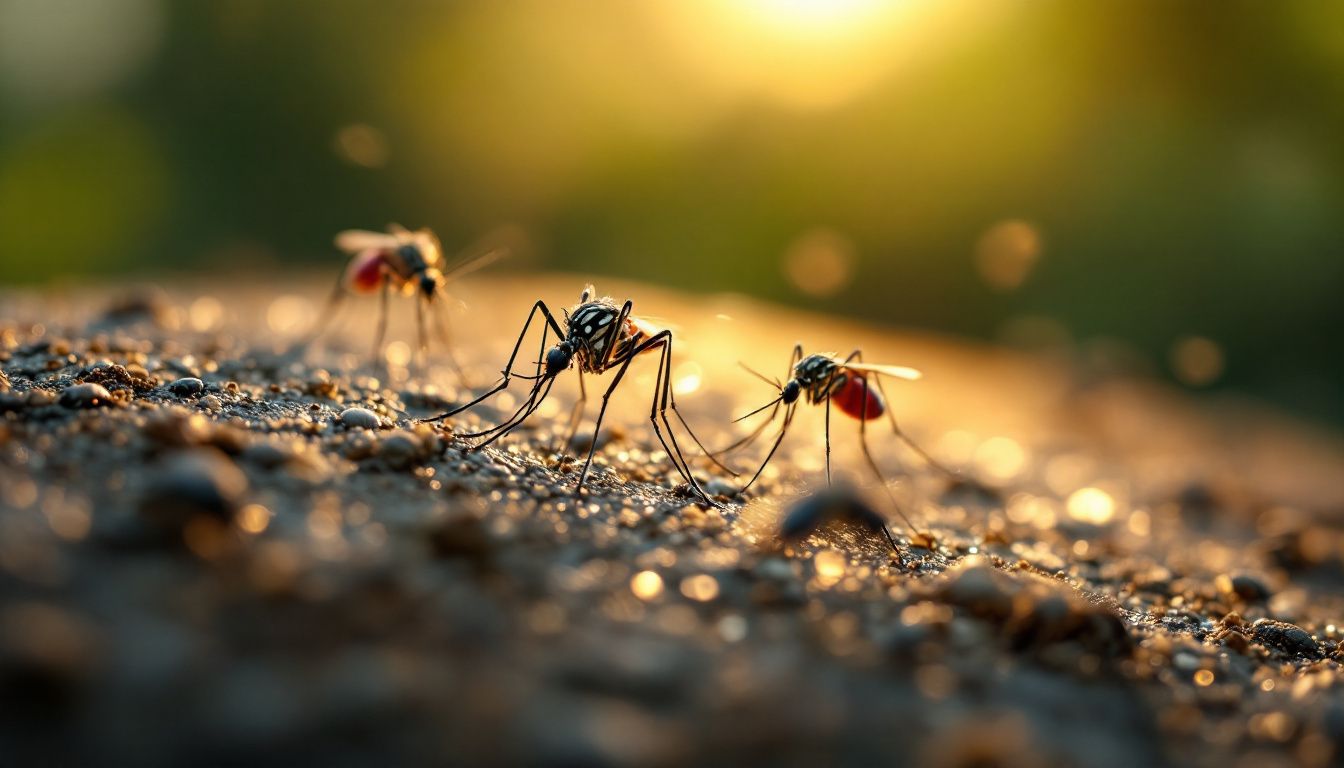
The chikungunya vaccine market is structurally bifurcating. Valneva's live-attenuated platform narrows to high-risk populations under an EMA CHMP recommendation. Bavarian Nordic's inactivated platform broadens access with a Canadian approval. The only protection available to everyone, regardless of medical countermeasure access, contraindication status, or supply ceiling, remains physical barriers.
Two regulatory signals, on opposite sides of the Atlantic and on the same week, have redrawn the shape of the chikungunya vaccine market. The European Medicines Agency's Committee for Medicinal Products for Human Use (CHMP) has formally recommended restricting the use of Valneva's Ixchiq, a live-attenuated chikungunya vaccine, to populations at high infection risk only. Health Canada has approved Bavarian Nordic's Vimkunya, an inactivated chikungunya vaccine indicated for active immunisation.
Read together, the two signals describe a market that is structurally bifurcating. One live-attenuated platform is narrowing to high-risk groups under a European safety recommendation; one inactivated platform is broadening access under a North American approval. Vaccines are, and remain, the most important medical countermeasure against chikungunya for the populations they cover. The editorial question the bifurcation raises, the one the 2026 press cycle has now put on the table, is what protection is available to everyone else.
What the CHMP actually recommended
The recommendation, as reported by Les Echos on 29 June, is that Ixchiq should be used only in populations at high infection risk. The recommendation follows the 2025 EMA safety review of chikungunya vaccines, which was triggered by post-marketing cases of meningitis in young adults after Ixchiq administration, paired coverage of the underlying review is in Frankfurter Rundschau from 19 March 2026. The German-language institutional confirmation came from Pharmazeutische Zeitung on 16 June and DiePresse.com on 22 June.
A CHMP recommendation is not a final marketing-authorisation change. It is a formal scientific opinion from the committee that EMA then forwards to the European Commission, which issues the binding decision. In practice, the recommendation is the load-bearing signal, once CHMP speaks, member states adjust their national guidance, prescribers adjust their prescribing, and travellers adjust their pre-travel consultations.
The narrower point is this: a live-attenuated chikungunya vaccine that until recently was marketed for general traveller use is now formally recommended for a narrower population. The recommendation reflects a real safety signal in young adults, which is the kind of signal that regulators are set up to act on.
What Vimkunya's Canadian approval adds
Bavarian Nordic's Vimkunya is an inactivated, adjuvanted chikungunya vaccine. The Canadian approval, reported by medwatch.com on 29 June, is the cleanest North American regulatory win for the inactivated platform. It follows the US Food and Drug Administration approval of Vimkunya earlier in the cycle.
The structural significance is the platform difference. An inactivated vaccine cannot replicate in the vaccinated person; a live-attenuated vaccine can. The two platforms have different safety profiles, different storage and handling requirements, and different eligible populations. Vimkunya's broadening access, Canada today, the United States already, sits on the inactivated side of that distinction; Ixchiq's narrowing sits on the live-attenuated side.
Vaccines remain the most important medical countermeasure against chikungunya for the populations they reach. The Canadian approval of Vimkunya is a meaningful broadening of access for travellers and at-risk populations in North America, and a parallel broadening signal for European regulators reviewing the same inactivated platform.
The structural picture
The chikungunya vaccine market now consists of four reference products with very different status.
Dengvaxia (Sanofi) is discontinued, with production ended and supply not available after 2026. Qdenga (TAK-003, Takeda) is WHO-recommended for children in high-transmission settings, but supply cannot meet global demand. Ixchiq (Valneva) is the live-attenuated platform that CHMP is now formally recommending for restriction to high-risk populations only. Vimkunya (Bavarian Nordic) is the inactivated single-dose vaccine approved for ages 12 and up that has just been approved in Canada.
The market is now structurally bifurcating between the inactivated platform broadening access (Vimkunya) and the live-attenuated platform narrowing to high-risk (Ixchiq). It is a four-pillar state, and it is in motion.
Why the European autochthonous frame matters now
The European autochthonous chikungunya baseline is not theoretical. Santé publique France's 2025 national bilan, published on 6 May 2026, documents 809 autochthonous chikungunya cases in metropolitan France during 2025, the highest figure since chikungunya surveillance began in mainland France in 2006, plus 30 autochthonous dengue cases. The 2025 Bergerac (Dordogne) cluster, which ran from June to October 2025, is the standard reference for "chikungunya is not theoretical in mainland France."
In French Guiana, the chikungunya transmission in 2026 has been documented by Sinturel and colleagues in Eurosurveillance in May, with viral circulation intensifying across the Ile de Cayenne and seven active clusters. In Italy, Stefanizzi and colleagues have published the 2026 institutional picture for chikungunya in Frontiers in Public Health in May, with emphasis on the climate-change implications for the vector range. Across all three settings, metropolitan France, French Guiana, Italy, chikungunya is now a structural part of the European and European-adjacent arbovirus landscape, and the vaccine-market bifurcation lands directly on that landscape.
What this means in practice for the 2026 season
The vaccine-market bifurcation does not change the medical recommendation for the populations for whom a vaccine is appropriate. Travellers to high-transmission settings, laboratory workers handling chikungunya virus, and individuals with specific risk profiles should follow the guidance of their national immunisation authority and their travel-medicine provider. Vaccines are the most effective medical countermeasure for chikungunya and remain the recommended approach for the eligible populations.
What the bifurcation does change is the consumer-side protection question. The chikungunya vaccine market is now structurally bifurcating: an inactivated platform broadening access for some, a live-attenuated platform narrowing to high-risk populations for others. There is no single chikungunya vaccine available to everyone regardless of age, contraindication status, regulatory jurisdiction, supply availability, or personal preference. The protection layer that sits underneath the medical countermeasure layer, the layer available to everyone, with no supply ceiling, no contraindication, no excluded cohort, is physical barriers and personal protection.
For residents and travellers in chikungunya-active settings, metropolitan France and the Bergerac-type clusters, French Guiana, northern and central Italy, the broader Mediterranean and Indian Ocean basin, the operative summer advice remains: cover up at dusk and dawn when Aedes albopictus and Ae. aegypti are most active, use a proven repellent on exposed skin, sleep under treated netting or in screened rooms in affected areas, and empty standing water weekly from gardens, balconies and roof gutters to reduce local breeding. These steps sit underneath the medical countermeasure layer and remain available to everyone.
What we know
- The European Medicines Agency's CHMP has formally recommended restricting Valneva's live-attenuated Ixchiq chikungunya vaccine to populations at high infection risk only, following the 2025 EMA meningitis-safety review triggered by post-marketing cases in young adults. [Les Echos 29 June 2026; Pharmazeutische Zeitung 16 June 2026; DiePresse.com 22 June 2026; Frankfurter Rundschau 19 March 2026]
- Health Canada has approved Bavarian Nordic's Vimkunya, an inactivated, adjuvanted, single-dose chikungunya vaccine indicated for active immunisation, the cleanest North American regulatory win for the inactivated platform, contrasting directly with the European live-attenuated restriction. [medwatch.com 29 June 2026; Bavarian Nordic press materials]
- The chikungunya vaccine market is now structurally bifurcating between Bavarian Nordic's inactivated platform (broadening access) and Valneva's live-attenuated platform (narrowing to high-risk), a four-pillar state with Dengvaxia discontinued, Qdenga in supply-constrained WHO recommendation, Ixchiq restricted, and Vimkunya approved. [EMA CHMP recommendation 29 June 2026; Health Canada Vimkunya approval 29 June 2026; WHO Qdenga position; Sanofi Dengvaxia discontinuation]
- Metropolitan France recorded 809 autochthonous chikungunya cases during 2025, the highest figure since chikungunya surveillance began in mainland France in 2006, plus 30 autochthonous dengue cases (2025 bilan, published 6 May 2026). [Santé publique France, Bilan annuel 2025, Surveillance des arboviroses en France hexagonale, 6 May 2026]
- French Guiana is in a chikungunya transmission intensification in 2026, with seven active clusters in the Ile de Cayenne and rising cumulative incidence. [Sinturel F et al., Euro Surveill 2026;31(20):2600296, PMID 42170750]
- Italy's 2026 institutional chikungunya picture emphasises climate-change implications for vector range, building on the 2025 baseline of 472 chikungunya cases (384 autochthonous across 6 local transmission events and 3 regions). [Stefanizzi P et al., Front Public Health 2026;14:1791544, PMID 42180454; EpiCentro ISS dashboard, 11 June 2026]
- Vaccines remain the most important medical countermeasure against chikungunya for the populations they reach; the structural question raised by the 2026 bifurcation is what protection is available to everyone regardless of vaccine access, contraindication status, regulatory jurisdiction, or supply ceiling, physical barriers and personal protection remain that layer.
Sources cited
- Les Echos, Le CHMP recommande de restreindre l'utilisation d'Ixchiq de Valneva contre le chikungunya aux populations à risque, 29 June 2026. https://www.lesechos.fr
- Pharmazeutische Zeitung, Chikungunya: Ixchiq-Impfung nur für Personen mit hohem Infektionsrisiko, 16 June 2026. https://www.pharmazeutische-zeitung.de
- DiePresse.com, Chikungunya: Impfstoffe in Afrika nicht zugelassen, in Europa schon, 22 June 2026. https://www.diepresse.com
- Frankfurter Rundschau, Meningitis-Fälle bei jungen Menschen: EMA warnt vor Impfung nach Chikungunya-Ausbruch, 19 March 2026. https://www.fr.de
- medwatch.com, Bavarian Nordic wins Canadian approval for chikungunya vaccine, 29 June 2026. https://medwatch.com
- Bavarian Nordic, Vimkunya chikungunya vaccine press materials. https://www.bavarian-nordic.com
- Santé publique France, Bilan annuel 2025, Surveillance des arboviroses en France hexagonale, published 6 May 2026. https://www.santepubliquefrance.fr
- Sinturel F, Boukhari R, Chatigre J, et al. Chikungunya virus transmission in French Guiana, 2026. Euro Surveill 2026;31(20):2600296. PMID 42170750. https://pubmed.ncbi.nlm.nih.gov/42170750/
- Stefanizzi P, Lopalco P, Balena V, et al. Chikungunya virus infection in Italy: epidemiology, climate change implications and public health recommendations. Front Public Health 2026;14:1791544. DOI: 10.3389/fpubh.2026.1791544. PMID 42180454. https://pubmed.ncbi.nlm.nih.gov/42180454/
- Istituto Superiore di Sanità, EpiCentro, Casi di arbovirosi in Italia: i dati al 9 giugno 2026 (dashboard update 11 June 2026). https://www.epicentro.iss.it/arbovirosi/
This article is general information, not medical advice. Ask a doctor or pharmacist about your own health.