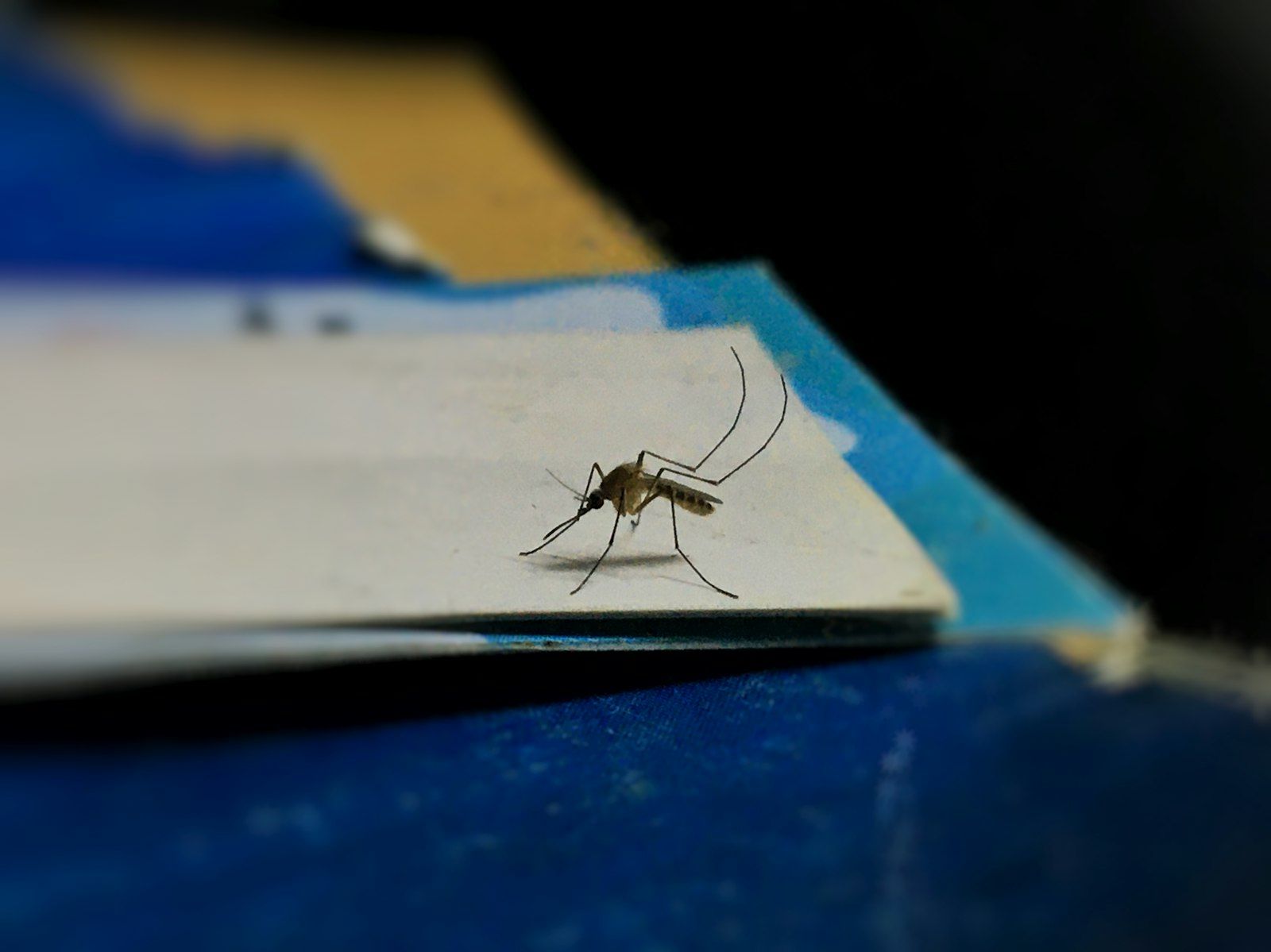
Dengue is the fastest-spreading mosquito-borne virus on Earth, and it is no longer only a tropical disease. This is the complete 2026 reference: the virus and its four serotypes, antibody-dependent enhancement, the Aedes vectors, the global and European picture, the full clinical course from silent infection to severe dengue, the vaccines (Dengvaxia, Qdenga, and Brazil's single-dose Butantan candidate), the Wolbachia and sterile-insect breakthroughs, and the warming climate that is turning dengue into a recurring Mediterranean summer. Updated for World Dengue Day 2026.
Dengue is the fastest-spreading mosquito-borne virus in the world. The World Health Organization estimates that 5.6 billion people, more than half of humanity, now live where it can be caught, and that it causes between 100 and 400 million infections a year. It is carried by two mosquitoes, Aedes aegypti and Aedes albopictus, and there is no drug that cures it. Treatment is supportive. Prevention rests on three things: controlling the mosquito, protecting the household, and, where it is approved, vaccination.
This is a reference for readers who want the whole disease rather than the week's headline: clinicians, public-health teams, science journalists, and people across the European Union watching dengue arrive on coastlines that used to be too cold for it. It covers the virus and its four serotypes, the two mosquitoes, the clinical course, the vaccines, the vector-control breakthroughs of the past decade, and the warming climate that is redrawing the map.
The week that showed where dengue is heading
Read the news in mid-June 2026 and you saw the disease from several angles at once. On 15 June the World Health Organization marked World Dengue Day with a refreshed picture of the global burden. The same days brought the World Mosquito Program's fourth Annual Review, reporting 16.1 million people protected across 15 countries, 1.5 million dengue cases prevented, and US$455 million in healthcare costs averted by a single vector-control method. The Asia Dengue Summit 2026 opened in Singapore. Sri Lanka reported the first credible signs of a newly introduced dengue strain. France counted more than 210 imported arbovirus cases on the mainland.
No single one of those stories is the whole story. Together they are: a disease whose centre of gravity shifts a little every year, tracked by an expanding scientific effort, and reaching a little further into temperate latitudes each season. What follows is the durable version beneath the headlines.
1. The virus
Dengue virus (DENV) is a single-stranded, positive-sense RNA virus of the genus Flavivirus, in the family Flaviviridae. Its genome is small, about 10.7 kilobases, and encodes a single long polyprotein that the cell cuts into ten pieces: three structural proteins (capsid, premembrane or membrane, and envelope) and seven non-structural proteins (NS1, NS2A, NS2B, NS3, NS4A, NS4B, and NS5). The virus particle is roughly 50 nanometres across, enveloped, and icosahedral. The envelope protein does the work of entry, binding the host cell and fusing with its membrane, and it is the principal target of the antibodies that neutralise the virus.
What makes dengue dengue is that it comes in four. There are four antigenically distinct serotypes, DENV-1, DENV-2, DENV-3, and DENV-4, told apart by neutralisation assays; sequencing resolves each into multiple genotypes that themselves drift measurably over decades. The four share only about 65-70% of their amino acids in the envelope protein. That is close enough for the antibodies you make against one serotype to recognise the others, but not close enough to neutralise them, and that single immunological fact is the root of dengue's most dangerous behaviour, antibody-dependent enhancement, explained in section 3. Infection with one serotype gives lifelong immunity to that serotype and only brief cross-protection against the rest, a few months to around two years.
The virus persists in nature through two cycles. A sylvatic cycle circulates among forest monkeys and forest-dwelling Aedes mosquitoes in South-East Asia and West Africa, spilling over to people only occasionally. An urban cycle circulates between Aedes aegypti, Aedes albopictus, and human beings. The urban cycle produces essentially all of the human disease.
2. How dengue spreads
Dengue reaches people almost only one way: the bite of an infective female Aedes mosquito. Two species carry the global burden. Aedes aegypti is the primary vector worldwide. Aedes albopictus, the Asian tiger mosquito, is the principal vector along the temperate edges of the dengue map, including Europe. A handful of other Aedes species (Ae. polynesiensis, Ae. scutellaris, Ae. niveus) sustain transmission in isolated Pacific and South-East Asian settings but do not matter at the global scale.
Between biting an infected person and being able to infect the next one, the mosquito needs time. That interval is the extrinsic incubation period, and it is governed by temperature. At 25 °C it runs about 8-12 days. At 30 °C it shortens to roughly 5-7 days. Below about 18 °C the virus effectively stops replicating in the insect. This temperature dependence is the hinge on which climate change turns dengue's range, and section 9 returns to it: warmer summers put more days above the threshold within a single season, and warmer years let the cycle complete across a wider band of latitude.
Once infected, a mosquito stays infective for life. Female Aedes take a blood meal every 2-4 days through their egg-laying cycle and will feed in several partial bites between layings, behaviour that raises both how much virus they can move around and, usefully, how often a closed window or door can interrupt them. The virus has also been found passing from a female into her eggs (vertical, or transovarial, transmission), which may help it survive hard seasons in the egg stage, though how much this drives the following year's outbreaks is still debated.
Transmission also runs the other way, from person to mosquito, and its timing matters. A patient's viraemia peaks around the moment the fever breaks and falls away over the next 5-7 days; a mosquito biting during that window picks up enough virus to become infective. Because people who are infected but not yet ill, or who never feel ill at all, are not isolating, they can seed local transmission without knowing it. That is precisely why community-wide mosquito control cannot be replaced by asking sick individuals to stay home. It is a complement to case isolation, not a substitute for it.
3. Four serotypes, and why the second infection is the dangerous one
Each of the four serotypes can cause the full range of illness, from nothing at all to a life-threatening emergency. But they are not interchangeable to the immune system, and that is where dengue turns counter-intuitive.
A first infection (a primary infection) is usually mild or silent. It leaves lifelong immunity to that one serotype and a short window, a few months to about two years, of cross-protection against the other three. When that window closes, a later infection with a different serotype (a secondary, or heterotypic, infection) can be more dangerous than the first, not less. The mechanism is antibody-dependent enhancement. The antibodies left over from the first infection still bind the new serotype but no longer neutralise it. Instead they ferry it into the very cells that carry Fc-gamma receptors, monocytes, macrophages, and some dendritic-cell subsets, where the virus replicates more freely. The immune response escalates, and the resulting cytokine surge and complement activation drive the plasma leakage, bleeding, and organ stress that define severe dengue.
The public-health consequence is blunt: introducing a new serotype into a population that already carries immunity to another is a risk multiplier. That is the concern behind the 2026 report of a newly introduced strain in Sri Lanka. A population meeting an unfamiliar variant faces a wave of primary infections, with the gravest risk concentrated in those who have met a different serotype before. It is also why a dengue vaccine is so hard to build. To be safe, a vaccine must protect against all four serotypes at once, without leaving anyone holding the half-strength, enhancement-prone antibody profile against even one of them.
4. What dengue does to the body
Dengue's presentation is famously broad, and since 2009 the World Health Organization has sorted it into three practical categories, replacing the older split of dengue fever, dengue haemorrhagic fever, and dengue shock syndrome. The three are dengue without warning signs, dengue with warning signs, and severe dengue. The categories are worth learning because they map onto action: they tell a clinician when a patient can be watched at home and when the patient must be admitted.
Most infections never reach a clinic. Around 75% are asymptomatic or mild enough that the person does not seek care. When symptoms do come, they follow an incubation of 4-10 days (typically 5-7), then a febrile phase of 2-7 days marked by:
- Abrupt high fever, often 39-40 °C
- Severe headache
- Pain behind the eyes
- Muscle and joint pain (the old name "breakbone fever" comes from this)
- Nausea, vomiting, and a blotchy or reddened rash
- Falling white cells and platelets, and a rising haematocrit, on blood tests
The fever usually breaks between day 3 and day 7. That is the moment to pay the closest attention. The 24 to 48 hours around defervescence are the critical phase, the window in which plasma leaks from the blood vessels, bleeding can start, and organs can come under strain. The warning signs that mark a patient crossing from "with warning signs" toward "severe" are specific:
- Severe abdominal pain
- Persistent vomiting (three or more episodes in 24 hours, or vomiting with clinical dehydration)
- Fluid accumulating in the body (pleural effusion, ascites)
- Bleeding from the gums, nose, or vagina
- Lethargy or restlessness
- An enlarged liver (more than 2 cm)
- A rising haematocrit alongside a falling platelet count
Severe dengue itself is defined by any of three things: severe plasma leakage leading to shock or breathing difficulty; severe bleeding; or severe involvement of an organ, whether the liver, brain, heart, or kidneys. Without the right care, mortality runs in the 2-5% range and can reach 20% once shock sets in. With prompt fluid resuscitation and close monitoring, it falls below 1%.
Two points deserve emphasis. First, severe dengue is not only a second-infection problem. It can also strike infants who still carry their mother's antibodies (a passive version of the same enhancement effect) and adults with particular risk factors: diabetes, obesity, pregnancy, or age 65 and over. Second, the critical window is narrow and easy to miss. A patient who looks well as the fever breaks can deteriorate within hours, which is why the WHO and most national guidelines advise admitting anyone with warning signs for monitoring through the critical phase, however reassuring they seem at first.
5. Diagnosis
A dengue diagnosis rests on three things: the epidemiological context (travel to or residence in a transmission area, contact with confirmed cases, the calendar week within the mosquito's active season), the clinical picture described above, and laboratory confirmation. Which laboratory test is useful depends on how many days have passed since symptoms began.
- NS1 antigen tests (ELISA or a rapid strip) detect a viral protein shed during the acute phase. They work from roughly day 1 to day 5 and are most sensitive in a first infection; a negative NS1 in a strongly suspected second infection does not rule dengue out.
- RT-PCR and related nucleic-acid tests are the gold standard for identifying the serotype and measuring viral load. They are useful in the first 5-7 days, then lose sensitivity from day 5 onward as the virus clears.
- Antibody tests (IgM and IgG) come into their own later. IgM appears around day 5-7 and lingers for two to three months; IgG appears around day 7-10 and persists for years, lifelong after a second infection. A fourfold rise in IgG across paired acute and convalescent samples is the most reliable single serological confirmation, but by definition it is retrospective.
The complication is that dengue's antibodies cross-react with those of its flavivirus relatives, Zika, yellow fever, West Nile, and Japanese encephalitis, which muddies IgM interpretation in anyone with prior flavivirus exposure or a yellow-fever vaccination. Most public-health laboratories now run dengue, Zika, and chikungunya together as a panel, and confirm outbreaks with pan-flavivirus RT-PCR followed by sequencing. Combined point-of-care tests that read NS1 and IgM/IgG together are improving, but in real field conditions they still fall meaningfully short of a laboratory ELISA.
6. Treatment
There is no antiviral drug for dengue. Care is supportive, and in severe disease it is a race against the clock. The heart of it is fluid management judged carefully: enough to keep the organs perfused while plasma is leaking, but not so much that the patient is overloaded once the leak seals. WHO and US CDC protocols group patients by their warning signs and their phase of illness. The essentials:
- Dengue without warning signs: managed at home with oral fluids, paracetamol for fever and pain (not NSAIDs or aspirin, which worsen the bleeding risk), and daily review through the critical window.
- Dengue with warning signs: admitted for isotonic crystalloid fluids titrated to the patient's response, with haematocrit and platelet counts once or twice a day.
- Severe dengue: intensive care, fluid boluses followed by carefully titrated infusion, blood products only where there is active bleeding or dangerously low platelets with bleeding, and treatment of whichever organs are affected.
A long list of adjuncts has been tried, corticosteroids, intravenous immunoglobulin, recombinant activated factor VII, pentoxifylline, and antivirals such as lovastatin or celgosivir, and none has shown consistent benefit. The standard of care remains supportive. The most important fact in this section is not a drug at all: there is no cure, yet the gap between a death and a full recovery is almost entirely a matter of recognising the warning signs early and managing fluids through the critical phase. It is the highest-return clinical action in all of dengue.
7. The global picture
Dengue is the most geographically widespread arthropod-borne virus on the planet, and its burden has grown roughly eightfold in twenty years. The canonical numbers come from the WHO dengue fact sheet and the 2013 Bhatt et al. burden paper in Nature.
The 2024 calendar year was, on the WHO's own retrospective, the worst on record. The Americas were the epicentre, and Brazil was the epicentre of the Americas: more than 6.6 million probable cases in 2024, and 1.7 million in 2025. Then something changed. In 2026 Brazil ran three interventions at once, the single-dose Butantan vaccine, Fiocruz and World Mosquito Program Wolbachia releases at biofactory scale, and ovitrap surveillance across 1,600 municipalities, and first-quarter cases fell by 75%, to 227,500 from 916,400 a year earlier. It is the cleanest natural experiment yet for what happens when vaccination, biological control, and surveillance are combined rather than run in isolation.
Behind the Americas, South-East Asia and the Western Pacific carry the next two largest regional burdens, with all four serotypes circulating together in many cities, the immunological tinder for the enhancement dynamics of section 3. Africa is widely believed to be substantially under-counted: seroprevalence surveys routinely find community exposure in countries with no formal surveillance at all, and the WHO has named African surveillance a priority gap.
8. The two mosquitoes
Almost everything practical about preventing dengue follows from the habits of two insects.
Aedes aegypti is the primary global vector: a small, dark mosquito with a lyre-shaped pattern of white scales on its thorax and white bands on its legs. It likes people. It prefers human blood, lives in and around human homes, and bites by day, with peaks in the early morning and late afternoon. It breeds in small containers of clean water, discarded tyres, plant saucers, roof gutters, storage jars, cemetery vases, which makes the built environment its natural habitat. It is also sensitive to cold; development essentially stops below about 16 °C, so without artificial heat it is confined to tropical and subtropical latitudes. In Europe its established range is limited to Madeira (Portugal) and parts of the Black Sea coast.
Aedes albopictus, the Asian tiger mosquito, is the world's secondary vector and Europe's primary one. It is a little larger, with a single bold white stripe down the centre of its thorax and the same banded legs that earn it the tiger name. It began as a forest-edge species in South-East Asia and has spread across the world over the past fifty years, carried in part by the international trade in used tyres, whose trapped water holds its desiccation-resistant eggs. Like aegypti it bites by day and breeds in containers, but it is far more cold-tolerant: its eggs can overwinter in diapause through a European winter, which lets the species establish itself in temperate climates. By mid-2025 it was established in 16 EU and EEA countries and 369 regions, up from 114 regions a decade earlier, according to ECDC mapping. Every autochthonous case of dengue, chikungunya, and Zika recorded in Europe so far traces back to it.
One fact reorganises everything that follows: controlling Aedes is a different job from controlling malaria. The Anopheles mosquitoes that carry malaria bite at night, rest on indoor walls after feeding, and breed in larger bodies of standing water, so malaria control leans on indoor residual spraying, insecticide-treated bed nets, and larval management in places like rice paddies. Aedes does none of that. It bites in daylight, rests in hidden outdoor spots where indoor spraying cannot reach it, and breeds in thousands of small containers scattered across every household. Its control therefore has to work at the level of the home and the neighbourhood: physical barriers, personal repellents, removing the water it breeds in, and community-wide clearing of container habitats. This is the single most important idea in dengue prevention, and section 10 builds on it.
9. Why dengue is moving into Europe
Dengue's range is expanding, and the cause is no longer in serious doubt: a combination of a warming climate, urbanisation, international travel, and the quiet dismantling of the vector-control programmes that once kept southern Europe clear. The ECDC's summary of the situation, that Europe is entering a new normal of mosquito-borne disease, is borne out by its own surveillance. Locally acquired dengue on the European mainland rose from 71 cases in 2022 to more than 300 in 2024, with France, Spain, and Italy on the front line. The 2026 season is the first tracked in real time by a coordinated EU-wide medical community through the ECDC's autochthonous-arbovirus updates; the first in-season report usually appears in late June, just after this article is published.
Four forces are driving the shift.
- Warmth speeds the virus inside the mosquito. As section 2 explained, the extrinsic incubation period shortens as temperature rises. In temperate Europe that threshold was historically crossed only in the hottest summers. It is now crossed in a median one.
- The mosquito is spreading north. Aedes albopictus has gone from 114 EU and EEA regions a decade ago to 369 by mid-2025, and models project further northward march under every plausible climate scenario.
- Imported cases keep arriving. EU and EEA countries report roughly 2,000-5,000 imported dengue cases a year, rising and falling with the global situation; the 2024 surge showed up as a jump in European imports. Between 1 May and 14 June 2026 alone, France recorded 164 imported dengue cases, 43 of chikungunya, and 4 of Zika (Santé publique France, 17 June 2026). Each import is a potential seed for local transmission.
- The old defences are gone. The large-scale Aedes control that protected southern Europe into the mid-twentieth century, larviciding, source reduction, dedicated public-health infrastructure, was largely dismantled from the 1970s on, once endemic mosquito-borne disease was assumed to be history. Agencies are now rebuilding it from a much lower base.
For people living in southern and central Europe, the practical meaning is simple. Dengue is no longer a tropical souvenir; it is becoming a Mediterranean summer disease, with a season running roughly from June to November and peaking in August and September. Protecting a home, window and door screens, intact seals, air-conditioning where it exists, has become a routine part of preparing for summer rather than a one-off reaction to an outbreak.
10. Prevention
Because there is no cure, prevention is the whole game, and it is nobody's job alone. The framework the WHO endorses is integrated vector management: source reduction (removing or treating breeding sites), larval control (larvicides, biological control, environmental management), adult mosquito control (targeted indoor residual spraying and, during outbreaks, ultra-low-volume fogging), personal protection, and community engagement. No single layer is enough by itself. Brazil's 75% drop in 2026 is the clearest evidence yet that the combination works at population scale when it is genuinely integrated.
At the level of the individual, personal protection stands on three legs.
- Repellents on exposed skin, DEET, picaridin (icaridin), IR3535, oil of lemon eucalyptus (PMD), and more recently plant-derived compounds such as patchouli oil, applied according to the label. They work for four to eight hours depending on the formulation and conditions, and they depend on remembering to reapply.
- Clothing, light-coloured, long-sleeved, and long-legged, especially during peak biting hours. Because Aedes albopictus bites in daylight, clothing and physical barriers matter more for dengue than for diseases spread by strictly night-biting mosquitoes.
- Household barriers, window and door screens, intact seals, bed nets, and air-conditioning where available. For residents of an affected area these are the most dependable layer of all. They work around the clock through the peak biting hours without asking anyone to remember anything, and they are the household component the WHO and ECDC recommend within integrated vector management.
Above the household sits municipal action: larviciding container habitats, draining standing water, public-awareness campaigns, and surveillance with ovitraps and BG-Sentinel traps to measure mosquito density and trigger a response. Most affected EU countries now run such programmes through their national public-health agencies, and public cooperation, reporting tiger-mosquito sightings, allowing inspectors onto a property, measurably improves how well they work.
Vaccination is the third tier where a licensed vaccine exists (section 11), but it displaces none of the above. A vaccine can protect a person from falling ill without stopping that person, once bitten, from passing the virus on. Only vector control suppresses transmission across a whole population. That is the durable layer, and it is the one every household can build.
11. Vaccines
The 2026 vaccine landscape has two licensed products and one fast-rising challenger.
Dengvaxia (CYD-TDV), from Sanofi Pasteur, was the first, licensed in 2015. It is a live-attenuated, tetravalent vaccine built on a chimeric yellow-fever backbone. Its pivotal trials showed solid protection in people who had already had dengue, but an increased risk of hospitalisation for severe dengue in people who had not and who then met the virus for the first time, exactly the enhancement effect the immunology predicts. As a result it is licensed only for people with documented prior infection, which makes it awkward to use where the population's serostatus is unknown. It is not the leading product in Europe.
Qdenga (TAK-003), from Takeda, is the current European reference. It is a live-attenuated, tetravalent vaccine on a DENV-2 backbone. Its pivotal TIDES trial (Biswal et al., 2019, NEJM) showed 80.2% overall efficacy against symptomatic dengue at 18 months, holding up across serotypes and, crucially, without the serostatus restriction that hobbled Dengvaxia. The European Medicines Agency authorised it in December 2022 for anyone aged 4 and over regardless of prior infection, making it the first dengue vaccine that European travel-medicine and outbreak services could deploy broadly. Real-world data through 2024 and 2025 has tracked the trial, and it is now the reference vaccine for European clinicians and for many endemic-country immunisation programmes.
Butantan-DV is the challenger: a live-attenuated, tetravalent, single-dose vaccine developed at Brazil's Instituto Butantan and rolled out in Brazilian pilot cities in 2025 and 2026. A single dose is a decisive operational advantage in lower-income settings where completing a two-dose course is hard, and the vaccine is one of the three interventions credited in Brazil's 75% fall in early-2026 cases. Phase 3 readouts in 2024 and 2025 reported efficacy in the 70-80% range, broadly comparable to Qdenga on the data available, with no enhancement signal seen in post-market surveillance so far. For now it is a Brazil-led product; export to other endemic countries and a future EMA submission are expected to follow the 2026 pilot results.
Beyond these three, the pipeline is busy: mRNA candidates building on the COVID-19 platform, pan-serotype monoclonal antibodies for outbreak containment, virus-like-particle vaccines, and several recombinant subunit designs. A parallel effort is chasing an oral, short-course, broadly active antiviral that could serve both as treatment and as outbreak control. None has yet cleared the bar for regulatory authorisation.
12. New tools: Wolbachia, sterile insects, and gene drives
The past decade and a half has produced a genuinely new vector-control toolkit. Three technologies now sit at or near population scale.
Wolbachia-based biocontrol uses a naturally occurring intracellular bacterium, Wolbachia, to blunt the ability of Aedes aegypti to transmit dengue, Zika, chikungunya, and yellow fever. It works in one of two ways. Population suppression releases males carrying a Wolbachia strain that makes their matings with wild females infertile, shrinking the next generation. Population replacement releases males and females carrying a strain that blocks the virus from replicating, so that the released mosquitoes and their descendants gradually take over from the wild population, leaving a mosquito that can no longer spread the disease. The World Mosquito Program's method is the leading example of replacement, and it is the technology behind the protection figures in section 7. The evidence is strong and building: a cluster-randomised trial in Yogyakarta, Indonesia, found a 77% drop in dengue in release zones; the Singapore Project Wolbachia trial, published in the NEJM in 2026, reported more than 70% fewer infections among residents of treated areas; and Brazil's rollout across 72 municipalities and 70 million people is the first at national scale. A 2025 Nature feature on the Fiocruz and World Mosquito Program biofactory in Curitiba, the largest Wolbachia mosquito factory in the world, describes just how much production capacity is now feasible.
The sterile insect technique takes a different route to the same end, releasing male mosquitoes sterilised by radiation so that their matings produce no offspring. The International Atomic Energy Agency has backed the approach for Aedes for years, and it has been run at operational scale in parts of Italy, Spain, and Brazil. Europe's 2026 programmes are still small against the total Aedes albopictus population, but the cost per mosquito is falling and the technique is increasingly folded into municipal vector-management plans.
Gene-drive technologies, including CRISPR-based suppression and replacement drives, remain in research. The Target Malaria consortium and a handful of Aedes-focused groups are working through the regulatory pathway, but no gene-drive organism has been authorised for release anywhere. The technical and ethical questions are serious, and the regulatory timeline is measured in decades, not years.
Around these headline tools, quieter work continues: next-generation larvicides such as Bti and other biological agents; autodissemination stations that let adult mosquitoes carry larvicide back to their own breeding sites; and AI-assisted surveillance, image recognition of Aedes eggs in ovitraps, breeding-site detection from drone imagery, and real-time forecasting of mosquito density. The years from 2026 to 2030 are the first in which the full kit, vaccination, Wolbachia or sterile-insect population modification, household barriers, AI-augmented surveillance, and rapid outbreak response, is plausibly available to a national programme as one integrated package.
13. What comes next
Three trends will shape the next five years.
The geography will keep expanding. Climate-driven spread of Aedes, more international travel, and the slow rebuild of Europe's mosquito-control infrastructure make it very likely that the EU's locally acquired case count keeps climbing through at least 2030. The first sustained transmission chains are expected within three to five years in the most suitable areas: coastal Mediterranean France, Spain, Italy, Greece, and the Adriatic. The vector is already in place, and the role of imported cases in lighting the first chains is well understood; the open question is whether the public-health response can move fast enough when they appear.
The vaccine field will diversify. Butantan-DV and the mRNA candidates are likely to reach wider availability late this decade, and the question will shift from whether a vaccine exists to how to fold it into vector management. A vaccine protects an individual; it does not interrupt transmission. The places that learn to integrate the two earliest, Brazil being the example most often cited, will see the largest population-level gains.
The toolkit will go digital. AI-assisted surveillance, real-time outbreak forecasting, and the capacity to deploy Wolbachia or sterile insects quickly will steadily replace the old model of paper records and door-to-door inspection. The municipalities that invest in that digital infrastructure now are the ones that will hold a controllable dengue curve through the 2030s.
For households in southern and central Europe, the practical conclusion has not changed since 2010, and it is the calm one. The foundation of any personal dengue strategy is physical: screens on the windows and doors, intact seals, day-safe clothing and repellents, and no standing water around the home. It is now a routine annual task, not an emergency measure. Vaccines protect travellers; screens protect homes. The two work together, and neither replaces the other.
Frequently asked questions
Is dengue the same as "breakbone fever"?
Yes. "Breakbone fever" is the old name for dengue, from the severe muscle and joint pain of the acute febrile phase. It fell out of clinical use in the twentieth century but is still common in patient-facing communication in endemic countries.
Can you catch dengue more than once?
Yes, up to four times. There are four serotypes, and infection with one gives lifelong immunity only to that one. A second infection with a different serotype is the commonest route to severe dengue, through antibody-dependent enhancement. Third and fourth infections are progressively less likely to be severe, as cross-protective immunity gradually broadens.
Is there a cure for dengue?
No. There is no specific antiviral. Care is supportive, and fluid management through the critical phase is the single highest-yield intervention, the main reason severe dengue is usually survivable. Several pan-serotype antivirals are in development, but none has yet reached regulatory authorisation.
Is there a dengue vaccine available in Europe?
Yes. Takeda's Qdenga (TAK-003) was authorised by the European Medicines Agency in December 2022 for anyone aged 4 and over, regardless of prior infection, and is now the reference vaccine for European travel medicine and outbreak response. Sanofi's Dengvaxia is also licensed but, in most settings, only for people who have had dengue before. Butantan-DV, a single-dose candidate, is currently available in Brazil, with wider rollout expected later this decade.
Can you catch dengue in Europe?
Yes. Locally acquired (autochthonous) cases have been confirmed in France, Spain, Italy, Croatia, and Portugal (the 2012 Madeira outbreak) since 2010, and mainland-EU cases rose from 71 in 2022 to more than 300 in 2024. The trend is clearly upward, driven by the northward spread of Aedes albopictus and the volume of imported cases. Household protection, window and door screens, intact seals, day-safe clothing, is now a recurring annual task in the Mediterranean summer, not a one-off response to a discrete outbreak.
What time of year is dengue risk highest in Europe?
The season runs roughly from June to November, peaking in August and September when both mosquito numbers and temperatures are at their highest. The ECDC publishes weekly autochthonous-arbovirus updates through this period, with the first in-season report usually in late June.
Can dengue be fatal?
Yes, but rarely with good care. The case-fatality rate for severe dengue is below 1% when it is managed properly, against as much as 20% when it is not. The highest-yield action is early recognition of the warning signs and prompt fluid resuscitation through the critical phase. If you or a family member develops the warning signs above after a fever during the mosquito season in a transmission area, seek medical attention at once.
Is it safe for a pregnant woman to travel to a dengue-endemic area?
Dengue in pregnancy carries specific risks, including transmission to the baby, premature birth, and neonatal dengue, and the WHO advises pregnant women to defer non-essential travel to high-transmission areas where they can. Any pregnant traveller to an endemic area should seek travel-medicine advice; Qdenga is not currently licensed for use in pregnancy. For residents of endemic areas, household protection is the most dependable measure.
What is the connection between dengue and the weather?
Warmth speeds the virus's development inside the mosquito, shortening the time between the mosquito being infected and being able to infect a person. Warmer winters let Aedes albopictus survive in places that were once too cold. Together these are the main mechanism by which climate change is expanding dengue's range, including the emergence of local transmission in Europe.
Why are there so many dengue vaccines and so few malaria vaccines?
The two diseases are not directly comparable, and the difficulty runs opposite to what many assume. Dengue has four serotypes that all need covering, plus the constraint of avoiding enhancement; the live-attenuated vaccines (Dengvaxia, Qdenga, Butantan-DV) have navigated that with mixed success. Malaria has a single main target species (Plasmodium falciparum) but a complex multi-stage life cycle that no single antigen defeats; the RTS,S and R21/Matrix-M vaccines that reached WHO recommendation in 2023-2024 target only the liver stage and have lower per-dose efficacy. Both are real, active fields. The lesson is that vaccine difficulty cannot be read off the number of organisms involved.
References (primary sources)
- WHO, Dengue and severe dengue fact sheet (regularly updated). 5.6 billion people at risk; 100-400 million infections per year.
- ECDC, Dengue surveillance and disease data for the EU/EEA. Weekly autochthonous arbovirus updates during Aedes activity season.
- ECDC, Risk assessment for dengue on mainland EU/EEA. Annual assessment.
- US CDC, Clinical features and warning signs of dengue. Standard clinical reference.
- EMA, Qdenga (TAK-003) EPAR. Product information and EU authorisation history.
- NEJM, Singapore Project Wolbachia trial (2026). >70% reduction in dengue risk in release zones.
- Nature, Fiocruz/World Mosquito Program Wolbachia biofactory, Curitiba (2025). The largest Wolbachia factory in the world.
- World Mosquito Program, Wolbachia method global impact. 16.1M people protected across 15 countries, 1.5M dengue cases prevented, US$455M healthcare costs averted (Annual Review 2025).
- Wilder-Smith, A. et al. (2019). Dengue. The Lancet, 393(10169), 350-363. The standard modern clinical review.
- Bhatt, S. et al. (2013). The global distribution and burden of dengue. Nature, 496(7446), 504-507. Foundational burden-of-disease paper.
- Biswal, S. et al. (2019). Efficacy of a tetravalent dengue vaccine in healthy children and adolescents. NEJM, 381(21), 2009-2019. The TIDES trial of TAK-003.
- Agência Brasil, Brazil Ministry of Health 75% YTD dengue drop in 2026. April 2026 reporting on the integrated programme.
- Brazil Ministry of Health, official 2026 dengue announcement. Source for the 1.4M-vaccinated / 300K-health-worker figures.
- Halstead, S. B. (2007). Dengue. The Lancet, 370(9599), 1644-1652. The classic ADE reference.
- Guzman, M. G. et al. (2016). Dengue infection. Nature Reviews Disease Primers, 2, 16055.
- Messina, J. P. et al. (2019). The current and future global distribution and population at risk of dengue. Nature Microbiology, 4(9), 1508-1515.
- European Centre for Disease Prevention and Control (2024). Autochthonous transmission of dengue virus in EU/EEA, 2010-2024.
- Sousa, C. A. et al. (2012). Ongoing outbreak of dengue type 1 in the Autonomous Region of Madeira, Portugal. Eurosurveillance, 17(49).
- Succo, T. et al. (2016). Autochthonous dengue outbreak in Nîmes, South of France. Eurosurveillance, 21(21).
- Rocklöv, J. & Tozan, Y. (2019). Climate change and the rising infectiousness of dengue. Emerging Topics in Life Sciences, 3(2), 133-142.
- Laporta, G. Z. et al. (2023). Global distribution of Aedes aegypti and Aedes albopictus in a climate-change scenario of RCP 4.5. Insects, 14(1), 49.
This article is informational. It is written for clinicians, public-health professionals, science journalists, and informed readers, and it does not constitute medical advice. If you suspect dengue, particularly during the mosquito season in a transmission area, seek medical attention promptly.
By Mosticare Editorial. Corrections: corrections@mosticare.org.