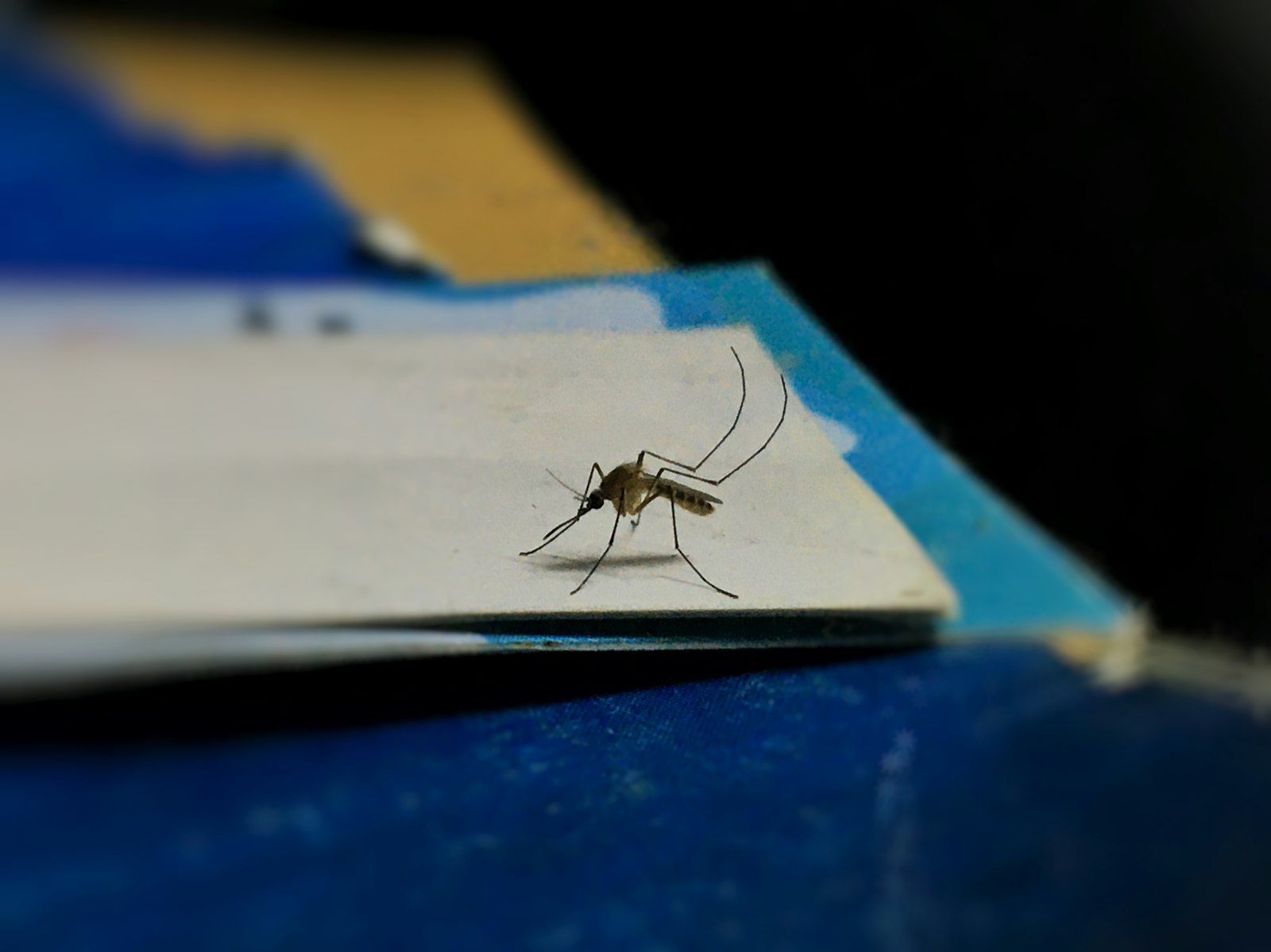
Locally acquired dengue cases on the European mainland rose from 71 in 2022 to more than 300 in 2024, with France, Spain, and Italy at the frontline. Aedes albopictus is now established in 16 EU/EEA countries and 369 regions, more than triple a decade ago. Climate change, urban adaptability, and daytime biting have turned a tropical disease into a Mediterranean summer threat. What that means for the 2026 season.
For decades, Europeans associated dengue fever with faraway tropical destinations. That perception is now dangerously outdated. Between 2022 and 2024, the number of locally acquired dengue cases on the European mainland surged from 71 to more than 300, according to the European Centre for Disease Prevention and Control (ECDC). France, Spain, and Italy are at the epicentre of this shift, and epidemiologists warn that the trend will only accelerate as climate conditions continue to favour the disease's primary vector: the Asian tiger mosquito.
This article explains where dengue is spreading in Europe, what the symptoms look like, who is most at risk, and -- most importantly -- what you can do about it right now.
What Is Dengue Fever?
Dengue is a viral infection transmitted to humans through the bite of infected Aedes mosquitoes, primarily Aedes aegypti and Aedes albopictus. According to the World Health Organization (WHO), dengue is the fastest-spreading mosquito-borne disease worldwide, with cases increasing eightfold over the past two decades.
The virus has four distinct serotypes (DENV-1 through DENV-4). Infection with one serotype provides lifelong immunity to that specific strain but only short-term cross-protection against the others. A second infection with a different serotype can increase the risk of severe dengue, a potentially life-threatening complication.
The Rise of Autochthonous Dengue in Europe
The term "autochthonous" means locally acquired -- in other words, the person was bitten by an infected mosquito within Europe itself, not during travel abroad. This distinction matters enormously for public health planning.
France: The Frontline
France has become Europe's dengue hotspot. In 2024, the country reported 76 locally acquired dengue cases across several departments, including Alpes-Maritimes, Var, Bouches-du-Rhone, and Drome, according to ECDC surveillance data. The first autochthonous case of 2024 was detected in Montpellier (Occitania region) in early July, with symptom onset on 17 June. Southern France's Mediterranean climate provides ideal breeding conditions for Aedes albopictus, and the dense urban population enables rapid transmission cycles.
Spain: A New Front Opens
Spain reported its first significant cluster of locally acquired dengue in 2024, with 21 non-travel-associated cases in the Catalonia and Murcia regions, as documented in ECDC threat assessments. Prior to this, autochthonous dengue in Spain was essentially unheard of. The Iberian Peninsula's warm climate and expanding mosquito populations suggest this will not be a one-off event.
Italy: Sustained Local Transmission
Italy detected its first autochthonous dengue cases of 2024 in Emilia-Romagna, beginning in the municipality of Albinea (Reggio Emilia province) in August. Italy has a long history of Aedes albopictus establishment -- the tiger mosquito was first detected in the country in 1990 -- and its dense populations in the Po Valley and along the Adriatic coast create persistent transmission risk.
The Trajectory: 71 to 304 in Two Years
In 2022, the EU/EEA recorded 71 locally acquired dengue cases. By 2024, that figure had climbed past 304. The ECDC's risk assessment for dengue on mainland EU/EEA warns that the increasing geographic range of Aedes albopictus, combined with rising numbers of viraemic travellers returning from endemic regions, creates a growing risk of further outbreaks.
The Vector: Aedes albopictus (Asian Tiger Mosquito)
Understanding the mosquito behind the outbreak is essential to understanding the risk.
A Mosquito Perfectly Adapted to Europe
Aedes albopictus, commonly known as the Asian tiger mosquito, is now established in 16 EU/EEA countries and 369 regions, up from just 114 regions a decade ago. This more than threefold expansion has been driven by several factors:
- Climate change: Rising temperatures and milder winters allow the mosquito to survive in regions that were previously too cold.
- Urban adaptability: Tiger mosquitoes breed in tiny amounts of standing water -- a bottle cap, a discarded tyre, a clogged gutter -- making cities ideal habitats.
- Egg diapause: The species can survive winter as dormant eggs, resuming development when temperatures rise in spring.
- Daytime biting: Unlike many mosquito species that bite primarily at dusk and dawn, Aedes albopictus is an aggressive daytime biter, increasing human contact.
Countries With Established Populations
As of 2025, established tiger mosquito populations exist in Austria, Belgium, Bulgaria, Croatia, Cyprus, France, Germany, Greece, Hungary, Italy, Malta, Portugal, Romania, Slovakia, Slovenia, and Spain, according to ECDC distribution maps. Since 2024, new establishments have been confirmed in Cyprus and Slovakia, with range expansions detected in Austria, Belgium, Germany, and several other countries.
Symptoms of Dengue: What to Watch For
According to the WHO and the US Centers for Disease Control and Prevention (CDC), dengue symptoms typically appear 4 to 10 days after a bite from an infected mosquito and last 2 to 7 days.
Common Symptoms
- High fever (40 degrees Celsius / 104 degrees Fahrenheit)
- Severe headache, particularly behind the eyes
- Muscle and joint pain (dengue is sometimes called "breakbone fever")
- Nausea and vomiting
- Skin rash (appearing 2-5 days after fever onset)
- Swollen glands
- Fatigue
Severe Dengue: Warning Signs
Roughly 1 in 20 dengue patients develop severe dengue, which can be fatal without proper medical care. Warning signs typically emerge 24 to 48 hours after fever subsides and include:
- Severe abdominal pain
- Persistent vomiting
- Rapid breathing
- Bleeding gums or nosebleeds
- Blood in vomit or stool
- Extreme fatigue or restlessness
If you or a family member develops these symptoms after a mosquito bite -- particularly in southern Europe during summer and autumn -- seek medical attention immediately.
Asymptomatic Cases
Most dengue infections (up to 75 percent) are asymptomatic, according to WHO data. This means infected individuals can unknowingly serve as a reservoir, allowing local mosquitoes to pick up the virus and transmit it further.
Who Is Most at Risk?
Several factors increase the risk of contracting dengue in Europe:
- Geographic location: Residents of southern France, coastal Spain, Italy (especially the Po Valley, Liguria, and the Adriatic coast), and Greece face the highest risk.
- Outdoor exposure: People who spend time outdoors during daylight hours in areas with established tiger mosquito populations.
- Previous infection: A second dengue infection with a different serotype carries a higher risk of severe disease.
- Age and health: Young children, the elderly, and immunocompromised individuals are more vulnerable to severe outcomes.
- Travellers: Europeans returning from dengue-endemic regions (Southeast Asia, Latin America, the Caribbean) can introduce the virus to areas where competent vectors are present.
Prevention: How to Protect Yourself and Your Family
Personal Protection
- Eliminate standing water around your home: empty plant saucers, clear guttered drains, cover rain barrels, and dispose of any containers that collect water.
- Use physical barriers: Window and door screens, bed nets, and mosquito-proof enclosures remain among the most effective and chemical-free methods of protection.
- Wear protective clothing: Light-coloured, long-sleeved shirts and long trousers reduce exposed skin, particularly during peak biting hours.
- Apply repellents carefully: If using repellents, choose products approved by your national health authority and follow instructions, especially for children.
Community and Municipal Action
- Surveillance programmes: Many EU countries now run mosquito surveillance programmes to track Aedes albopictus distribution and density. Support local efforts by reporting tiger mosquito sightings.
- Integrated vector management: Municipalities in high-risk areas should implement breeding site reduction, larviciding, and public awareness campaigns.
- Blood supply safety: Blood banks in affected regions have implemented screening and deferral policies for dengue.
Vaccination: Limited Options
Dengue vaccines exist (Dengvaxia and Qdenga), but their use in Europe is limited. Qdenga (TAK-003) received European Medicines Agency (EMA) approval in 2022, but distribution remains focused on endemic tropical regions. Vaccination is not yet part of routine prevention strategies for European residents.
What Does the Future Hold?
The ECDC has been unequivocal: mosquito-borne diseases in Europe are entering a "new normal." The combination of expanding vector populations, increasing global travel, and climate change means that dengue outbreaks in Europe will likely become larger, more frequent, and more geographically widespread.
The 2025 mosquito season saw Europe set new records for mosquito-borne disease transmission, and projections suggest 2026 could be worse still. For families, businesses, and municipalities across the continent, proactive protection is no longer optional -- it is essential.
Frequently Asked Questions
Can you catch dengue in Europe?
Yes. Locally acquired dengue cases have been confirmed in France, Spain, and Italy since 2022, with more than 300 cases reported in 2024 alone.
Is there a dengue vaccine available in Europe?
Qdenga (TAK-003) is approved by the EMA but is not widely available for routine use among European residents. Protection through mosquito bite prevention remains the primary strategy.
What time of year is dengue risk highest in Europe?
The transmission season runs from approximately June to November, with peak risk in August and September when mosquito populations and temperatures are highest.
Can dengue be fatal?
Yes. Severe dengue can be fatal, though mortality is low when proper medical care is available. Seek immediate medical attention if you experience warning signs after a febrile illness during mosquito season.
About Mosticare: Mosticare develops chemical-free mosquito protection solutions for homes, businesses, and communities across Europe. Our mission: a green, mosquito-free life for every European. Learn more