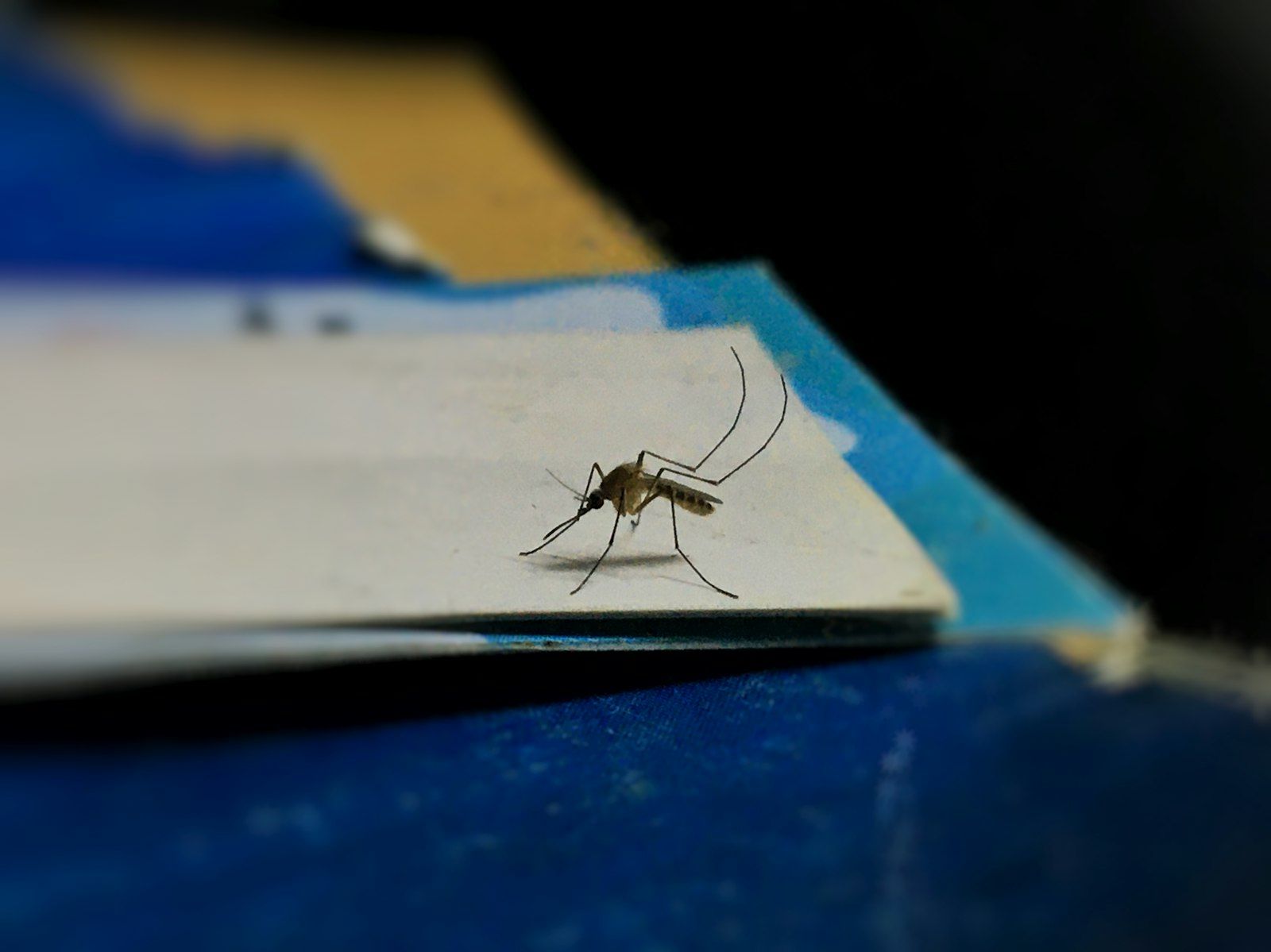
Alhliða, ritrýnt rannsóknaryfirlit yfir dengue-hita fyrir 2026: veiran, fjórir sermismar hennar og mótefla-tengd aukning, Aedes moskítófluguvektorarnir, faraldsfræðileg mynd á heimsvísu og í Evrópu, allt klínískt róf frá einkennalausri sýkingu til alvarlegs dengue, núverandi bóluefnamynd (Dengvaxia, Qdenga, Butantan stakskammta frambýling), Wolbachia og ófrjósemistækni nýjungarnar, og loftslagsdrifin landfræðileg útbreiðsla sem er að gera dengue að endurteknum sumarveruleika á Miðjarðarhafssvæðinu. Uppfært fyrir Heimsdengue-dag 2026.
Mosticare Editorial · Birt 2026-06-18 · Síðast uppfært 2026-06-18
Dengue er veirusýking sem berst með Aedes aegypti og Aedes albopictus moskítóflugum og setur áætlað 5,6 milljarða manns, meira en helming jarðarbúa, í áhættu, veldur 100-400 milljónum sýkinga á ári, og er hraðast vaxandi moskítóberandi veirusjúkdómur á jörðinni. Engin sértæk veirulyfjameðferð er til; klínísk meðferð er stuðningsmeðferð, og forvarnir byggjast á vektorstýringu, heimilisvernd og (þar sem leyft er) bólusetningu. Þessi grein er viðurkennd Mosticare tilvísun fyrir sjúkdóminn árið 2026, rituð fyrir lækna, lýðheilsustarfsmenn, vísindablaðamenn og upplýsta neytendur um alla Evrópusambandið.
Af hverju þetta yfirlit, og af hverju núna
Vikan 15. júní 2026 var textabókardæmi um af hverju dengue krefst meðferðar á rannsóknargrunni, ekki fréttagrunni. Sama 48 klukkustunda gluggi bar (1) heimssamskipti Alþjóðaheilbrigðismálastofnunarinnar 2026 fyrir Heimsdengue-dag og endurnýjaða alþjóðlega byrðaramma, (2) fjórðu ársskýrslu World Mosquito Program, 16,1 milljónir manns varin í 15 löndum, 1,5 milljónum dengue-tilvika komið í veg fyrir, US$455 milljónum sparað í heilbrigðiskostnaði, og (3) opnun Asia Dengue Summit 2026 í Singapore. Samtímafréttir í sama glugga báru einnig fyrstu trúverðugu 2026 skýrslurnar um nýlega innleiddan dengue-stofn á Sri Lanka og 210+ innflutt arbovirus-tilvik í péttbýli Frakklands. Mynstrið er skýrt: dengue er sjúkdómur þar sem þyngdarkrafturinn færist til á ári hverju, og hver einasti fréttahringur fangar aðeins einn sneið af mun stærra faraldsfræðilegum boga.
Þessi grein er kyrr, sígild tilvísun sem grundvallar lesandann í sjúkdómnum sjálfum, veirunni, vektorunum, sermisunum, klíníska rófinu, bóluefnunum, forvarnarnýjungunum, og loftslagsdrifnu útbreiðslunni, og veitir þær vitnanlegu aðalheimildir sem fréttahringurinn reiðir sig á. Fyrir Mosticare sérstaklega, þá situr hún sem súlugreinin fyrir dengue efnisþyrpinguna, með Evrópu- og Brasilíu-staðsettar bloggfærslur okkar sem styðjandi spök.
1. Veiran
Dengue-veiran (DENV) er einþátta, jákvæð-skynjað RNA-veira af ættkvíslinni Flavivirus (fjölskylda Flaviviridae). ~10,7 kilóbasa erfðamengi hennar kóðar eitt fjölprótein sem klofið er samtímis og eftir þýðingu í þrjú byggingarprótein (hjúpur, forhúð/húð, umslag) og sjö óbyggingarprótein (NS1, NS2A, NS2B, NS3, NS4A, NS4B, NS5). Veiran er um 50 nm í þvermál, umslög og ísósahedral; umslagspróteinið ber viðtaka-bindingu og himnuvirkni sem miðlar hýsilfrumuinntöku og er aðalmarkmið hlutleysandi mótefla.
Það eru fjórir ónæmisfræðilega ólíkir sermisar, DENV-1, DENV-2, DENV-3, og DENV-4, skilgreindir með hlutleysingarprófum. Erfða raðgreining leysir hvern sermis enn frekar upp í marga arfgerðir, sem sjálfar reenna mælanlega yfir áratugi. Fjórir sermisar deila um 65-70% amínósýrusamsvörun á umslagspróteininu; krossvirkja en ekki kross-hlutleysandi mótefnasvar gegn ósamstæðum sermism er ónæmisfræðilegur grundvöllur hættulegasta klíníska einkennis sjúkdómsins, mótefla-tengdrar aukningar, rætt í §4. Allir fjórir sermisar valda fullu klínísku rófi sjúkdómsins, og sýking með einum sermis gefur lífstíðar ónæmi gegn þeim sermis en aðeins skammlífa (mánuði til ~2 ár) krossvörn gegn hinum.
Veiran er viðhaldið í náttúrunni í tveimur smitleiðum: skógarsmitleið í öpum og skógbúum Aedes moskítóflugum (Suðaustur-Asía og Vestur-Afríka, með stöku tilfelli til manna), og borgarsmitleið í Aedes aegypti og Aedes albopictus og mannlegum hýslum. Borgarsmitleiðin er uppspretta nær alls mannlegs lýðheilsu álags.
2. Smitleið
Dengue berst í menn nær eingöngu með biti sýktrar kvenkyns Aedes moskítóflugu. Aðalvektorarnir eru Aedes aegypti (aðal alþjóðlegi vektorinn) og Aedes albopictus (asíska tígrismoskítóflugan, sem er aðalvektorinn í Evrópu og á tempraða jaðri dengue-kortsins). Aðrar Aedes tegundir, Ae. polynesiensis, Ae. scutellaris, Ae. niveus, viðhalda staðbundinni smitun í afmörkuðum Kyrrahafs- og Suðaustur-asískum svæðum en eru ekki marktækar á alþjóðlegum skala.
Smitleiðin innan hæfrar moskítóflugu stjórnast af ytri inkubationartímanum (EIP), tímanum frá því að moskítóflugan tekur sýkta blóðmáltíð og þar til moskítóflugan getur smitað veirunni í gegnum munnvatn sitt. EIP er hitastigsháð: við 25 °C er hann um 8-12 dagar; við 30 °C styttist hann í ~5-7 daga; undir ~18 °C stöðvast veirumargföldun í raun. Hitastigsnæmi EIP er einn aðalvélanna sem loftslagsbreytingar knýr landfræðilega útbreiðslu dengue: hlýrri sumur þýða fleiri daga yfir EIP þröskuldinum innan eins smittímabils, og hlýrri vetur þýða að EIP getur lokið á breiðara breiddarstigs sviði.
Moskítóflugan helst sýkingarfær alla ævi. Kvenkyns Aedes moskítóflugur taka yfirleitt blóðmáltíð á 2-4 daga fresti á meðan á kynkirtlahringrásinni stendur og geta tekið margar hlutamáltíðir milli eggjaframleiðslutilvika, hegðun sem eykur bæði vektorsgetu þeirra og áhættuna á að rjúfa hringrásina með heimilisvernd (skjáir, lokaðar hurðir og glugga). Lóðrétt (transovarial) smitun hefur verið skráð og getur leyft veirunni að lifa af óhagstæð árstíð á eggjastigi, þó faraldsfræðilegt mikilvægi þessarar leiðar við að knýja árstíðabundna endurkomu sé enn til umræðu.
Skilvirkni smits frá manni til moskítóflugu er sjálf breytileg. Veirublóðfall í mannlegu dengue-tilviki nær hámarki í kringum hitalækka og fellur skarpt á næstu 5-7 dögum; moskítóflugur sem nærast á veiruhýsli á þessu glugga taka næga veiru til að hefja sýkingu. Fólk með einkennalitla eða fyrir-einkenna sýkingu, sem er sjálfgefið ekki að einangra sig, getur því sáð staðbundnum smitrásum, sem er ein ástæða þess að samfélagsstigs vektorstýring er óútvinnanleg viðbót við einstaklingsbundna einangrun tilfella.
3. Alþjóðleg byrði
Dengue er landfræðilega útbreiddasta liðdýraberandi veira á jörðinni, og byrði hennar hefur vaxið um það bil áttafalt síðustu tvo áratugi. Dengue blaðasíða WHO 2024 og byrðarritgerð Bhatt o.fl. 2013 í Nature ramma inn viðurkenndu tölurnar; Heimsdengue-dagur 2026 herferð WHO uppfærir og endursagt þær á mest vitnanlegu einnar rammasniði sem völ er á í dag.
Almanaksárið 2024 var, samkvæmt endurskoðun WHO, hæsta byrðar dengue-ár sem nokkru sinni hefur verið skráð. Ameríka var alþjóðlegi miðpunkturinn: Brasilía ein tilkynnti yfir 6,6 milljónir líklegra dengue-tilvika árið 2024 (heilbrigðisráðuneytið) og 1,7 milljónir árið 2025, áður en samþætta 2026 forritið, Butantan stakskammta bóluefni, Fiocruz/World Mosquito Program Wolbachia sleppingar í lífverksmiðjustærð, ovitrap vöktun í 1.600 sveitarfélögum, skar fyrsta ársfjórðungs 2026 tilvikatalningu um 75% (227.500 á móti 916.400 árið 2025). 2026 Ameríku tímabilið er nú hreinasta náttúrulega tilraunagrunnur sem völ er á fyrir samþættingu bóluefnis, lífstýringar og vöktunar; sjá umfjöllun Mosticare um Brasilíu fyrir rekstraryfirlit.
Suðaustur-Asía og Vestur-Kyrrahaf bera annarri og þriðju stærstu svæðisbundnu byrðirnar, með ofursmitandi samtímisrás allra fjögra sermisa í mörgum borgarsvæðum, ónæmisfræðilegur undirstaða fyrir mótefla-tengda aukningarfræðina sem rætt er í §4. Afríka er almennt viðurkennt að sé verulega van-skráð; sermisalgengiskannanir greina reglulega samfélagsútsetningu í löndum án formlegs vöktunarforrits, og WHO hefur merkt afríska vöktun sem forgangsbil.
4. Fjórir sermisar og mótefla-tengd aukning
Fjórir sermisar geta hver um sig valdið fullu klínísku rófi sjúkdómsins, en þeir eru ekki ónæmisfræðilega útskiptanlegir. Fyrsta sýking með einum sermis („aðal" sýking) veldur yfirleitt sjálf-lokandi hitasjúkdómi eða einkennalitlu sermisvörðu og veitir lífsstíðar ónæmi gegn þeim sermis auk nokkurra mánaða til ~2 ára krossvörn gegn hinum. Þegar þessi krossvörn dvínar getur ónæmissvar síðari sýkingar með öðrum sermis („afleidd" eða „ósamstæð" sýking) á mótsöknarháttaðan hátt aukið hættu á alvarlegum sjúkdómi. Vélbúnaðurinn er mótefla-tengd aukning (ADE): hlut-hlutleysandi krossvirk mótefli bindast veirunni og auðvelda inngöngu hennar í Fcγ-viðtaka-frumum (einkjarna, átfrumur, sumar tré-klæðningar frumur), sem eykur veirumargföldun á hverja frumu og magna hýsil meðfædda ónæmissvar. Afleiðandi boðefnisflæði og komplement-virkjunar snið eru næstu drifkraftar plasma-leka, blæðingareinkenna og líffæraskemmda sem skilgreina alvarlegt dengue.
Faraldsfræðileg afleiðing er sú að innleiðing nýs sermis í þýði sem þegar hefur orðið fyrir einum eða fleiri af öðrum er helsti áhættuörvun. Þetta er ónæmisfræðileg bakgrunnsmynd 2026 Sri Lanka „nýlega innleidda stofns" gagnapunktsins: þýði án fyrri útsetningar fyrir rásandi afbrigði stendur frammi fyrir þýðisbreiðri aðal-sýkingaröldu, með alvarlegu dengue-áhættu þétt saman í þeim sem áður hafa orðið fyrir öðrum sermism. Það er einnig ástæðan fyrir því að bóluefnis hönnun er svo erfið: bóluefni verður að vera fjórsermis (verndandi gegn öllum fjórum sermism) án þess að framleiða hlut-hlutleysandi, ADE-næmt mótefnisnið í neinum þeirra.
5. Klínískt róf
Klínískt róf dengue er frægt fyrir að vera vítt. Flokkun WHO 2009, sem leysti af eldri dengue-hita / dengue-blæðingarhita / dengue-lostsstýru skema, skiptir sjúkdómnum í dengue án viðvörunarmerkja, dengue með viðvörunarmerkjum, og alvarlegt dengue. Flokkarnir eru klínískt aðgerðanlegir því dánarhlutfall með viðeigandi stuðningsmeðferð er undir 1%, en ómeðhöndlað alvarlegt dengue getur náð 20%.
Um 75% dengue-sýkinga eru einkennalausar eða nógu vægar að sjúklingurinn leitar ekki til þjónustu. Einkennagefandi tilvik fylgja yfirleitt inkubationartíma 4-10 daga (miðgildi 5-7), síðan hita-stigi í 2-7 daga einkenndur af:
- Skyndilegum háum hita (oft 39-40 °C)
- Alvarlegum höfuðverk
- Aftur-augnkringluverkjum
- Vöðva- og liðverkjum (sagnafornafnið „beinkveisa" dregur nafn sitt af þessu)
- Ógleði, uppköstum, og maculopapular eða roðaútbrotum
- Hvítfrumnafæð, blóðflögufæð, og hækkandi blóðkornaskammti á rannsóknarstofuprófum
Hita-stigið hverfur oft í kringum dag 3-7, og mikilvæga stigið hefst á 24-48 klukkustunda glugga í kringum hitadeyfingu. Mikilvæga stigið er gluggi plasma-leka, blæðingareinkenna og líffæraskemmda sem skilgreinir alvarlegt dengue. Viðvörunarmerki sem marka umskiptin frá „dengue með viðvörunarmerkjum" til „alvarlegs dengue" eru:
- Alvarlegur kviðverkur
- Viðvarandi uppköst (≥3 tilvik á 24 klukkustundum, eða uppköst með klínískri vökvaskorti)
- Klínísk vökvasöfnun (fleiðruvökvi, skinvökvi)
- Slímhúðarblæðingar (gómur, nef, leggöng)
- Sljóleiki eða eirðarleysi
- Lifrarstækkun (>2 cm)
- Hratt hækkandi blóðkornaskammtur með fallandi blóðflögufjölda
Alvarlegt dengue er sjálft skilgreint með (a) alvarlegum plasma-leka sem leiðir til losts eða öndunarerfiðleika, (b) alvarlegum blæðingum, eða (c) alvarlegum líffæraþátttöku (lifrar, tauga, hjarta, nýrna). Dánarhlutfall í alvarlegu dengue án viðeigandi meðferðar er skráð á bilinu 2-5% og getur náð 20% í ómeðhöndluðu losti; með viðeigandi vökvameðferð og nánu eftirliti er það undir 1%.
Tveir klínískir eiginleikar eru þess virði að undirstrika. Í fyrsta lagi er alvarlegt dengue ekki takmarkað við afleidda sýkingu: aðal-sýking hjá ungbörnum með móðurmótefni (sérstakt tilfelli óbeinnar ADE) og aðal-sýking hjá fullorðnum með ákveðna áhættuþætti (sykursýki, offita, meðganga, aldur ≥65) geta einnig þróast. Í öðru lagi er „mikilvægi" glugginn þröngur og auðvelt að missa af, sjúklingur sem lítur vel út við hitadeyfingu getur versnað á klukkustundum, sem er ástæðan fyrir því að WHO og flestar landsbundnar leiðbeiningar mæla með inniliggjandi eftirliti í gegnum mikilvæga stigið fyrir alla sjúklinga með viðvörunarmerki, jafnvel þótt fyrsta kynning líti út fyrir að vera róleg.
6. Greining
Greining hvílir á þremur súlum: faraldsfræðilegu samhengi (ferðalög eða búseta í smitsvæði, útsetning fyrir staðfestum tilvikum, almanaksvika innan Aedes virknitímabils), klínískri kynningu (hitaheilkennið að ofan), og rannsóknarstofu staðfestingu. Val rannsóknarstofuprófs ræðst af degi veikinda miðað við upphaf einkenna.
- NS1 mótefnavakagreining (ELISA eða hraðpróf). Greinir óbyggingarprótein 1 sem sýktar frumur seyta á bráðu veirufasa. Nytsamlegt frá degi 1 til dags 5; næmni hæst í aðal-sýkingu. Neikvætt NS1 í sterklega grunuðum afleiddum sýkingum er ekki upplýsandi.
- RT-PCR (eða önnur kjarnsýrumögnunarpróf). Gullstaðall fyrir sermisauðkenningu og veirumagnsmælingu. Nytsamlegt á fyrstu 5-7 dögum veikinda; minnkandi næmni frá degi 5 áfram þegar veirufall hverfur.
- IgM / IgG sermisfræði (ELISA eða hraðpróf). IgM hækkar frá u.þ.b. degi 5-7 og helst greinanlegt í 2-3 mánuði; IgG hækkar frá degi 7-10 og varir í mörg ár (lífstíð í afleiddri sýkingu). Fjörföld hækkun IgG á pöruðum bráðum/batandi sýnum er nytsamlegasta staka sermisfræðistaðfestingin, en hún er afturskyggn.
Sérstök greiningarörðugleiki er sermisfræðileg krossvirkjun við aðrar flaviveirur, Zika, gulusótt, West Nile, japanskt heilabólga, sem flækir IgM túlkun hjá sjúklingum með fyrri flavivirus-útsetningu eða gulusóttarbólusetningu. Flestar lýðheilsurannsóknarstofur keyra nú pöruð dengue / Zika / chikungunya borð á viðeigandi faraldsfræðilegu samhengi, og pan-flavivirus RT-PCR fylgt eftir með raðgreiningu er staðall fyrir útbrotsstaðfestingu. Nýrri staðbundin próf sameina NS1 með IgM/IgG til að gefa nytsamlegri fyrstu-göngu niðurstöðu; frammistaða þeirra í raunheimsskilyrðum batnar en er enn marktækt undir rannsóknarstofu ELISA.
7. Meðferð
Það er engin sértæk veirulyfjameðferð fyrir dengue. Meðferð er stuðningsmeðferð og er, í alvarlegs sjúkdóms samhengi, tímaháð. Hornsteinn umönnunar er hyggileg vökvastjórnun, næg til að viðhalda lok-líffæra blóðflæði í gegnum plasma-leka gluggann, en ekki svo ákaflega að hún valdi vökvaofhleðslu þegar leki hættir. WHO og US CDC verklagsreglur skipta meðferð í hópa byggt á tilvist viðvörunarmerkja og stigi veikinda; grundvallarreglurnar eru:
- Dengue án viðvörunarmerkja: göngudeildarmeðferð með vökva inntöku, parasetamóli (EKKI NSAID eða aspirín, sem auka blæðingarhættu), og daglegu endurmati í gegnum mikilvæga gluggann.
- Dengue með viðvörunarmerkjum: inniliggjandi eftirlit, ísótónísk kristallóð vökvameðferð títuð að klínísku svari, dagleg eða tvisvar á dag blóðkornaskammts- og blóðflögufjöldatalning.
- Alvarlegt dengue: gjörgæsla, ísótónískir vökvaboðar fylgt af títuðu innrennsli, blóðhlutaþegar gefnar þar sem við á (sjaldgæft, og aðeins með virkum blæðingum eða kritískri blóðflögufæð með blæðingum), meðferð líffærasértækra fylgikvilla (lifrar, tauga, nýrna).
Hjálparmeðferðir (barksterar, ónæmisglóbúlín í æð, endurröðuð virkjaður þáttur VII, pentoxifyllín, veirulyf eins og lovastatin eða celgosivir) hafa verið rannsökuð í litlum tilraunum en engin hefur sýnt samræmdan ávinning, og staðall umönnunar er áfram stuðningsmeðferð. Mikilvægasti klíníski hlutur er ekki lyfjafræðilegur: dánarhlutfall í alvarlegu dengue fellur úr 20% niður fyrir 1% með viðeigandi stuðningsmeðferð, og jaðar fjárfesting í snemmgreiningu, eftirliti og vökvastjórnun er ein hæsta-ávinnings klíníska aðgerð sem völ er á.
8. Prevention
Dengue prevention is layered and is not the responsibility of any single actor. The WHO-endorsed framework is integrated vector management (IVM): the combination of (a) source reduction (eliminating or treating breeding sites), (b) larval control (larviciding, biological control, environmental management), (c) adult mosquito control (targeted indoor residual spraying, ultra-low-volume fogging during outbreaks), (d) personal protection (repellents, clothing, household barriers), and (e) community engagement. No single intervention is sufficient at scale; the Brazilian 2026 75% drop is the cleanest evidence to date that the IVM combination works at population scale when it is actually integrated.
Personal protection in 2026 rests on three pillars:
- Topical repellents (DEET, picaridin / icaridin, IR3535, oil of lemon eucalyptus / PMD, and, more recently, naturally-derived compounds such as patchouli oil) applied to exposed skin according to label instructions. Effective for 4-8 hours depending on formulation and conditions; require re-application and behavioural compliance.
- Protective clothing, light-coloured, long-sleeved shirts and long trousers, especially during peak biting hours. Aedes albopictus in particular is a daytime biter, which is one reason why clothing and household barriers are more useful for dengue than for purely nocturnal mosquito-borne diseases.
- Household barriers, window and door screens, intact door seals, bed nets, and air-conditioning where available. These are the most reliable intervention for residents of affected areas: they protect continuously during peak biting hours without requiring active behavioural compliance, and they are the WHO and ECDC recommended component of IVM for households in transmission areas.
Community and municipal action is the second tier: larviciding of container habitats, environmental management to reduce standing water, public-awareness campaigns, and surveillance using ovitraps and BG-Sentinel traps to track vector density and trigger interventions. Most affected EU countries now run vector-surveillance programmes through their national public-health agencies; public participation (reporting tiger-mosquito sightings, allowing property access for inspection) materially improves the effectiveness of these programmes.
Vaccination (see §9) is the third tier in populations where licensed vaccines are available, but vaccine coverage does not displace any of the above, it complements them. A vaccine that protects an individual from symptomatic disease does not prevent that individual from being bitten and contributing to onward transmission if they are subsequently exposed; vector control remains the only currently available tool to suppress transmission at the population level.
9. Vaccines
The dengue vaccine landscape in 2026 is dominated by two licensed products, Sanofi Pasteur's Dengvaxia (CYD-TDV) and Takeda's Qdenga (TAK-003), and by the rising South-led candidate Butantan-DV, the single-dose dengue vaccine developed by Instituto Butantan in São Paulo and rolled out at scale in Brazil in 2025-2026.
Dengvaxia (CYD-TDV) is a live-attenuated tetravalent chimeric yellow-fever / dengue vaccine first licensed in 2015. Its pivotal trials showed a strong protective effect in seropositive recipients but an increased risk of hospitalisation for severe dengue in seronegative recipients who later experienced their first natural infection, the ADE signal predicted from the underlying immunology. As a result, Dengvaxia is licensed only for individuals with documented prior dengue infection, which makes it operationally complex in low-transmission settings where the serostatus of the population is unknown. It is not the leading EU-relevant product.
Qdenga (TAK-003) is a live-attenuated tetravalent dengue vaccine based on a DENV-2 backbone. The pivotal TIDES trial (Biswal et al. 2019, NEJM) demonstrated 80.2% overall efficacy against symptomatic dengue at 18 months, with efficacy maintained across serotypes and, critically, without the serostatus restriction that limited Dengvaxia. The European Medicines Agency authorised Qdenga in December 2022 for individuals aged 4 and older regardless of prior dengue serostatus, making it the first dengue vaccine broadly deployable in EU travel-medicine and outbreak-response contexts. Real-world effectiveness data accumulated through 2024 and 2025 has been broadly consistent with the pivotal-trial profile; the product is now the reference dengue vaccine for European clinicians and for most endemic-country national immunisation programmes.
Butantan-DV is the live-attenuated tetravalent single-dose dengue vaccine developed at Instituto Butantan and rolled out in Brazilian pilot cities in 2025 and 2026. The single-dose regimen is a critical operational advantage for low- and middle-income countries where completing a two-dose schedule is logistically difficult; the Brazil Ministry of Health's April 2026 announcement and the Agência Brasil reporting place the Butantan vaccine as one of the three load-bearing interventions in Brazil's 75% YTD 2026 case-count drop. Phase 3 readouts in 2024 and 2025 reported efficacy in the 70-80% range, broadly comparable to TAK-003 on the available data, with an ADE signal that has not been reported to date in post-market surveillance. Butantan-DV is currently a Brazil-led product; export to other endemic countries and a future EMA submission are expected to follow the 2026 pilot data.
Beyond these, the development pipeline in 2026 includes: mRNA-based dengue vaccine candidates (following the platform validation from COVID-19), pan-serotype monoclonal-antibody prophylaxis for outbreak containment, virus-like-particle vaccines, and a number of recombinant subunit candidates. The pan-serotype antiviral development path is also active: the ideal profile is an oral, short-course, broadly active antiviral that could be used both therapeutically and as outbreak containment. None of these has yet reached the regulatory-authorisation threshold.
10. Vector biology
Aedes aegypti is the primary global dengue vector. It is a small, dark mosquito with characteristic white lyre-shaped markings on the thorax and white-banded legs. It is highly anthropophilic (preferring human blood meals), strongly synanthropic (living in and around human dwellings), and a daytime biter with peak activity in the early morning and late afternoon. Container-breeding: Ae. aegypti females lay their eggs in small, clean-water artificial containers, discarded tyres, plant saucers, roof gutters, water-storage jars, cemetery vases, which makes urban environments its native habitat. The species is temperature-sensitive (development essentially halts below ~16 °C) and is therefore limited, in the absence of heating, to tropical and subtropical latitudes; in Europe its established range is essentially restricted to Madeira (Portugal) and limited Black-Sea coastal areas.
Aedes albopictus (the Asian tiger mosquito) is the secondary global dengue vector and the primary European vector. It is slightly larger than Ae. aegypti, with a distinctive single white stripe down the centre of the thorax and bold white-banded legs that give the "tiger" name. Originally a South-East Asian forest-edge species, it has expanded its global range dramatically over the past 50 years, in part through the international trade in used tyres (which carry desiccation-resistant eggs). It is also a daytime biter, also container-breeding, but it is significantly more cold-tolerant than Ae. aegypti, its eggs can survive European winters in diapause, allowing the species to establish itself across temperate climates. As of mid-2025, Ae. albopictus is established in 16 EU/EEA countries and 369 regions, up from 114 regions a decade ago (ECDC distribution maps). The species is responsible for essentially all autochthonous European dengue, chikungunya, and Zika transmission events to date.
A critical vector-biology fact is that Aedes control is categorically different from malaria-vector control. Anopheles mosquitoes (malaria) tend to bite at night, rest on indoor walls after feeding, and breed in larger bodies of standing water, interventions target indoor residual spraying, long-lasting insecticidal nets, and larval source management in rice paddies. Aedes mosquitoes bite by day, rest in hidden outdoor locations where indoor residual spraying is ineffective, and breed in small artificial containers that are dispersed across every household, interventions must therefore focus on household barriers, personal repellents, and peridomestic source reduction, with community-wide container-habitat elimination campaigns as the population-level complement.
11. Climate and geographic expansion
Dengue's geographic range is expanding in a pattern that is now unambiguously attributable to a combination of climate change, urbanisation, international travel, and the failure of legacy vector-control programmes. The ECDC's standing characterisation, Europe enters a new normal of mosquito-borne disease, is supported by the surveillance data: locally acquired dengue cases on the European mainland rose from 71 in 2022 to more than 300 in 2024, with France, Spain, and Italy at the frontline. The 2026 season is the first in which the ECDC's autochthonous-arbovirus surveillance updates are being tracked in real time by a coordinated EU-wide medical community; the first in-season ECDC update is typically published in late June, after the Mosticare publication of this article.
The mechanism is a combination of:
- Warming-driven EIP completion. Warmer summers mean more days within the temperature range where the extrinsic incubation period can complete within a single transmission season. In temperate Europe, the EIP threshold was historically crossed in only the warmest summers; climate change has moved it to the median summer.
- Vector range expansion. Aedes albopictus has expanded from 114 EU/EEA regions a decade ago to 369 as of mid-2025, and modelling studies project further northward expansion under all reasonable climate scenarios. Northern-European capitals, Paris, Vienna, Zagreb, Frankfurt, London, were formally declared climatically suitable for Ae. albopictus establishment in a January 2026 European Commission environment report.
- Imported case seeding. EU/EEA countries report approximately 2,000-5,000 imported dengue cases annually, with numbers tracking the global epidemiological situation. The 2024 global surge was reflected in markedly increased European imports, creating more "seed" cases that could potentially trigger local transmission. The 2026 numbers, 164 imported dengue, 43 chikungunya, 4 Zika in France from 1 May to 14 June alone (Santé publique France, 17 June 2026), are consistent with another high-import year.
- Failure of legacy programmes. The large-scale Aedes control programmes that protected southern Europe through the mid-20th century, larviciding, source reduction, public-health infrastructure, have been substantially dismantled in most EU countries since the 1970s, in line with the perception that autochthonous mosquito-borne disease was a thing of the past. The ECDC and national agencies are now rebuilding this infrastructure from a much lower base.
For the European consumer specifically, the consequence is that dengue is no longer a "tropical" disease. It is a Mediterranean-summer disease, with the transmission season running approximately June to November and peak risk in August and September. Household-level protection, window and door screens, intact seals, air-conditioning where available, is now a recurring annual preparedness task for households across southern and central Europe, not a one-off response to a discrete outbreak. The Mosticare editorial position on this is that household screening is infrastructure, not luxury, in the modern European dengue landscape.
12. Innovation in prevention
The 2010s and 2020s have produced a remarkable expansion in the vector-control toolkit, with three technologies now at or near population-scale deployment.
Wolbachia-based biocontrol uses the Wolbachia endosymbiont (a naturally occurring intracellular bacterium) to reduce the ability of Aedes aegypti to transmit dengue, Zika, chikungunya, and yellow fever. The mechanism is either (a) population suppression, releasing male mosquitoes carrying a Wolbachia strain that causes embryonic lethality when males mate with wild-type females, or (b) population replacement, releasing male and female mosquitoes carrying a Wolbachia strain that blocks viral replication, so the released mosquitoes and their offspring gradually replace the wild population with a virus-resistant one. The World Mosquito Program's Wolbachia method is the leading example of the population-replacement approach and is the technology behind the 16.1M-people-protected / 1.5M-cases-prevented / US$455M-saved cumulative figures. Cluster-randomised trials in Yogyakarta (Indonesia) showed a 77% drop in dengue incidence in release zones; the Singapore Project Wolbachia trial published in the NEJM in 2026 reported more than 70% fewer dengue infections in residents of treated areas; the Brazilian Ministry of Health's 72-municipality / 70M-people Wolbachia rollout is the first national-scale deployment. The 2025 Nature feature on the Fiocruz/World Mosquito Program biofactory in Curitiba, the largest Wolbachia mosquito factory in the world, is the clearest single description of the production scale now feasible.
Sterile insect technique (SIT) uses radiation-sterilised male mosquitoes released into the wild to suppress the population through sterile-male mating. The IAEA has been a long-standing supporter of SIT for Aedes control, and the technique has been deployed at operational scale in parts of Italy, Spain, and Brazil. The 2026 EU SIT programmes remain small relative to the total Ae. albopictus population, but the cost-per-mosquito is dropping and the technology is increasingly being integrated into municipal IVM programmes.
Gene drive technologies, including CRISPR-based population suppression and replacement drives, are still in the research phase. The Target Malaria consortium and a small number of Aedes-focused programmes are pursuing regulatory pathway development, but no gene-drive product is yet authorised for environmental release. The technical and ethical issues are substantial and the regulatory timeline is measured in decades, not years.
Alongside these headline technologies, ongoing work continues on next-generation larvicides (Bti and other biological agents), autodissemination stations (devices that allow adult mosquitoes to carry larvicide back to their breeding sites), and AI-driven surveillance (image-recognition of Aedes eggs in ovitraps, AI-assisted breeding-site detection from drone imagery, real-time vector-density forecasting). The 2026-2030 horizon is the first in which the full IVM toolkit, vaccination, Wolbachia or SIT population modification, household barriers, AI-augmented surveillance, and rapid outbreak response, is plausibly available as an integrated package to a national public-health programme.
13. Outlook
Three trends will define the dengue landscape over the next 5 years.
First, the geographic expansion will continue. Climate-driven Aedes range expansion, increasing international travel, and the slow rebuilding of European public-health mosquito-control infrastructure mean that the EU autochthonous case count is highly likely to keep rising through at least 2030, with the first sustained EU transmission chains expected within the next 3-5 years in the most climatically suitable areas (coastal Mediterranean France, Spain, Italy, Greece, and the Adriatic). The role of imported-case seeding in triggering these chains is well-established; the Ae. albopictus vector is in place; the missing variable is whether the public-health response can be mobilised at sufficient speed when the first local chains appear.
Second, the vaccine landscape will diversify. Butantan-DV and the mRNA-based candidates will likely reach wider global availability in the late 2020s, and the operational question will shift from "is there a vaccine" to "how do we integrate vaccine into IVM." A vaccine that protects an individual from severe disease does not interrupt transmission; only integrated vector management does. The countries that learn the IVM integration lesson earliest, Brazil being the most cited current example, will see the largest population-level benefit.
Third, the IVM toolkit will be increasingly digital. AI-augmented vector surveillance, real-time outbreak forecasting, and rapid Wolbachia / SIT deployment capability will progressively replace the legacy paper-and-knock-on-door surveillance model. The countries and municipalities that invest in this digital infrastructure now will be the ones that maintain a controllable dengue curve through the 2030s.
For European consumers specifically, the operational implication is the same one that has applied since 2010: household-level protection, window and door screens, intact seals, daytime-biting-safe clothing and repellents, breeding-site elimination around the home, is the foundation of any effective personal dengue strategy, and is now a recurring annual task for households across southern and central Europe. Vaccines protect travellers; screens protect homes. The two are complementary, not substitutes.
Frequently asked questions
Is dengue the same as "breakbone fever"?
Yes. "Breakbone fever" is the historical name for dengue, derived from the severe myalgia and arthralgia that characterise the acute febrile phase. The name fell out of clinical use in the 20th century but is widely used in patient-facing communications in endemic countries.
Can you catch dengue more than once?
Yes. There are four serotypes, and infection with one provides lifelong immunity only to that serotype. A second infection with a different serotype is the most common route to severe dengue, because of the antibody-dependent enhancement mechanism. Subsequent third and fourth infections are progressively less likely to cause severe disease, because the cross-protective immunity gradually broadens.
Is there a cure for dengue?
No. There is no specific antiviral therapy. Clinical management is supportive, fluid resuscitation through the critical phase is the highest-yield intervention, and the case-fatality rate in severe dengue drops from ~20% to below 1% with appropriate care. Several pan-serotype antivirals are in development but none has reached the regulatory-authorisation threshold.
Is there a dengue vaccine available in Europe?
Yes. Takeda's Qdenga (TAK-003) was authorised by the European Medicines Agency in December 2022 for individuals aged 4 and older regardless of prior dengue serostatus. It is now the reference dengue vaccine for European travel medicine and outbreak response. Sanofi's Dengvaxia is also licensed but restricted to seropositive individuals in most settings. Butantan-DV (single-dose) is the rising South-led candidate, currently available in Brazil with wider rollout expected later in the decade.
Can you catch dengue in Europe?
Yes. Locally acquired (autochthonous) dengue cases have been confirmed in France, Spain, Italy, Croatia, and Portugal (Madeira, 2012 outbreak) since 2010, with mainland-EU cases rising from 71 in 2022 to more than 300 in 2024. The trend is unambiguously upward, driven by climate-driven Aedes albopictus range expansion and the volume of imported cases from endemic regions. The Mosticare editorial position is that household-level protection (window and door screens, intact seals, daytime-biting-safe clothing) is now a recurring annual Mediterranean preparedness task, not a one-off response to a discrete outbreak.
What time of year is dengue risk highest in Europe?
The transmission season runs approximately June to November, with peak risk in August and September when mosquito populations and temperatures are both at their highest. The ECDC publishes weekly autochthonous-arbovirus updates during this period; the first in-season update is typically published in late June.
Can dengue be fatal?
Yes. Severe dengue can be fatal, but the case-fatality rate with appropriate clinical management is below 1%. Untreated severe dengue can reach 20% mortality. The highest-yield clinical action is early recognition of warning signs and timely fluid resuscitation through the critical phase. If you or a family member develops the warning signs above after a febrile illness during Aedes activity season, seek medical attention immediately.
Is it safe for a pregnant woman to travel to a dengue-endemic area?
Dengue in pregnancy carries specific risks (vertical transmission, premature birth, neonatal dengue) and the WHO recommends that pregnant women defer non-essential travel to high-transmission areas where possible. Travel-medicine consultation is essential for any pregnant traveller to a dengue-endemic area; Qdenga is not currently licensed for use in pregnancy. Household protection is the most reliable intervention for residents of endemic areas.
What is the connection between dengue and the weather?
Warmer temperatures accelerate the extrinsic incubation period of dengue virus in the mosquito, which shortens the time between mosquito infection and human infectivity. Warmer winters allow Aedes albopictus to survive in regions that were previously too cold. The combination is the principal mechanism by which climate change is driving the geographic expansion of dengue, including the emergence of autochthonous European transmission.
Why are there so many dengue vaccines and so few malaria vaccines?
The two diseases are not directly comparable, and the relative vaccine-development difficulty is the opposite of what the public often assumes. Dengue has four antigenically distinct serotypes that all need to be protected against, with an additional constraint (no ADE) on the antibody profile; the live-attenuated platforms (Dengvaxia, Qdenga, Butantan-DV) have navigated this with varying degrees of success. Malaria has a single species (Plasmodium falciparum) as the primary target but a complex multi-stage lifecycle that no single antigen protects against; the RTS,S and R21/Matrix-M vaccines that reached WHO recommendation in 2023-2024 target only the liver-stage and have lower per-dose efficacy. Both are real and continuing fields; the takeaway is that vaccine difficulty is not predictable from the number of organisms involved.
References (primary sources)
- WHO, Dengue and severe dengue fact sheet (regularly updated).
- WHO, World Dengue Day 2026 campaign page. 5.6 billion people at risk; 100-400 million infections per year.
- ECDC, Dengue surveillance and disease data for the EU/EEA. Weekly autochthonous arbovirus updates during Aedes activity season.
- ECDC, Risk assessment for dengue on mainland EU/EEA. Annual assessment.
- US CDC, Clinical features and warning signs of dengue. Standard clinical reference.
- EMA, Qdenga (TAK-003) EPAR. Product information and EU authorisation history.
- NEJM, Singapore Project Wolbachia trial (2026). >70% reduction in dengue risk in release zones.
- Nature, Fiocruz/World Mosquito Program Wolbachia biofactory, Curitiba (2025). The largest Wolbachia factory in the world.
- World Mosquito Program, Wolbachia method global impact. 16.1M people protected across 15 countries, 1.5M dengue cases prevented, US$455M healthcare costs averted (Annual Review 2025).
- Wilder-Smith, A. et al. (2019). Dengue. The Lancet, 393(10169), 350-363. The standard modern clinical review.
- Bhatt, S. et al. (2013). The global distribution and burden of dengue. Nature, 496(7446), 504-507. Foundational burden-of-disease paper.
- Biswal, S. et al. (2019). Efficacy of a tetravalent dengue vaccine in healthy children and adolescents. NEJM, 381(21), 2009-2019. The TIDES trial of TAK-003.
- Agência Brasil, Brazil Ministry of Health 75% YTD dengue drop in 2026. April 2026 reporting on the integrated programme.
- Brazil Ministry of Health, official 2026 dengue announcement. Source for the 1.4M-vaccinated / 300K-health-worker figures.
- Halstead, S. B. (2007). Dengue. The Lancet, 370(9599), 1644-1652. The classic ADE reference.
- Guzman, M. G. et al. (2016). Dengue infection. Nature Reviews Disease Primers, 2, 16055.
- Messina, J. P. et al. (2019). The current and future global distribution and population at risk of dengue. Nature Microbiology, 4(9), 1508-1515.
- European Centre for Disease Prevention and Control (2024). Autochthonous transmission of dengue virus in EU/EEA, 2010-2024.
- Sousa, C. A. et al. (2012). Ongoing outbreak of dengue type 1 in the Autonomous Region of Madeira, Portugal. Eurosurveillance, 17(49).
- Succo, T. et al. (2016). Autochthonous dengue outbreak in Nîmes, South of France. Eurosurveillance, 21(21).
- Rocklöv, J. & Tozan, Y. (2019). Climate change and the rising infectiousness of dengue. Emerging Topics in Life Sciences, 3(2), 133-142.
- Laporta, G. Z. et al. (2023). Global distribution of Aedes aegypti and Aedes albopictus in a climate-change scenario of RCP 4.5. Insects, 14(1), 49.
Companion Mosticare content (internal)
- Dengue in Europe 2026: from tropical postcard to local outbreak, Europe-anchored spoke.
- Brazil's dengue cases fell 75% in early 2026. Three things changed at once., Brazil / Wolbachia-anchored spoke.
- Singapore Project Wolbachia trial reports >70% reduction in dengue risk, Science spoke.
- Luciano Moreira named to TIME 100 for Wolbachia work in Brazil, Science spoke.
- WHO Malaria Day 2026 and the funding gap, Cross-disease context.
- Chikungunya transmission threshold at 13 °C, implications for European range expansion, Cross-disease vector-biology context.
This article is informational and is intended for clinicians, public-health professionals, science journalists, and informed consumers. It does not constitute medical advice. If you suspect dengue infection, particularly during Aedes activity season in a transmission area, seek medical attention promptly.
About Mosticare: Mosticare develops chemical-free mosquito protection solutions, built to WHO standards for treated nets, EU BPR compliant, permethrin-only, for homes, businesses, and communities across Europe. Our mission: a green, mosquito-free life for every European. Learn more.
Mosticare Editorial. Corrections: corrections@mosticare.org.